Lip Filler in Bangkok: Enhance Your Smile with Natural Volume

Lip Filler in Bangkok: Enhance Your Smile with Natural Volume (2025 Guide)
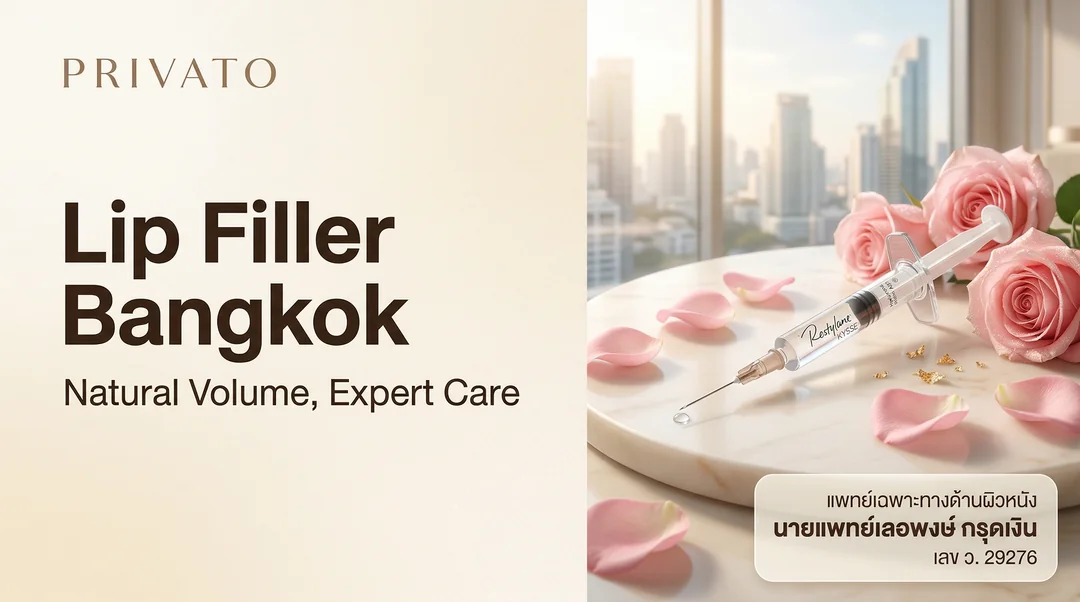
Lip filler bangkok treatments typically cost between 4,990 THB and 19,000 THB per 1 cc syringe, providing natural volume and hydration that lasts from 6 to 12 months.

How much does lip filler cost in Bangkok and what should you expect?

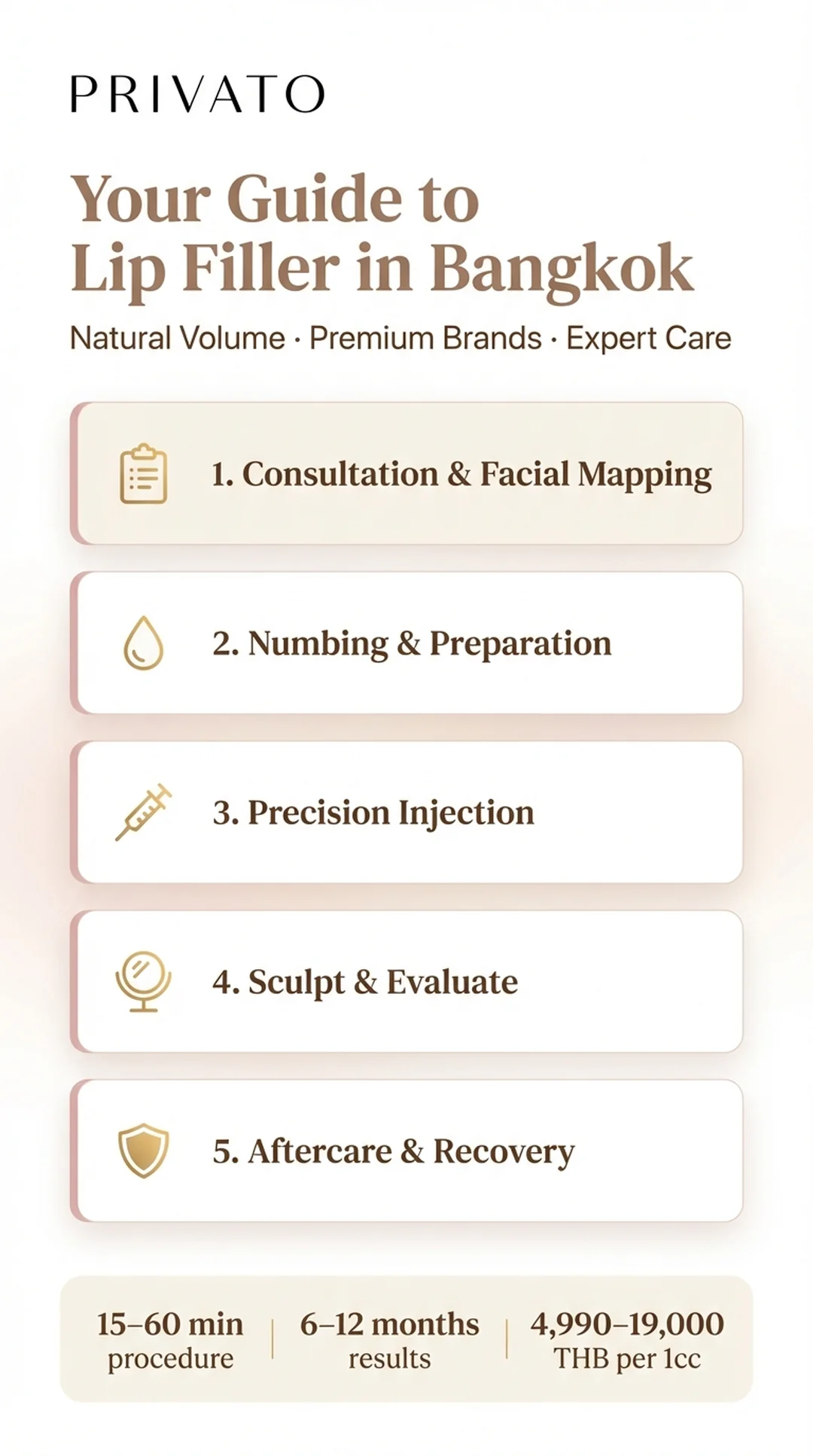
Lip filler in Bangkok typically costs between 4,990 THB and 19,000 THB per 1 cc syringe, depending on the brand and clinic tier.

While value-tier options like Neuramis start around 4,990 THB, premium brands such as Restylane Kysse and Juvéderm Volbella generally range from 11,990 THB to 19,000 THB. When planning your procedure, you should expect the following:

  • Volume Planning: Most clinics recommend 1 cc for a visible but subtle first-time result, though 0.5 cc to 2 cc may be used depending on desired fullness.
  • The Procedure: The appointment usually lasts 15 minutes to one hour and includes a facial assessment, cleansing, and numbing before the injection.
  • Immediate Aftercare: You should avoid strenuous exercise, excessive heat, and applying pressure to the lips for 24 to 48 hours.
  • Recovery Timeline: Common side effects include swelling, bruising, and tenderness; swelling typically peaks around day two or three and subsides within a few days.
  • Results: Hyaluronic acid (HA) fillers generally last between 6 and 12 months, though high lip mobility may reduce this duration to 4–6 months for some individuals. (Aura Bangkok Clinic, 2025)

What is Lip Filler and How Does It Work for Lip Enhancement?

Lip filler is an injectable soft-tissue implant, typically made of hyaluronic acid (HA), used to add volume or smooth lines in the perioral area. As a polysaccharide naturally found in body tissues, HA works by binding to water molecules, which causes the gel to swell and create a plumping effect. To ensure the filler lasts longer before being absorbed by the body, the material is often crosslinked to increase its persistence. During the procedure, practitioners use various techniques—such as linear threading for contouring or microdroplets for definition—to target areas like the vermilion border and the Cupid’s bow. The results generally last between 6 to 12 months, depending on the specific product used and the individual’s metabolism

Understanding Hyaluronic Acid (HA) Dermal Fillers

Hyaluronic acid (HA) is a naturally occurring polysaccharide found in body tissues that acts as an injectable soft-tissue implant to augment lips and smooth perioral lines. When used in gel form, HA binds to water and swells to create volume, with its persistence in the body often increased through a process called crosslinking. Most HA fillers provide results lasting approximately 6 to 12 months, though real-world duration varies based on the specific product used and the area of injection (Lip filler fundamentals and how HA works, FDA, 2020)

Common Lip Filler Shapes and Injection Techniques

Lip filler shapes and injection techniques vary based on the desired aesthetic outcome, ranging from subtle definition to significant volume.

Commonly used injection techniques and shapes include:

  • Linear Threading: Used primarily for creating contour and defining the lip edges.
  • Microdroplet Technique: Applied to define the Cupid’s bow and the vermilion border.
  • Fanning: A method used to distribute filler across a broader area for increased volume.
  • “Korean Celebrity Lips”: A specific shape trend popular in Bangkok markets that focuses on a particular stylized appearance.
  • Anatomical Targets: Injections typically target the vermilion border, the red lip, and the philtrum to achieve the desired look.

Practitioners may use needles for precise placement or cannulas for injecting into deeper planes.

Popular Lip Filler Brands Available in Bangkok Clinics

Restylane Kysse: The Gold Standard for Natural Lip Texture

Restylane Kysse is a hyaluronic acid filler specifically designed for lip augmentation and the correction of upper perioral lines in patients over age 21. This product is manufactured using XpresHAn technology, which creates a crosslinked gel intended to provide flexibility and support while maintaining a natural feel and movement. Clinical indications specify its use for adding volume to the lips and smoothing wrinkles around the mouth, with effects typically lasting between 6 and 12 months depending on individual metabolism and injection technique (Restylane Kysse IFU, 2024)

Juvederm Volbella and Ultra Plus for Volume and Definition

Juvederm Volbella is primarily used to plump lips and smooth perioral lines, while Juvederm Ultra Plus XC is indicated for correcting mid-to-deep facial folds. Volbella is a smooth hyaluronic acid (HA) gel manufactured with Vycross technology, designed to provide subtle volume and definition with effects lasting up to one year. In contrast, Ultra Plus XC contains a higher concentration of crosslinked HA (24 mg/mL) and, while used for facial structure, its safety and efficacy specifically for lip injections have not been established in controlled studies according to historical labeling.

Korean Lip Filler Brands vs. European Premium Fillers

European premium fillers generally command higher price points and offer specialized technologies for natural movement, while Korean brands are often positioned as a more affordable value-tier option.

In the Bangkok market, these two segments differ primarily in cost and intended aesthetic outcomes:

  • European Premium Brands: Products like Restylane (Sweden) and Juvéderm (France/US) typically cost between 11,990 THB and 19,000 THB per 1 cc. They utilize advanced crosslinking technologies, such as Restylane’s XpresHAn for flexibility and Juvéderm’s Vycross for smoothness, with clinical data supporting results lasting up to 12 months.
  • Korean Brands: Brands such as Neuramis are frequently marketed for approximately 4,990 THB per 1 cc. They are often associated with specific style trends, such as “Korean celebrity lips,” and serve as an entry-level option for those seeking visible changes at a lower price point. (Aura Bangkok Clinic, 2025)

Key Benefits of Getting Lip Injections in Thailand

Achieving Balanced and Symmetrical Lip Proportions

Achieving balanced and symmetrical lip proportions requires a combination of precise injection techniques and careful volume planning by a licensed professional. Practitioners typically target specific anatomical areas, such as the vermilion border, the red lip, and the philtrum, to create definition and structure.

To ensure a symmetrical and natural-looking result, the following factors are considered:

  • Technique Selection: Injectors use linear threading for contouring, microdroplets for Cupid’s bow definition, and fanning for broader volume.
  • Volume Planning: While 0.5 mL to 2 cc may be used depending on goals, clinics often recommend 1 cc for first-time patients to achieve a visible yet subtle change.
  • Tool Choice: Needles are used for precise placement in superficial layers, while cannulas are often preferred for deeper planes to minimize trauma.
  • Anatomical Assessment: A standard procedure begins with facial mapping to identify natural asymmetries before cleansing and anesthetizing the area.

Excessive volume should be avoided as it can lead to an unnatural appearance and restricted lip movement.

Hydration and Smoothing of Fine Lip Lines

Hyaluronic acid (HA) fillers are the primary injectable treatment for hydrating the lips and smoothing perioral lines. These soft-tissue implants work by binding to water molecules in the tissue, which causes the gel to swell and provide both volume and structural support.

Key products and techniques for these concerns include:

  • Specific Formulations: Products like Volbella are specifically indicated to plump lips and smooth perioral lines in adults, often utilizing technologies like Vycross for a smooth consistency.
  • Hydration Mechanism: HA is a natural polysaccharide that, when crosslinked into a gel, increases persistence in the body while maintaining moisture.
  • Injection Techniques: Practitioners may use “linear threading” for contouring or “microdroplets” to define the Cupid’s bow and border, effectively addressing fine lines.
  • Duration: While real-world results vary based on the specific product and individual metabolism, these fillers typically offer effects lasting between 6 to 12 months. (Volbella patient labeling, 2020)

How to Choose the Best Lip Filler Clinic in Bangkok

To choose the best lip filler clinic in Bangkok, prioritize licensed medical injectors who use authentic, Thai FDA-approved products and maintain high hygiene standards.

Follow these steps to ensure a safe and high-quality result:

  • Verify Practitioner Credentials: Only receive injections from trained, licensed doctors; dermal filler is a medical procedure that should never be performed by non-medical staff or via DIY kits.
  • Use Manufacturer Tools: Utilize official “find a clinic” features from reputable brands like JUVEDERM Thailand to locate authorized providers in Bangkok.
  • Check Product Authenticity: Ask to see the unopened filler packaging before the procedure and inspect it for authenticity cues to avoid counterfeit or unapproved substances.
  • Confirm Regulatory Approval: Ensure the specific filler brand is registered in the Thai FDA database; for example, Juvederm Ultra XC has a recorded approval valid through 2028.
  • Look for External Accreditation: Favor clinics or hospitals with international quality frameworks, such as Joint Commission International (JCI) accreditation.
  • Research Reviews and Pricing: Consult platforms like GoWabi or RealSelf for patient feedback, and expect to pay between 11,990 THB and 19,000 THB per 1 cc for premium, name-brand fillers. (JUVEDERM Thailand, 2025)

Evaluating Doctor Expertise and Clinic Certifications

To evaluate doctor expertise and clinic certifications in Bangkok, verify that the injector is a trained, licensed medical professional and confirm the clinic uses authentic, Thai FDA-approved products. Because dermal filler injection is a medical procedure, patients should avoid self-injection or unapproved products to prevent severe risks like vascular occlusion or blindness.

Follow these steps to ensure a safe selection:

  • Use Manufacturer Tools: Utilize official resources like the JUVEDERM Thailand “find a clinic” tool to locate authorized providers who treat fillers as regulated medical devices.
  • Verify Product Registration: Check the Thai FDA database to ensure specific brands, such as Juvederm Ultra XC, have valid authorization records.
  • Inspect Packaging: Request to see the unopened filler box before the procedure to check for authenticity cues and ensure it was not purchased from unverified online sources.
  • Seek International Accreditation: Favor clinics or hospitals with Joint Commission International (JCI) accreditation, which indicates adherence to over 350 global healthcare standards.
  • Triangulate Reviews: Combine clinical data with feedback from platforms like RealSelf, which claims to vet provider licenses, while treating anecdotal social media advice as secondary.

Reading Real User Reviews and Reddit Recommendations

Real user reviews and Reddit recommendations for lip fillers in Bangkok should be used only for idea generation and must be verified against professional licensing and product authenticity. While these platforms offer personal insights, they vary significantly in reliability and detail.

To effectively evaluate these sources, consider the following:

  • Review Platforms: RealSelf provides a more structured environment, listing approximately 14 results for lip fillers in Thailand with review counts ranging from 0 to 111 and claims of license vetting.
  • Reddit Limitations: Recommendations on Reddit are purely anecdotal; users should independently verify a clinic’s medical licensing, pricing transparency, and the authenticity of the products used.
  • Booking Platforms: Sites like GoWabi offer a high volume of service listings (over 3,400 in Thailand) and can provide a snapshot of current market pricing and general clinic popularity.
  • Verification Steps: Always cross-reference online praise with official tools, such as the JUVEDERM Thailand clinic finder or the Thai FDA database, to ensure the provider is authorized and the products are regulated medical devices (JUVEDERM Thailand, 2025)

The Lip Filler Procedure: Step-by-Step from Consultation to Results

Preparing for Your Appointment: Dos and Don’ts

To prepare for a lip filler appointment, you must avoid specific substances and activities that increase the risk of bruising or complications.

Following these guidelines ensures the best possible results and a smoother recovery:

  • Medications and Supplements: Stop taking aspirin and non-steroidal anti-inflammatory drugs (NSAIDs) 5–7 days before your appointment and continue to avoid them for 24–48 hours afterward.
  • Alcohol: Avoid consuming alcohol for at least 24–48 hours before and after the procedure.
  • Physical Activity: Refrain from strenuous exercise for 24 hours following the injection.
  • Heat Exposure: Avoid excessive heat, such as saunas or intense sun, for 24–48 hours after treatment.
  • Aftercare: Do not apply pressure to or massage the treated area early on, and use cool compresses to manage any initial swelling (American Society of Plastic Surgeons, 2020)

What Happens During the Injection Process?

The lip filler injection process is a medical procedure involving facial assessment, cleansing, and the precise administration of hyaluronic acid gel. The entire appointment typically lasts between 15 minutes and one hour.

The procedure generally follows these steps:

  • Assessment and Mapping: The practitioner evaluates your facial structure and marks specific injection targets, such as the vermilion border, Cupid’s bow, or philtrum.
  • Preparation: The lips are cleansed and a topical anesthetic (numbing cream) is applied to minimize discomfort.
  • Injection: The filler is injected using various techniques, such as linear threading for contouring or microdroplets for definition. Practitioners may use needles for precision or cannulas for deeper placement.
  • Evaluation and Massage: The injector may gently massage the area to ensure even distribution and evaluate the immediate aesthetic result.
  • Cleanup and Aftercare: The area is cleaned, and an ice pack is often provided to manage initial swelling

Immediate Aftercare and Recovery Timeline

Immediate aftercare for lip fillers involves avoiding pressure, heat, and strenuous exercise for 24 to 48 hours to ensure proper healing. Following the procedure, which typically lasts between 15 minutes and one hour, patients should also avoid touching or massaging the treated area and refrain from consuming alcohol or blood-thinning medications like aspirin.

The recovery timeline generally follows these stages:

  • Day 1: Initial swelling, redness, and potential bruising or tenderness at the injection sites.
  • Days 2–3: Peak swelling period where the lips may appear most enlarged or uneven.
  • Days 4–7: Most side effects, including lumps or firmness, typically begin to subside.
  • Long-term: Full results are usually visible once all swelling resolves, with effects lasting between 6 and 12 months depending on the product used and individual metabolism (KKC Clinic, Bangkok, Thailand)

Safety, Side Effects, and Important Considerations

Common Side Effects: Swelling, Bruising, and Tenderness

Common side effects of lip fillers include bruising, redness, swelling, pain or tenderness, and itching or a rash. These reactions typically occur at the injection site and are often immediate, though some effects can be delayed by weeks or months. While most swelling and bruising improve within a few hours to a few days, some patients may experience lumps, bumps, or firmness during the initial recovery period

How to Identify and Avoid Counterfeit Fillers

To identify and avoid counterfeit fillers, you must exclusively use licensed, trained medical providers and personally inspect the product’s unopened packaging for authenticity cues.

Follow these steps to ensure product safety and legitimacy:

  • Select a qualified injector: Only receive injections from trained medical professionals in clinical settings; avoid non-medical injectors, “DIY” kits, or self-injection.
  • Verify clinic authorization: Use official manufacturer tools, such as the Juvederm Thailand “find a clinic” search, to locate providers authorized to dispense genuine products.
  • Inspect the packaging: Ask to see the unopened filler box before the procedure to check for official regulatory markings and ensure the seal is intact.
  • Check local registration: Confirm the product is registered with national health authorities, such as the Thai FDA database, which tracks approved medical devices and their validity dates.
  • Avoid online purchases: Never buy dermal fillers from online marketplaces or unverified social media sources, as these are high-risk channels for unapproved or counterfeit materials.
  • Prioritize accredited facilities: Favor clinics with external quality frameworks, such as Joint Commission International (JCI) accreditation, which assesses medical systems and safety standards

Who Should Avoid Lip Filler Treatments?

Individuals should avoid lip filler treatments if they are under the age of 21, have active skin infections, or are considering self-injection using unapproved online products. According to regulatory and clinical guidance, the following groups and practices should be avoided:

  • Minors: Products like Volbella and Restylane Kysse are specifically indicated for adults over the age of 21.
  • Unlicensed Settings: Dermal filler injections are medical procedures that must be performed by trained, licensed practitioners to avoid severe risks like permanent blindness or skin necrosis.
  • DIY Users: Individuals should never attempt self-injection or purchase fillers online, as these products may be counterfeit, unapproved, or contaminated.
  • Those with Specific Health Conditions: While a consultation is required for a full assessment, the procedure should be avoided if there is active inflammation or infection in the treatment area.
Lip Filler in Bangkok: Enhance Your Smile with Natural Volume (2025 Guide) Infographic

FAQs About Lip Filler in Bangkok

How much should 1 mL of lip fillers cost in Thailand?

The cost for 1 mL of lip fillers in Thailand typically ranges from 4,990 THB to 19,000 THB, depending on the clinic tier and product brand.

While value-tier options like Neuramis are often priced around 4,990 THB, premium brands such as Restylane and Juvederm Volbella generally fall between 11,990 THB and 19,000 THB per syringe. Mid-range programs frequently anchor their pricing between 11,990 THB and 15,000 THB, often including a consultation and numbing cream. (Aura Bangkok Clinic, 2025)

Is lip filler safe in Thailand clinics?

Lip filler is generally safe in Thailand clinics when performed by licensed, trained injectors using authentic, regulated products. While the procedure is common, the FDA notes that it is a medical treatment with potential risks, including bruising, swelling, and redness. Severe but rare complications, such as accidental injection into a blood vessel, can lead to skin necrosis or vision loss, underscoring the importance of choosing providers who can recognize and respond to emergencies. To ensure safety, patients should verify that the clinic uses products approved by the Thai FDA, inspect unopened packaging for authenticity, and avoid uncertified injectors or DIY kits

Is 0.5 mL lip filler worth it for a natural look?

Yes, 0.5 mL of lip filler is often considered worth it for achieving a natural look or making subtle micro-adjustments to the lips. While many clinics position 1.0 mL as the standard baseline for a visible yet subtle change, 0.5 mL can be effective depending on the individual’s specific anatomy and aesthetic goals. Most treatment plans suggest using between 0.5 mL and 2.0 mL total to reach the desired shape and volume (KKC Clinic, Bangkok, Thailand).

How long do lip fillers typically last?

Lip fillers typically last between 6 and 12 months, though real-world duration varies based on the specific product used and the injection area. While some clinical trials for high-end hyaluronic acid fillers report outcomes lasting up to one year, certain providers note that the frequent movement of the lips may reduce the effective duration to approximately 4 to 6 months. Factors such as the material’s crosslinking density and an individual’s tissue response also influence how quickly the body absorbs the filler (FDA, 2020)

Can I dissolve my lip fillers in Bangkok if I’m unhappy with the results?

Yes, you can dissolve hyaluronic acid (HA) lip fillers in Bangkok using an enzyme called hyaluronidase. This medical procedure breaks down the HA gel and typically requires a dosage of 50–150 IU per 1 mL of filler, though higher doses may be necessary for highly crosslinked products. Because the process involves medical risks and specific dosing requirements, it must be performed under professional medical supervision (Lip Fillers in Bangkok: Fundamentals, Brands, Costs, Clinic Selection, Procedure, and Safety, 2025)
Laser Tattoo Removal in Bangkok | Privato Clinic

Laser Tattoo Removal in Bangkok: Pico Laser Technology and Pricing

Laser tattoo removal bangkok typically costs between 3,000 and 7,000 THB per session for small areas, utilizing advanced Pico laser technology to fragment ink over three to ten required treatments.

How much does laser tattoo removal cost in Bangkok and which clinic is best?

Laser tattoo removal in Bangkok typically costs between 3,000 THB and 7,000 THB per session for small areas, while large-area treatments at major hospitals can range from 20,000 THB to 30,000 THB. Total costs scale linearly with the number of sessions required, which often ranges from 3 to 10 visits depending on the tattoo’s size, ink color, and depth.

The “best” clinic is defined by medical oversight and the availability of appropriate technology for your specific tattoo:

  • Bangkok Hospital: Offers structured pricing by size, such as 5,000 THB for areas up to 3×3 cm and 10,000 THB for 10×10 cm to 20×20 cm, including anesthesia.
  • Bumrungrad International Hospital: Provides comprehensive clinical evaluations considering skin type and tattoo age, with a single pricing system for all nationalities.
  • Yanhee Hospital: Features itemized pricing for specific platforms like PicoWay, with rates such as 3,300 THB for a 1×1 cm area.
  • Specialized Clinics: Facilities like Mingkwan Clinic offer competitive per-session rates, such as 3,000 THB for eyebrow removal and 6,000 THB for 10×10 cm areas.

When choosing a provider, prioritize board-certified dermatology oversight and verify that the laser wavelengths (e.g., 1064 nm for black ink, 532 nm for red) match your tattoo’s colors to minimize the risk of scarring or permanent pigment changes

What is Pico Laser Tattoo Removal and How Does It Work?

Pico laser tattoo removal is a medical procedure that uses ultra-short picosecond (ps) pulses of light to break down tattoo ink into tiny particles. It works primarily through a photoacoustic or photomechanical mechanism, where the rapid delivery of energy creates a shockwave that fragments the ink without excessive heat.

Key aspects of how the process works include:

  • Fragmentation: The laser targets specific ink colors using different wavelengths; for example, 1064 nm is typically used for black or dark inks, while 532 nm targets red, orange, and yellow.
  • Immune Clearance: Once the laser shatters the ink into microscopic fragments, the body’s immune system—specifically cells called macrophages—clears the debris over several weeks.
  • Clinical Endpoint: During treatment, a temporary white “frosting” effect (gas bubbles) usually appears on the skin, indicating the laser has successfully interacted with the pigment.
  • Multiple Sessions: Because ink is layered at different depths, most tattoos require between 3 to 10 sessions spaced 6 to 8 weeks apart to allow for proper healing and pigment clearance.

The Difference Between Picoway, Picosecond, and Revlite Lasers

The primary difference is that picosecond is a category of laser technology, while PicoWay and RevLite are specific brand-name platforms that utilize different pulse durations and mechanisms to remove ink.

  • Picosecond Lasers: This is a broad class of lasers that deliver energy in ultra-short bursts (trillionths of a second). They primarily use a photoacoustic or photomechanical effect to shatter ink particles into tiny fragments that the immune system can clear more easily than older technologies.
  • PicoWay: This is a specific brand of picosecond laser manufactured by Candela Medical. It operates with pulse durations typically between 300 and 450 picoseconds, which is designed to maximize the photoacoustic effect for various ink colors and particle sizes.
  • RevLite (RevLite SI): This is a brand of Q-switched Nd:YAG laser manufactured by Cynosure. Unlike picosecond lasers, it operates in the nanosecond domain (billionths of a second), using longer pulses (5–20 ns) and a photothermal mechanism to break down pigment.

How Many Sessions Are Required to Fully Remove a Tattoo?

The number of sessions required to fully remove a tattoo typically ranges from 1 to 10 treatments, though complete removal cannot be guaranteed for all cases.

The exact number of sessions depends on several biological and technical factors:

  • Tattoo Characteristics: Professional tattoos are often deeper and more uniform, requiring more sessions than amateur or traumatic tattoos. Older tattoos may be easier to remove than newer ones.
  • Ink and Color: Black and dark pigments are generally easier to target with a 1064 nm laser, while colors like green, blue, and yellow may require specific wavelengths (755 nm or 532 nm) and more visits.
  • Skin Type and Location: Factors such as the patient’s skin type (Fitzpatrick scale), the tattoo’s location on the body, and the presence of pre-existing scarring affect the clearance rate.
  • Technology Used: Picosecond lasers have been shown to outperform nanosecond (Q-switched) lasers, achieving higher satisfactory clearance in fewer sessions.
  • Biological Timing: Sessions must be spaced 6 to 8 weeks apart to allow the immune system to clear fragmented ink particles and ensure proper skin healing. (American Society of Plastic Surgeons, 2024)

Key Factors Affecting Tattoo Removal Success and Effectiveness

Tattoo Ink Color and Depth: What Can Be Removed?

Laser tattoo removal can target most ink colors and depths, though success depends on matching the specific laser wavelength to the pigment.

The effectiveness of removal is determined by several factors:

  • Ink Color and Wavelength:
    • Black and dark inks: These are the easiest to treat and are best targeted by the 1064 nm Nd:YAG laser.
    • Red, orange, and yellow: These respond best to the 532 nm wavelength.
    • Blue, green, and purple: These typically require 694 nm (ruby) or 755 nm (alexandrite) lasers.
  • Tattoo Depth and Type: Professional tattoos are usually deeper and more uniform, often requiring more sessions than amateur tattoos, which may have uneven depths.
  • Cosmetic Inks: Permanent makeup (like eyebrow tattoos) containing iron oxide can undergo “paradoxical darkening,” turning from red-brown to grey-black when treated with certain lasers.
  • Limitations: Complete removal is not always possible, especially for newer inks, pastels, or tattoos with significant layering and pre-existing scarring (StatPearls, 2025)

Tattoo Location and Skin Type Considerations

Tattoo location and skin type are critical factors that determine the laser wavelength used, the number of required sessions, and the overall risk of complications. According to the Kirby-Desai scale, the anatomical location of a tattoo and the patient’s skin type are assigned numeric values to estimate the total number of treatments needed for clearance.

Key considerations include:

  • Wavelength Selection: While 1064 nm lasers are generally safe for a broad range of skin types, 532 nm lasers are often restricted to lighter skin (Fitzpatrick types I–III) due to the high risk of melanin competition and pigmentary changes in darker skin.
  • Dyspigmentation Risks: Patients with darker skin or those treated with specific wavelengths face a higher risk of hyperpigmentation or hypopigmentation, which may take 6–12 months to fade.
  • Session Count: The location of the tattoo affects how efficiently the immune system can clear fragmented ink; areas with higher vascularity typically clear faster than those on the lower extremities.
  • Specialized Areas: Cosmetic tattoos, such as eyebrows, require caution because certain red-brown pigments can undergo paradoxical darkening to a grey-black color when exposed to Q-switched lasers (Kirby-Desai, 2009)

Laser Tattoo Removal Price Guide in Bangkok

Average Cost per Session vs. Full Treatment Packages

Bangkok tattoo removal costs typically range from 3,000 to 7,000 THB per session for small areas, while full treatment costs depend on the total number of sessions required.

Pricing structures in Bangkok clinics and hospitals generally follow these patterns:

  • Per-Session Pricing by Size:
    • Small areas (up to 3×3 cm): Approximately 3,000 to 5,000 THB.
    • Medium areas (up to 10×10 cm): Approximately 6,000 to 7,000 THB.
    • Large areas (up to 50×50 cm): Can reach 20,000 to 30,000 THB at major hospitals.
    • Specialized areas: Eyebrow tattoo removal is often fixed between 3,000 and 6,100 THB.
  • Package Considerations:

While some networks like Bangkok Hospital Pattaya offer a package range (3,000–10,000 THB), most providers scale costs linearly based on the number of sessions. Because “complete” removal cannot be guaranteed and typically requires 3 to 10 sessions spaced 6–8 weeks apart, the total investment is determined by the tattoo’s age, ink color, and depth.

Comparing Clinic Prices: From Budget to Premium Wellness Centers

Tattoo removal prices in Bangkok typically range from 3,000 THB to 30,000 THB per session, depending on the tattoo size and the clinic’s tier.

Pricing structures across the city’s medical and wellness landscape include:

  • Budget and Specialized Clinics: Smaller clinics like Mingkwan Clinic offer entry-level pricing, such as 3,000 THB for eyebrows, 4,000 THB for a 4×4 cm area, and 6,000 THB for a 10×10 cm area.
  • Mid-Range and Specialized Hospitals: Yanhee Hospital provides itemized rates like 3,300 THB for a 1×1 cm area and 16,500 THB for a 10×10 cm area.
  • Premium Wellness and General Hospitals: Large networks like Bangkok Hospital use a tiered system based on dimensions:
    • Small (≤3×3 cm): 5,000 THB
    • Medium (3×3 to 10×10 cm): 7,000 THB
    • Large (10×10 to 20×20 cm): 10,000 THB
    • Extra Large (up to 50×50 cm): 20,000 to 30,000 THB

These prices often include anesthesia but may exclude initial doctor consultation fees. Total costs scale with the number of sessions required, which typically ranges from 3 to 10 visits

Is Laser Tattoo Removal Right for You?

Laser tattoo removal is an effective option for individuals who can commit to multiple spaced treatments and have realistic expectations regarding fading and potential skin changes. While it is the dominant method for fragmenting ink so the immune system can clear it, “complete” removal cannot be guaranteed for all ink types or colors.

Ideal candidates and key considerations include:

  • Commitment to Process: Most tattoos require between 1 and 10 sessions, typically spaced 6 to 8 weeks apart to allow for biological healing and ink clearance.
  • Ink and Skin Type: Success depends on the laser wavelength matching the ink color; for example, 1064 nm is often used for dark inks, while 532 nm targets reds and oranges.
  • Risk Awareness: While generally safe, potential side effects include temporary redness, swelling, or blistering, and a risk of long-term pigment changes or scarring.
  • Professional Oversight: Results depend heavily on the operator; medical societies recommend treatment by board-certified dermatologists to minimize complications. (American Academy of Dermatology, 2023)

Who is an Ideal Candidate for Laser Treatment?

An ideal candidate for laser tattoo removal is someone who can commit to multiple spaced sessions and follow strict sun avoidance and wound care protocols.

Beyond these behavioral requirements, the most suitable candidates possess the following characteristics:

  • Realistic Expectations: They understand that complete removal is not always possible and that pigment shifts or fading may occur instead of total clearance.
  • Health Awareness: They have discussed their medical history, medications, and any history of raised scars (keloids) with a professional.
  • Patience for Biology: They accept that sessions must be repeated every 6–8 weeks to allow the immune system to clear fragmented ink.
  • Risk Awareness: They recognize that certain skin types and ink colors (such as pastels or professional-grade inks) carry a higher risk of dyspigmentation or may be more difficult to remove

When to Choose Laser Removal vs. Tattoo Cover-ups

The choice between laser removal and a tattoo cover-up depends on whether the goal is completely clear skin or simply a new design.

  • Choose Laser Removal if you require “blank skin” and are prepared for the time and financial commitment of multiple sessions (typically 1–10) spaced 6–8 weeks apart.
  • Choose a Cover-up if you want to replace the existing art with a new design; however, a few laser sessions are often recommended first to fade the original ink, which allows for better cover-up geometry and prevents the old tattoo from showing through.
  • Considerations: Professional societies note that complete removal is not always possible, and some scarring or pigment variation may occur regardless of the method chosen

Professional Tattoo Removal Services in Bangkok Clinics

What to Expect During Your First Consultation

During your first consultation, you should expect a comprehensive medical and tattoo assessment to determine your suitability for treatment and establish a realistic clearance plan.

The process typically includes the following steps:

  • Tattoo Evaluation: The clinician will document the age, ink colors, and location of the tattoo, as well as the presence of any pre-existing scarring or tissue changes.
  • Medical History Review: You will discuss your general health, current medications, and any history of raised scars or keloids.
  • Risk and Outcome Discussion: The provider will explain realistic clearance endpoints, the expected number of sessions (often 1–10), and potential risks such as pigment shifts or scarring.
  • Visual Evidence: You may be shown provider-specific before-and-after photos to help set expectations for the results.
  • Test Spotting: In some cases, especially for cosmetic or red-brown pigments, a test spot may be performed to check for paradoxical darkening before proceeding with full treatment

Advanced Techniques for Eyebrow and Permanent Makeup Removal

Removing eyebrow and permanent makeup (PMU) requires specialized laser protocols to manage the high risk of paradoxical darkening. Because many cosmetic inks contain iron oxide or similar compounds, exposure to Q-switched or picosecond lasers can cause red-brown pigments to instantly turn grey or black.

To mitigate these risks and ensure safe removal, practitioners follow these advanced clinical guidelines:

  • Test-Spot Protocols: Clinical guidance recommends performing staged test spots to observe how the specific ink reacts before treating the entire eyebrow or lip area.
  • Wavelength Selection: Operators must choose wavelengths based on the shifted pigment color; for example, 1064 nm is often used for the dark pigments that remain after paradoxical darkening occurs.
  • Safety and Aftercare: Because the skin on the face is delicate, using the lowest effective fluence is emphasized to prevent pinpoint bleeding, tissue spatter, or permanent scarring.
  • Expectation Management: Patients are warned that complete removal is not always possible and that the darkening phase may make the pigment harder to clear in subsequent sessions

Safety, Risks, and Potential Side Effects

Common Side Effects: Redness, Swelling, and Blistering

Common side effects of laser tattoo removal include redness, swelling, and blistering, which are typically local and transient. While these reactions are expected as the skin heals and the immune system clears fragmented ink, other potential effects include tenderness, crusting, and pigmentary changes such as hyperpigmentation or hypopigmentation. Clinical data indicates that picosecond lasers may result in lower rates of blistering compared to nanosecond lasers, though they may carry a higher risk of hyperpigmentation

Long-term Risks: Scarring and Hypopigmentation

Persistent scarring and dyspigmentation, including hypopigmentation or hyperpigmentation, are the primary long-term risks associated with laser tattoo removal. While modern picosecond lasers generally carry a lower risk of scarring compared to older methods, these complications can still occur due to aggressive laser settings, poor aftercare, or a patient’s natural tendency toward keloid formation. Additionally, certain wavelengths can cause permanent lightening (hypopigmentation) or darkening (hyperpigmentation) of the skin, with one study noting that picosecond treatments may actually result in higher rates of hyperpigmentation compared to nanosecond lasers despite lower blistering rates

Essential Aftercare Tips for Faster Healing

Proper aftercare focuses on keeping the treated area clean, dry, and protected to support the body’s natural immune clearance of fragmented ink. Following these steps helps minimize the risk of complications like infection, scarring, or permanent pigment changes:

  • Initial Protection: Keep the treated area completely dry for the first 24 hours.
  • Wound Care: After the first day, remove any dressings, gently cleanse the area as instructed by your clinician, and apply a recommended antibiotic ointment.
  • Manage Side Effects: Expect local reactions such as redness, swelling, tenderness, or “frosting” (gas bubbles); if blistering or crusting occurs, do not pick at the skin to avoid scarring.
  • Sun Avoidance: Protect the area from sun exposure to reduce the risk of hyperpigmentation or light spots, which can take 6–12 months to fade.
  • Patience with Biology: Allow 6–8 weeks between sessions to give your immune system enough time to clear the shattered ink particles. (National Skin Centre, 2021)

FAQs About Laser Tattoo Removal in Bangkok

Can you get a tattoo 100% removed?

Complete removal of a tattoo cannot be guaranteed, as professional medical societies and clinical data indicate that some inks may be permanent or leave behind skin color variations. While modern picosecond lasers are highly effective, factors such as ink color, depth, and the age of the tattoo influence the final result.

Key facts regarding full removal include:

  • Success Rates: A recent clinical trial showed that even with advanced picosecond technology, only about 10% of treated sites achieved complete clearance after five sessions.
  • Ink Resistance: Professional tattoos and newer pastel or neon inks are often more difficult to remove than older or amateur tattoos.
  • Potential Side Effects: Even if the ink is cleared, the process may result in permanent scarring, hyperpigmentation (darkening), or hypopigmentation (lightening) of the skin.
  • Paradoxical Darkening: Certain cosmetic inks, such as those used for eyebrows, can actually turn darker (grey or black) when treated with specific lasers. (American Society for Dermatologic Surgery, 2023)

Will laser fully remove a tattoo without leaving a scar?

Complete tattoo removal cannot be guaranteed, and while the risk of scarring is generally low with skilled medical operators, it remains a possibility. Professional dermatological societies and health systems note that “complete” removal is not always achievable for all ink types and that some degree of scarring or skin color variation (dyspigmentation) can occur. Factors that influence these outcomes include:

  • Operator Skill: Scarring is significantly more common when the procedure is performed by non-medical operators; board-certified dermatologists are recommended to minimize risk.
  • Patient Factors: Individuals with a history of raised scars or keloids are at a higher risk for permanent tissue changes.
  • Laser Technology: Modern picosecond lasers generally show a lower risk of blistering compared to older nanosecond lasers, though they may carry a higher risk of temporary hyperpigmentation.
  • Ink and Skin Type: Certain inks (like pastels) and darker skin types present higher challenges for clean removal without side effects

How much should laser tattoo removal cost for a small tattoo?

In Bangkok, laser tattoo removal for a small tattoo typically costs between 3,000 THB and 7,000 THB per session.

The total cost depends on the specific clinic and the size of the treatment area:

  • Very small areas (up to 3×3 cm): Approximately 5,000 THB per session at major hospitals, including anesthesia.
  • Small to medium areas (up to 10×10 cm): Prices range from 6,000 THB to 7,000 THB per session.
  • Eyebrow tattoos: Specialized removal typically costs between 3,000 THB and 6,100 THB per session.

Because most tattoos require between 3 and 10 sessions for significant clearance, the total budget should be calculated by multiplying the per-session rate by the expected number of visits

Is laser tattoo removal painful?

Yes, laser tattoo removal is generally described as painful, often compared to the sensation of a rubber band snapping against the skin. While the procedure is somewhat painful, it is usually considered tolerable, and many clinics provide topical numbing creams or local anesthesia to manage discomfort. Recent clinical research indicates that picosecond lasers may result in lower pain scores compared to older nanosecond (Q-switched) laser technology

Laser Treatment in Bangkok | Privato Clinic

Laser Treatment in Bangkok: Best Clinics, Prices, and Skin Solutions

Professional laser treatment bangkok options include advanced picosecond and fractional CO2 platforms starting from 2,700 THB, typically requiring 3 to 5 sessions to achieve optimal skin rejuvenation and scar reduction.

What is the Best Laser Treatment in Bangkok for Your Skin Type?

The best laser treatment in Bangkok depends on your Fitzpatrick skin type and specific skin concerns, as different wavelengths are optimized for safety and efficacy across various tones.

To choose the correct treatment, match your skin profile to these common Bangkok modalities:

  • Pigmentation and Rejuvenation (Fitzpatrick I–IV): Picosecond platforms (532/730/785/1064 nm) are the standard for treating melasma and sun damage with minimal downtime.
  • Darker Skin (High Pigment Risk): Practitioners prioritize the 1064 nm wavelength, which has weaker melanin absorption to reduce the risk of overheating and post-inflammatory hyperpigmentation.
  • Redness and Vascular Issues: The 595 nm Pulsed Dye Laser (VBeam) targets blood vessels for rosacea or post-acne redness, while Dual Yellow (578/511 nm) is used for overlapping redness and brown spots.
  • Acne Scars and Texture: Fractional CO2 (10,600 nm) is the primary tool for deep resurfacing, though it requires significant downtime (7–10 days) compared to non-ablative options.
  • Sensitive or Oily Skin: Low-downtime fractional lasers or VBeam are often recommended, provided active inflammation or broken skin is not present.

Common Types of Cosmetic Lasers Available in Bangkok

Pico Laser for Pigmentation and Rejuvenation

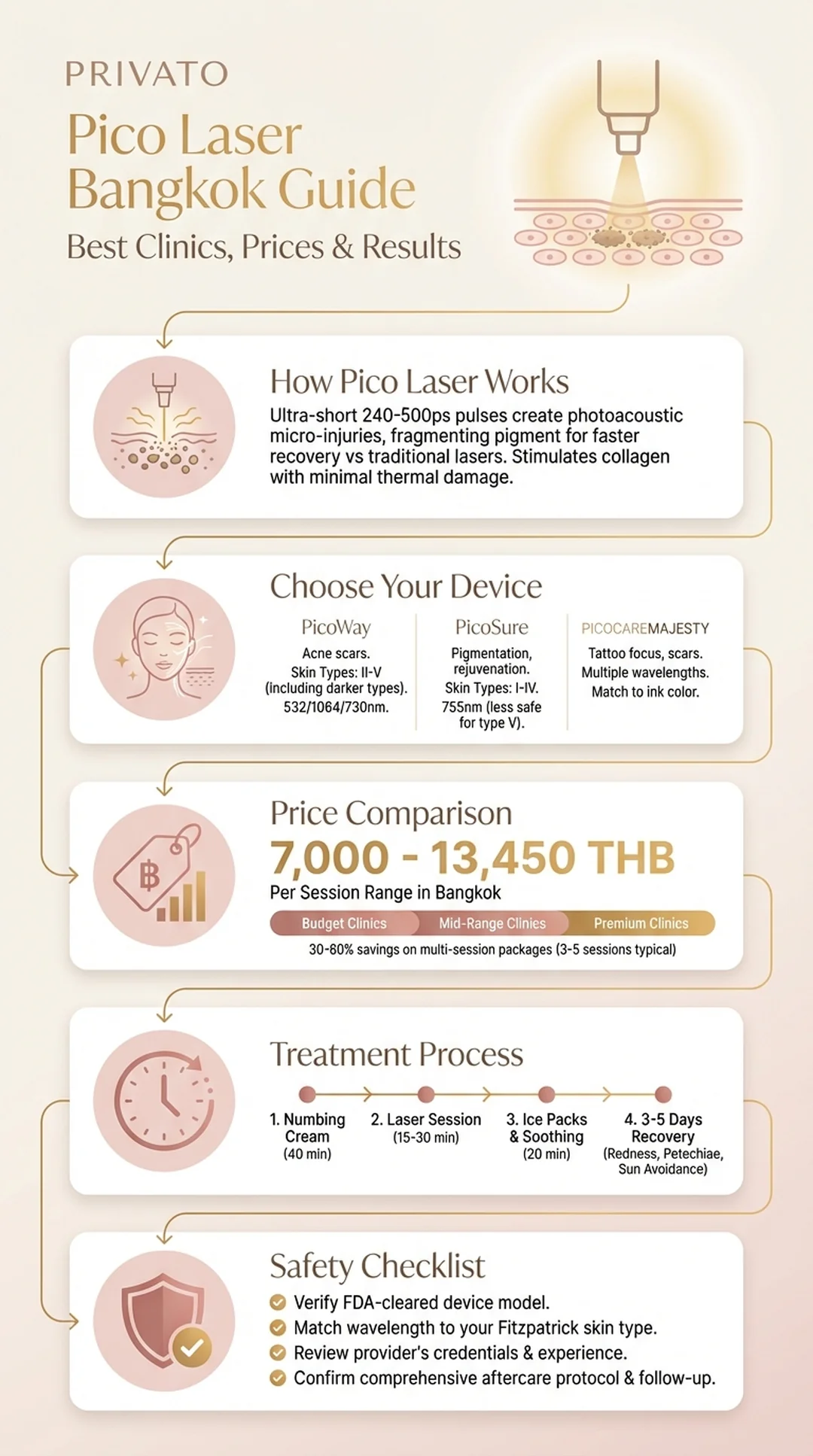
Picosecond platforms are commonly used for pigmentation and rejuvenation in Fitzpatrick skin types I–IV, utilizing wavelengths such as 532, 730, 785, and 1064 nm. These devices are designed to create a photoacoustic effect with minimal downtime, and typical treatment courses for acne scars or texture improvement consist of 3 to 5 sessions. In Bangkok, a 3-session rejuvenation package is approximately 21,000 THB, though single sessions can range from 7,000 to 15,000 THB depending on the clinic and specific treatment mode (Samitivej Srinakarin Hospital, 2026)

Fractional CO2 Laser for Acne Scars and Texture

Fractional CO2 laser (10,600 nm) is a primary resurfacing tool used in Bangkok for treating acne scars and skin texture, typically offering a 30–70% improvement range. While more intensive than other modalities, the fractional delivery method is designed to reduce complications compared to traditional ablative CO2 treatments.

Key details regarding the procedure include:

  • Treatment Plan: Providers generally recommend a course of 3–5 sessions spaced approximately 4 weeks apart for effective results.
  • Downtime: Initial re-epithelialization (re-skinning) takes about 7–10 days, though full recovery can last a month or longer. Patients should expect swelling for 2–3 days and a pink skin tone for 3–5 days.
  • Pricing in Bangkok: Single sessions for the full face are typically priced around 8,000 to 10,500 THB, while targeted areas may cost approximately 4,500 THB.
  • Contraindications: The treatment is generally avoided for individuals with a history of keloids, those who have used isotretinoin within the last 6 months, or those with active infections in the treatment area (Fractional CO2 Laser Program for Face, Vichaiyut Hospital, 2025)

VBeam and Dual Yellow Laser for Redness and Vascular Issues

VBeam and Dual Yellow lasers are primary treatments for redness and vascular issues in Bangkok, targeting blood vessels and pigmentation through specific light wavelengths.

VBeam utilizes a 595 nm pulsed-dye laser (PDL) to target blood-vessel chromophores, making it a standard choice for rosacea and post-acne erythema. Dual Yellow laser employs two wavelengths—578 nm (yellow) and 511 nm (green)—to simultaneously address vascular components and brown pigmentation. While VBeam aftercare often allows for an immediate return to normal activities, patients should be aware of potential side effects such as temporary redness, swelling, or purpura (bruising) depending on the intensity of the settings. Typical treatment protocols for these modalities, such as those used for Dual Yellow, often recommend a course of 3–5 sessions spaced 2–4 weeks apart to achieve optimal results

IPL Treatment for Brightening and Dark Spots

IPL (Intense Pulsed Light) is a broad-spectrum light treatment, not a laser, that uses a range of 400–1200 nm wavelengths to address skin rejuvenation and dark spots. While effective for general brightening, it is distinct from targeted laser platforms like PicoWay or Dual Yellow.

Key details regarding IPL treatment include:

  • Mechanism: It utilizes various filters to target different skin concerns across a wide light spectrum.
  • Pricing in Bangkok: Promotional rates can be as low as 999 THB, though the standard price is typically around 3,500 THB per session.
  • Provider Guidance: Patients should confirm the specific device and settings used, as results are highly dependent on the equipment and operator.

Key Benefits of Getting Laser Therapy in Thailand

Advanced Medical Technology and FDA-Approved Devices

Advanced medical technology in Bangkok includes picosecond platforms like PicoWay and fractional CO2 systems such as CO2RE, both of which hold specific FDA-approved indications. The PicoWay system is 510(k) cleared for treating melasma in Fitzpatrick skin types I–IV and tattoo removal for types I–VI, while the CO2RE system is a 10,600 nm laser used for skin resurfacing and treating acne scars. Other common technologies include the 595 nm VBeam Pulsed Dye Laser for vascular issues and the Dual Yellow laser for combined pigment and redness concerns. (U.S. Food and Drug Administration, 2025)

Expert Dermatologists and Specialized Skin Clinics

Laser treatment costs in Bangkok vary by technology, with single sessions typically ranging from 2,700 THB for VBeam to 15,000 THB for advanced picosecond platforms.

While individual prices fluctuate based on the clinic and the specific area being treated, the following price points and packages are common in the Bangkok market:

  • Picosecond Laser: Single sessions are often priced around 15,000 THB, though promotional packages can reduce the cost to approximately 7,000 THB per session (e.g., 21,000 THB for a 3-session bundle).
  • Fractional CO2 Laser: Prices generally range from 4,500 THB for specific areas to 16,000 THB for the full face and eyes; a standard full-face session at a major hospital is approximately 8,000 THB.
  • VBeam (Pulsed Dye Laser): Entry-level pricing can start as low as 2,700 THB per session, though specialized cycles may cost up to 15,000 THB.
  • Dual Yellow Laser: Individual sessions typically cost 6,000 THB, with 5-session packages available for roughly 15,000 THB.
  • IPL (Intense Pulsed Light): Standard sessions are priced around 3,500 THB, but promotional “flash sales” may offer rates as low as 999 THB.

Patients should also budget for “hidden” costs such as doctor fees, numbing creams, and post-treatment medications, which are not always included in the base price

Cost-Effectiveness Compared to Western Countries

Laser treatments in Bangkok are significantly more cost-effective than in Western countries, often costing a fraction of the price for similar procedures. While a single session of fractional CO2 laser in Bangkok is priced around 8,000 THB (approx. $220 USD), the average cost for laser resurfacing in the United States is approximately $2,810 USD. Similar patterns exist for advanced technologies like Pico lasers, where Bangkok hospitals offer three-session rejuvenation packages for 21,000 THB (approx. $580 USD), whereas Swiss providers may charge upwards of CHF 1,100 (approx. $1,250 USD) for a single session of comparable ablative treatment

Laser Treatment Bangkok Price Guide: What to Expect

Laser treatment prices in Bangkok vary significantly by technology, with single sessions typically ranging from 2,700 THB for targeted vascular treatments to 15,000 THB for advanced picosecond lasers.

Costs are often structured around the specific device used and the number of sessions purchased:

  • Picosecond Lasers: Single sessions are priced around 15,000 THB, though promotional packages can reduce the cost to approximately 7,000 THB per session (e.g., 21,000 THB for a 3-session bundle).
  • Fractional CO2 Lasers: Prices range from 4,500 THB for specific areas to 8,000–10,500 THB for full-face treatments.
  • Vascular & Pigment Lasers: Dual Yellow treatments cost approximately 6,000 THB per session, while VBeam treatments can start as low as 2,700 THB depending on the provider and eligibility.
  • IPL (Intense Pulsed Light): These non-laser treatments are the most affordable, with promotional rates starting near 999 THB, though standard prices are closer to 3,500 THB.

Budgeting should also account for “hidden costs” such as doctor fees, numbing creams, and post-treatment medications, which may or may not be included in the base price

Average Cost per Session by Treatment Type

Average costs per session for laser treatments in Bangkok typically range from 2,700 THB to 15,000 THB depending on the technology and provider.

The following table outlines the estimated pricing per session based on hospital and clinic data in Bangkok:

Treatment Type Estimated Cost per Session (THB) Notes
Pico Laser 7,000 – 15,000 Lower rates are often found in multi-session bundles (e.g., 21,000 THB for 3 sessions).
Fractional CO2 4,500 – 10,500 Price varies by surface area (e.g., single area vs. full face).
VBeam (Pulsed Dye) 2,700 – 15,000 Highly dependent on the specific hospital program and eligibility.
Dual Yellow 3,000 – 6,000 Often sold in 5-session packages for approximately 15,000 THB.
IPL 1,000 – 3,500 Frequently subject to promotional “flash sale” pricing.

Prices may exclude additional fees for doctor consultations, topical numbing creams, or post-treatment medications.

Package Deals vs. Single Session Pricing

Package deals in Bangkok typically offer significant savings, reducing the per-session cost of treatments like Pico laser to approximately 7,000 THB compared to single-session rates that can reach 15,000 THB. While a single Pico session may be priced at 15,000 THB, a three-session bundle can be found for 21,000 THB, and a five-session package for 26,900 THB. Similar structures exist for other modalities:

  • Dual Yellow: Single sessions cost around 6,000 THB, while a five-session package is available for 15,000 THB.
  • Fractional CO2: Single face treatments are priced at approximately 8,000 to 10,500 THB, with lower rates often applied when multiple areas are combined.
  • Inclusions: Bundled deals frequently include additional costs such as numbing cream and post-laser topical treatments that may be charged separately in single-session bookings

Hidden Costs: Consultation Fees and Post-Care Medications

Hidden costs for laser treatments in Bangkok typically include eligibility assessments, numbing agents, post-care medications, and doctor fees. While some hospital packages explicitly bundle these charges, patients should verify if the quoted price covers topical anesthetics (numbing cream), specialized post-laser recovery creams, and any required follow-up consultations. (Hidden-cost checklist, Bangkok Hospital Headquarters, 2025)

How to Choose the Right Skin Clinic in Bangkok

To choose the right skin clinic in Bangkok, verify the doctor’s credentials through the Medical Council of Thailand’s “checkmd” portal and confirm the legitimacy of the laser devices used.

Follow these steps to ensure a safe and effective treatment:

  1. Verify Practitioner Licenses: Use the doctor’s name and license number to check their status on the Medical Council of Thailand database.
  2. Confirm Device Authenticity: Ask for the specific brand and model of the laser (e.g., PicoWay, VBeam, or Stellar M22) and cross-check its FDA-cleared indications for your skin type.
  3. Check Facility Accreditation: Look for international standards such as Joint Commission International (JCI) accreditation, which is held by major institutions like Bangkok Hospital.
  4. Evaluate Pricing Transparency: Compare package costs against single-session rates and confirm if doctor fees, numbing creams, and post-care medications are included in the quote.
  5. Review Aftercare Support: Ensure the clinic provides written recovery instructions and has a clear protocol for managing potential side effects like purpura or swelling. (Medical Council of Thailand, 2026)

Checking Clinic Certifications and Doctor Credentials

To verify clinic and doctor credentials in Bangkok, use the Medical Council of Thailand’s “checkmd” portal to confirm a provider’s name and license number. You should also ensure the clinic can provide documentation that their medical devices are registered with the Thai Food and Drug Administration. For additional quality assurance, look for hospitals with Joint Commission International (JCI) accreditation, such as Bangkok Hospital or Bumrungrad International Hospital

Reading Authentic Patient Reviews and Reddit Recommendations

Authentic patient reviews and Reddit recommendations serve as useful leads for clinic names and anecdotal experiences in Bangkok, but they should not be used for clinical validation. While platforms like Reddit provide peer-to-peer insights on specific treatments like VBeam or scar removal, and eVoucher pages offer ratings and “flash sale” signals, these do not replace professional medical verification. To ensure safety and quality, patients should supplement these reviews by verifying a doctor’s license through the Medical Council of Thailand’s “checkmd” portal and confirming the legitimacy of the laser devices used.

Location and Accessibility: Sukhumvit vs. Central Bangkok

The Sukhumvit corridor is a primary hub for laser treatments in Bangkok, featuring a high density of international-facing providers and major accredited hospitals. This area includes prominent facilities such as Bumrungrad International Hospital on Sukhumvit 3 and various specialized clinics located near Sukhumvit 39. While “Central Bangkok” broadly encompasses these medical hotspots, the Sukhumvit district is specifically noted for its accessibility to travelers and its concentration of providers offering advanced platforms like PicoWay, VBeam, and Dual Yellow lasers (Bumrungrad International Hospital, 2026)

Preparing for Your Procedure: When Should You Consult a Specialist?

You should schedule a consultation with a specialist at least two weeks before your planned treatment or travel. This timeframe allows for a comprehensive risk review and ensures you can follow necessary pre-procedure protocols, such as avoiding intense sun exposure for at least 14 days and pausing irritants like retinoids or AHAs three to five days before the session

Safety, Side Effects, and Post-Treatment Care

Common Side Effects: Redness, Swelling, and Peeling

Common side effects of laser treatments in Bangkok include transient redness, swelling, and skin peeling or flaking depending on the specific technology used.

  • Redness and Swelling: Most laser types, including Picosecond and Pulsed Dye (VBeam), cause mild redness and swelling that typically lasts from a few hours to a full day.
  • Peeling and Scabbing: Fractional CO2 resurfacing involves a more intensive recovery where scabs form within 48 hours and typically fall off between days 5 and 7.
  • Bruising: Treatments targeting redness, such as VBeam, carry a specific risk of purpura (bruising) depending on the intensity of the settings.
  • Texture Changes: Lower-downtime fractional lasers may result in a “bronze” skin tone or mild flaking for 3 to 14 days following the procedure

Essential Aftercare: Sun Protection and Hydration

Effective aftercare for laser treatments in Bangkok centers on strict sun protection and consistent skin hydration to ensure proper healing. Patients are advised to use SPF 30–50+ and avoid direct or intense sunlight for at least one to two weeks, often utilizing hats or umbrellas for additional shielding. To support the skin barrier, providers recommend moisturizing regularly and pausing the use of harsh exfoliants, such as retinoids or AHAs/BHAs, until the skin has fully recovered.

Who Should Avoid Laser Treatments? (Contraindications)

Individuals with specific medical conditions, recent medication use, or active skin issues should avoid laser treatments to prevent severe complications.

Contraindications for laser procedures, particularly fractional CO2 resurfacing, include:

  • Recent Medication Use: Anyone who has taken isotretinoin within the last six months.
  • Active Infections: Presence of bacterial or herpes infections in the treatment area.
  • Skin Tendencies and Conditions: A history of keloid scarring or vitiligo, which carries a risk of new depigmentation.
  • Current Health Status: Individuals who are pregnant or breastfeeding.
  • Recent Sun Exposure: Those with a recent tan or intense sun exposure, as this increases the risk of burns and pigmentation issues.
  • Medical History: Patients with photosensitivity disorders, diabetes, or a history of skin cancer must disclose these during a pre-assessment (DermNet, 2025)

FAQs About Laser Treatment in Bangkok

How many sessions are typically needed for best results?

Most laser treatments in Bangkok typically require 3 to 5 sessions to achieve optimal results. Specific protocols vary by technology: Dual Yellow laser treatments are often spaced 2 to 4 weeks apart, fractional CO2 resurfacing for acne scars generally follows a 4-week interval between sessions, and picosecond platforms may require 5 to 10 sessions for full results depending on the skin concern.

Is laser treatment in Bangkok safe for sensitive skin?

Laser treatment safety for sensitive skin in Bangkok depends on the specific device and settings used, but many modalities are considered safe when performed with conservative parameters. While treatments like VBeam are noted for allowing patients to resume normal activities immediately with only mild redness or swelling, others like fractional CO2 require significant downtime and carry higher risks of irritation. To ensure safety, providers often recommend a consultation to determine the appropriate modality, such as the Dual Yellow laser for pigment and redness or specific picosecond settings, and advise pausing irritants like retinoids or AHAs for 3–5 days before the procedure

Can I get laser treatment and travel on the same day?

Whether you can travel on the same day as your laser treatment depends entirely on the specific type of laser used. While some treatments allow for an immediate return to normal activities, others require significant recovery time before travel is advisable.

  • Low-downtime treatments: Procedures like the VBeam (Pulsed Dye Laser) generally allow patients to resume normal activities immediately, though mild redness, swelling, or bruising may occur.
  • High-downtime treatments: Ablative resurfacing, such as Fractional CO2 laser, typically requires 7 to 10 days for the skin to re-epithelialize. Full recovery can take a month or longer, making same-day travel impractical and potentially risky for skin healing.
  • Intermediate treatments: Picosecond lasers may cause redness for 4 to 24 hours and potential scabbing for 5 to 7 days, which may affect your comfort during travel

Which clinic is best for Pico Laser in Bangkok?

There is no single “best” clinic for Pico Laser in Bangkok, as the optimal choice depends on verifying specific quality and safety standards. To select a top-tier provider, patients should ensure the clinic uses a legitimate device (such as the PicoWay with 532/730/785/1064 nm wavelengths), offers transparent pricing, and employs doctors whose licenses can be verified through the Medical Council of Thailand’s “checkmd” portal

Laser Hair Removal in Bangkok | Privato Clinic

Laser Hair Removal in Bangkok: Best Clinics, Technology, and Prices

Professional laser hair removal bangkok services utilize medical-grade technology like Alexandrite and Nd:YAG lasers to provide permanent hair reduction across 2 to 6 sessions.

What is the best laser hair removal treatment available in Bangkok?

The best laser hair removal treatment in Bangkok is defined as a medical-grade, multi-wavelength platform (such as dual 755/1064 nm or triple 755/810/1064 nm) delivered under clinician supervision with robust cooling technology. These systems allow for settings to be precisely tuned to the patient’s specific Fitzpatrick skin type and hair caliber to maximize efficacy and safety.

Key indicators of high-quality treatment in the region include:

  • Hospital-Tier Providers: Facilities like Bumrungrad International, Samitivej Sukhumvit, and Bangkok Hospital offer audited medical processes and treatments performed by doctors using FDA-approved devices like GentleYAG or Soprano.
  • Technology Standards: Top-tier clinics utilize platforms from established makers such as Candela, Lumenis, or Alma Lasers, which incorporate integrated cooling to reduce the risk of burns and discomfort.
  • Clinical Protocols: Quality providers require a medical history review, provide clear pre-treatment instructions (such as sun avoidance and shaving), and follow standardized intervals of 4–8 weeks between sessions

Understanding Laser Hair Removal Technology in Thailand

Diode Laser vs. Alexandrite Laser: Which is right for your skin type?

Choosing between a Diode and an Alexandrite laser depends primarily on your Fitzpatrick skin type and hair color.

  • Alexandrite Laser (755 nm): This wavelength is most effective for individuals with lighter skin (Fitzpatrick types I–III) because it has high melanin absorption, allowing it to target fine to medium hair with high precision.
  • Diode Laser (800–810 nm): This option is versatile for a broader range of skin tones, including moderate melanin levels, as it offers deeper penetration and often utilizes advanced cooling technologies to protect the skin surface.
  • Nd:YAG Laser (1064 nm): For those with the darkest skin tones (Fitzpatrick types IV–VI), this wavelength is the safest choice because it bypasses epidermal melanin to target the hair follicle directly, minimizing the risk of burns or pigment changes.

The role of ND:YAG laser in permanent hair reduction

The Nd:YAG laser is primarily used for permanent hair reduction on darker skin tones because its longer wavelength (1064 nm) penetrates deeper and has lower melanin absorption in the epidermis. This specific profile provides a safer treatment option for patients with Fitzpatrick skin types IV–VI by reducing the risk of surface burns while effectively targeting the hair follicle. To achieve optimal results, the laser is typically used with conservative energy parameters and robust cooling systems to protect the skin.

How many sessions are typically required for lasting results?

Most patients typically require between 2 and 6 sessions to achieve lasting hair reduction. Because the laser only effectively targets hair in the anagen (growth) phase, multiple treatments are necessary to capture all follicles as they cycle through different stages. While many individuals remain hair-free for months or even years, the results are generally considered “permanent reduction” rather than total removal, and occasional maintenance sessions may be needed to manage any fine or light regrowth (American Academy of Dermatology, 2025)

Benefits of Professional Laser Hair Removal

Long-term cost savings compared to waxing and shaving

Laser hair removal offers long-term cost savings by replacing the continuous, recurring expenses of shaving and waxing with a finite series of treatments and occasional maintenance. While the upfront cost for a treatment series is higher, the resulting stable hair reduction over months or years creates a “cost-deferral” benefit that eliminates the need for lifetime spending on razors, creams, or professional waxing services.

Precision treatments for facial hair and sensitive areas

Laser hair removal provides high precision for facial and sensitive areas by targeting hair follicles while generally sparing the surrounding skin. Treatment times vary significantly based on the size of the target area, with small facial sections taking only a few minutes while larger areas may require over an hour. Because these procedures typically involve minimal downtime, they are well-suited for delicate regions. For sensitive areas like the Brazilian, patients often experience a warm “pinprick” sensation, which is typically managed using cooling gels or specialized device tips to improve comfort. (Mayo Clinic, 2025)

Brazilian laser hair removal: What to expect from the procedure

During a Brazilian laser hair removal procedure, patients typically experience a warm “pinprick” sensation as the laser targets hair follicles. To manage discomfort, providers often use cooling gels or integrated cooling tips on the laser device. The treatment can take anywhere from a few minutes to over an hour depending on the specific area’s size and the technology used. Following the session, it is common to experience temporary redness and swelling, which can be alleviated with cool compresses or ice. Patients must strictly avoid sun exposure and use broad-spectrum SPF30 to minimize the risk of pigment changes (Mayo Clinic, 2022)

Laser Hair Removal for Men in Bangkok

Popular treatment areas: Back, chest, and beard shaping

Laser hair removal for men in Bangkok commonly targets the beard, chest, and back to reduce hair density and treat conditions like razor bumps. These treatments are frequently offered at major medical centers such as Bangkok Hospital and Vichaiyut Hospital, which utilize medical-grade lasers to manage coarser hair. For the beard area specifically, the procedure helps alleviate pseudofolliculitis barbae (razor bumps), though maintenance sessions may be required every six months to sustain results. Prices for these specialized areas vary by facility, with beard treatments typically starting around 2,500 to 7,000 THB per session.

Addressing thicker hair follicles with specialized settings

Thicker hair follicles are effectively addressed using longer wavelengths and higher-energy strategies combined with robust cooling to protect the skin. Coarser hair, such as that found in beards or on the chest and back, often requires these specialized settings and may necessitate a higher number of treatment sessions to achieve significant reduction. To manage the increased heat generated when targeting thicker follicles, clinicians utilize cooling tips or gels to maintain patient comfort and reduce the risk of epidermal damage.

Preparing for Your Appointment: A Step-by-Step Guide

Pre-treatment care: Shaving and sun protection rules

Patients should shave the treatment area the day before the procedure and strictly avoid sun exposure for at least four to six weeks prior. To ensure safety and efficacy, individuals must use broad-spectrum SPF 30 sunscreen and avoid other hair removal methods like plucking, waxing, or electrolysis for at least four weeks before the session.

The laser hair removal process: From consultation to cooling gel

The laser hair removal process begins with a medical consultation to review history and set expectations, followed by skin preparation and the application of laser energy.

The standard procedural flow includes:

  • Consultation: A clinician evaluates hair and skin type, discusses the treatment schedule, and may take photos for assessment.
  • Preparation: Patients must avoid sun exposure, plucking, or waxing for at least four weeks and should shave the target area the day before the session.
  • Treatment: During the procedure, patients wear protective goggles while a provider uses a handheld laser device.
  • Comfort Measures: To manage the “warm pinprick” sensation, providers use cooling tips, cool air, or cooling gels during the application of laser pulses.
  • Post-Care: After the session, cool compresses or ice packs are used to reduce redness and swelling, followed by strict sun avoidance and daily SPF30 application.

Choosing the Right Clinic in Bangkok

Evaluating medical standards at Sukhumvit and Silom clinics

Medical standards at Sukhumvit and Silom clinics are often characterized by international hospital-tier accreditations and physician-supervised laser delivery. Facilities such as Bumrungrad International and Samitivej Sukhumvit hold Joint Commission International (JCI) accreditation, ensuring audited safety processes for medical travelers. In these high-tier settings, treatments are typically performed by doctors using FDA-approved technologies like GentleYAG or Soprano platforms. Clinics in the Silom area, such as BNH Hospital, similarly maintain specialized dermatology centers with large teams of dermatologists to oversee laser procedures. (Joint Commission International, 2026)

Price list comparison: Package deals vs. pay-per-session

Package deals in Bangkok generally offer a lower unit cost per session compared to pay-per-session rates, with some bundles reducing the price by approximately 30% or more.

While single-session prices vary significantly by clinic and technology, the following table illustrates the typical pricing structures found in Bangkok:

Treatment Area Pay-Per-Session (Approx. THB) Package/Bundle Example (Approx. THB)
Underarms 750 – 5,400 9,900 for 3 sessions (~3,300 per session)
Beard 7,000 15,000 for 3 sessions (5,000 per session)
Bikini/Brazilian 2,250 – 9,000 4,550 – 6,300 (after 30% discount)
Whole Leg 21,600 15,120 (after 30% discount)

Most clinics recommend a series of 5 to 10 sessions for optimal results, making package deals the more economical choice for long-term hair reduction. Promotional events, such as “Summer” specials, may offer additional discounts of around 15% off standard rates.

Safety, Side Effects, and Contraindications

Common side effects: Redness and temporary sensitivity

Redness and swelling are the most common side effects of laser hair removal, typically lasting between one and three days. While the procedure is generally safe under dermatologist supervision, other potential effects include temporary skin discomfort and pigment changes, such as darkening or lightening of the treated area. Although rare, more serious complications like blistering, scarring, or infection can occur if the treatment is not administered correctly.

Who should avoid laser treatment? (Skin conditions and medications)

Individuals with tattooed skin or those seeking treatment on the eyelids should avoid laser hair removal. Additionally, patients must discuss the use of blood-thinning medications, such as aspirin or NSAIDs, with their clinician before undergoing the procedure. It is also advised to avoid treatment if the skin is recently tanned, as high melanin levels increase the risk of burns and hyperpigmentation (Laser Hair Removal, Mayo Clinic, 2022)

Post-treatment aftercare to prevent hyperpigmentation

To prevent hyperpigmentation after laser hair removal, you must strictly avoid direct sun exposure and apply broad-spectrum SPF 30 sunscreen daily. Using a cool compress or ice can help reduce immediate post-treatment discomfort and swelling, which typically lasts one to three days. It is also essential to avoid tanning beds and sunless-tanning products, as increased skin pigment can interfere with subsequent sessions and raise the risk of permanent skin color changes.

FAQs About Laser Hair Removal in Bangkok

Is laser hair removal in Bangkok permanent?

Laser hair removal in Bangkok typically results in long-term hair reduction rather than complete permanent removal. While many patients remain hair-free for months or even years, the treatment is generally defined as a stable reduction in hair count where any regrowth tends to be finer and lighter in color. Because the laser primarily targets hairs in the active growth (anagen) phase, multiple sessions are required, and occasional maintenance treatments may be necessary to manage new growth over time.

How much does a single session of laser hair removal cost in Thailand?

A single session of laser hair removal in Thailand typically costs between 750 THB and 21,600 THB, depending on the treatment area and the type of clinic or hospital.

Specific pricing examples from Bangkok providers include:

  • Underarms: 750 THB to 5,400 THB
  • Bikini/Brazilian: 2,250 THB to 9,000 THB
  • Full Legs: 6,000 THB to 21,600 THB
  • Face (Moustache/Beard): 2,500 THB to 7,000 THB

While specialized aesthetic clinics often offer lower starting rates, major hospitals like Bangkok Hospital and Vichaiyut Hospital provide medical-grade treatments that may exclude initial doctor fees. Many facilities offer bundles or “programs” that significantly reduce the cost per session.

Does the laser hair removal procedure hurt?

Laser hair removal typically causes a sensation described as a warm pinprick, though discomfort is often managed with cooling techniques. Most medical-grade devices and clinics utilize cooling tips, chilled air, or topical gels to improve patient comfort during the procedure. While the sensation is common, the intensity can vary based on the treatment area and individual pain tolerance. Patients are generally advised to avoid DIY numbing strategies, as some over-the-counter products may pose safety risks.

Can I get laser hair removal if I have a tan?

You can get laser hair removal with a tan, but it significantly increases the risk of burns and hyperpigmentation. While some modern laser platforms with longer wavelengths and advanced cooling systems are marketed for use on tanned skin, medical experts generally advise avoiding sun exposure and tanning beds for at least six weeks before treatment. If you have a recent tan, a clinician may recommend delaying the procedure or using skin-lightening products to reduce the concentration of melanin in the epidermis, which otherwise absorbs excessive laser energy.

Botox in Bangkok | Privato Clinic

Botox in Bangkok: 2026 Guide to Prices, Top Clinics, and Results

Botox bangkok treatments typically cost between 70 and 550 THB per unit, and this 2026 guide explains how to choose between premium and budget-friendly FDA-approved brands for optimal facial rejuvenation.

How much does Botox cost in Bangkok and what should you expect?

In Bangkok, Botox costs typically range from 70 to 550 THB per unit, depending on the brand and the facility. Prices for a full 100-unit vial generally fall between 7,500 and 18,000 THB at specialized clinics, while premium hospital list prices for specific areas like the forehead or underarms can range from 10,200 to 24,200 THB.

When seeking treatment in Bangkok, you should expect the following:

  • Brand Variety: Clinics offer several Thai FDA-approved options, including Botox (USA), Xeomin (Germany), and Korean brands like Nabota and Aestox.
  • Timeline: Effects usually begin within 3–5 days, reaching a peak at 7–10 days, and typically last 3–4 months.
  • Verification: Reputable providers should allow you to verify the product’s Thai FDA registration and the injector’s license through the Medical Council of Thailand.
  • Aftercare: Standard protocols include remaining upright for 3–4 hours and avoiding strenuous exercise or rubbing the injection sites for at least 4 hours to prevent the toxin from spreading. (Bangkok Hospital, 2026)

What is Botox and How Does it Work for Facial Rejuvenation?

Botox is a botulinum toxin type A injectable that acts as an acetylcholine-release inhibitor to relax targeted muscles. For facial rejuvenation, the neurotoxin reduces neuromuscular signaling to the muscles responsible for expression-driven (dynamic) lines, effectively smoothing the overlying skin.

Common applications for facial rejuvenation include:

  • Frown lines (glabellar)
  • Crow’s feet (lateral canthal)
  • Forehead lines

The effects typically begin within 3–5 days, reaching full peak results at 7–10 days. These wrinkle-softening effects generally last about 3–4 months, though longevity varies based on the specific dose and the patient’s muscle strength.

Common Treatment Areas: Forehead, Crow’s Feet, and Frown Lines

The standard FDA-labeled treatment for the upper face targets forehead lines, crow’s feet (lateral canthal lines), and frown lines (glabellar lines).

According to established dosing guidelines, the typical units required for these areas are:

  • Frown Lines: 20 Units
  • Crow’s Feet: 24 Units
  • Forehead Lines: 20 Units (administered in conjunction with glabellar treatment)

While effects may begin to appear within 3 to 5 days, the full results are generally visible after 7 to 10 days and typically last for 3 to 4 months.

Masseter Botox for Jawline Slimming and V-Shape Face

Masseter Botox is used to reduce muscle hypertrophy and achieve a V-shape face by relaxing the jaw muscles. While dosing is not standardized and can range from 20 to 120 units total, a common clinical approach in Bangkok-relevant studies involves injecting approximately 50 units bilaterally to reduce facial volume. Results typically begin to appear within 3 to 5 days, with full effects visible after 7 to 10 days, and the slimming outcome generally lasts about 3 to 4 months.

Botox for Hyperhidrosis: Controlling Excessive Sweating

Botox treats hyperhidrosis by blocking the nerve signals that stimulate sweat glands, typically requiring a total dose of 100 units for both underarms. This procedure involves approximately 10 to 15 intradermal injection sites per axilla to ensure even coverage. Patients can expect the sweat-reduction effects to persist for an average of 5.2 months, with some results lasting between 4 and 7 months. In Bangkok, the cost for this 100-unit treatment ranges from approximately 15,400 THB for Korean brands to 24,200 THB for US-manufactured Botox. (Yanhee Hospital, 2024)

Comparing Botox Brands Available in Thailand: Nabota vs. Allergan vs. Xeomin

FDA-Approved Brands and How to Verify Authentic Products

The primary FDA-approved botulinum toxin brands available in Thailand include Botox (Allergan), Xeomin (Merz Pharma), and Nabota (Daewoong). To verify the authenticity of these products in Bangkok, patients should cross-check the vial’s trade name and marketing authorization number against the Thai FDA’s searchable database. It is essential to confirm that the product has a valid Thai registration number, as counterfeit items often lack this documentation and may be sold through unlicensed “home or spa” settings. Additionally, patients can verify their injector’s credentials through the Medical Council of Thailand and ensure the facility is licensed via the Ministry of Public Health’s Department of Health Service Support (DHSS) lookup tool. (Thai FDA database, 2026)

Units vs. Areas: Understanding How Botox is Measured and Priced

Botox is measured in potency Units, which represent the amount of active biological activity rather than a specific volume of liquid. While pricing models vary, clinics typically charge by the number of Units injected or by the specific facial “Area” treated.

Measurement and Dosing

  • Units are not universal: Potency Units are specific to each brand’s manufacturing assay and are not interchangeable between different products like Botox, Xeomin, or Nabota.
  • Standard Dosing: For upper-face treatments, FDA-labeled dosing typically includes 20 Units for frown lines, 20 Units for forehead lines, and 24 Units for crow’s feet, totaling 64 Units for a full upper-face treatment.
  • High-Dose Areas: Specialized treatments require higher concentrations, such as 50 Units per underarm (100 Units total) for hyperhidrosis or 20–120 Units for masseter (jaw) reduction.

Pricing Models in Bangkok

Clinics in Bangkok generally use one of three pricing structures:

  1. Per Unit: Patients pay only for the exact amount used (e.g., 70–198 THB per Unit depending on the brand).
  2. Per Area: A flat rate is charged for a specific zone, such as the forehead or crow’s feet, regardless of the exact unit count.
  3. Per Vial: Patients purchase a full 50 or 100 Unit vial for their exclusive use during the session.

Average Botox Prices in Bangkok 2026: A Cost Breakdown by Unit

Price Comparison: Premium International Brands vs. Budget-Friendly Options

Premium international Botox brands in Bangkok generally cost between 139 and 198 THB per unit, while budget-friendly Korean alternatives typically range from 70 to 87 THB per unit.

The following table compares 2026 pricing for 100-unit vials and estimated per-unit costs across common brands available in Bangkok clinics:

Brand Category Brand Name 100u Vial Price (THB) Estimated Price per Unit (THB)
Premium (USA/EU) Allergan 17,999 180 – 198
Premium (Germany) Xeomin 13,900 139
Budget (Korea) Nabota 8,700 78 – 87
Budget (Korea) Aestox 7,500 70 – 75

Hospital list prices often reflect a higher baseline; for example, one major facility lists US-manufactured Botox for hyperhidrosis at 24,200 THB per 100 units, compared to 15,400 THB for Korean brands. While budget options offer significant savings, premium brands like Xeomin are often marketed for specific formulations, such as being free from complexing proteins.

Why Botox Prices Vary Between Luxury Hospitals and Aesthetic Clinics

Botox prices vary primarily due to differences in brand origin, provider expertise, and facility overhead costs.

In the Bangkok market, several factors contribute to the price gap between luxury hospitals and aesthetic clinics:

  • Brand and Sourcing: “USA/EU brands” (such as Allergan or Xeomin) are consistently priced higher than “Korean brands” (such as Nabota or Aestox). Hospitals often favor premium international brands, while clinics may offer a wider range of budget-friendly options.
  • Pricing Models: Facilities use different methods to calculate costs, including charging per unit, per specific treatment area (e.g., forehead or crow’s feet), or per full vial.
  • Provider Qualifications: Prices often reflect the expertise of the injector; luxury hospitals typically employ highly specialized doctors, whereas clinics may use a variety of practitioners.
  • Facility Standards: Higher costs at hospitals like Yanhee or Bumrungrad often account for international accreditations (such as JCI), comprehensive follow-up policies, and the safety of a hospital environment.
  • Service Bundles: Many aesthetic clinics offer promotional “area-bundle” pricing or discounts for multi-procedure packages that are less common in a traditional hospital setting.

How to Choose the Best Botox Clinic in Bangkok

To choose the best Botox clinic in Bangkok, verify the injector’s medical license, the facility’s legal registration, and the authenticity of the product being used.

Follow these steps to ensure a safe and effective treatment:

  1. Verify the Injector: Use the Medical Council of Thailand’s online database to search the provider’s name and license number to confirm they are a qualified medical doctor.
  2. Check Facility Licensing: Confirm the clinic or hospital is authorized by the Ministry of Public Health’s Department of Health Service Support (DHSS); avoid “home” or “spa” treatments.
  3. Look for Accreditations: Prioritize facilities with international quality markers, such as Joint Commission International (JCI) accreditation.
  4. Authenticate the Product: Ask to see the vial and cross-check the brand name and marketing authorization number in the Thai FDA registry to ensure it is not a counterfeit or illegal import.
  5. Evaluate Pricing: Be wary of prices that are significantly lower than market averages (e.g., 2026 benchmarks show Allergan at ~180–198 THB/unit and Nabota at ~78–87 THB/unit).
  6. Confirm Consultation and Aftercare: Ensure the clinic provides a formal consultation to discuss your medical history and offers a clear follow-up policy, typically scheduled for two weeks post-injection. (Thai FDA, 2026)

Essential Safety Checklists: Doctor Expertise and Clinic Licenses

To ensure a safe Botox procedure in Bangkok, you must verify the injector’s medical license through the Medical Council of Thailand and confirm the facility’s registration via the Ministry of Public Health’s Department of Health Service Support (DHSS) tool.

Follow these essential safety steps:

  • Verify Injector Credentials: Use the Medical Council of Thailand’s database to search the provider’s name and license number to ensure they are a qualified medical professional.
  • Check Facility Legality: Use the DHSS lookup tool to confirm the clinic or hospital is a licensed private medical facility; avoid “home” or “spa” settings.
  • Look for Accreditation: Seek facilities with recognized quality markers, such as JCI (Joint Commission International) accreditation, which indicates adherence to global healthcare standards.
  • Product Authentication: Request to see the Botox vial and cross-reference the trade name and marketing authorization number with the Thai FDA registry to avoid counterfeit products.
  • Consultation Standards: A legitimate provider should conduct a full medical review, including your history of neuromuscular disorders, allergies, and current medications, before proceeding with treatment. (Department of Health Service Support, 2024)

Red Flags to Avoid: Cheap Botox Deals and Counterfeit Risks

To avoid counterfeit risks and safety complications, steer clear of “too cheap” deals, unlicensed injectors, and products lacking a Thai FDA registration number.

Key red flags and safety protocols include:

  • Suspiciously Low Pricing: Prices significantly below the Bangkok market average (e.g., Aestox at ~70–75 THB/u or Allergan at ~180–198 THB/u) may indicate diluted, expired, or counterfeit products.
  • Unverified Facilities: Avoid “home or spa parties” and mobile injection services; only receive treatment at licensed private hospitals or clinics verified by the Ministry of Public Health’s Department of Health Service Support.
  • Missing Registration: Authentic products must have a trade name and marketing authorization in the Thai FDA database; raids have identified harmful counterfeits that lack these official registration numbers.
  • Unqualified Injectors: Always verify the provider’s credentials through the Medical Council of Thailand’s license search before booking.
  • Illegal Sourcing: Do not purchase botulinum toxin online for self-use, as international regulators like the HSA and FDA have flagged these as high-risk for containing unapproved or misbranded substances. (Thai FDA, 2024)

Is Botox Right for You? Candidacy and Preparation

Who Should Avoid Botox? Contraindications and Health Considerations

Individuals with an infection at the injection site or a known hypersensitivity to botulinum toxin or its formulation components must avoid Botox. Beyond these absolute contraindications, several health considerations and high-risk conditions require caution or avoidance:

  • Neuromuscular Disorders: Patients with conditions such as myasthenia gravis, Lambert-Eaton syndrome, or ALS are at an increased risk of systemic weakness, difficulty swallowing (dysphagia), and respiratory compromise.
  • Pregnancy and Breastfeeding: Due to limited high-quality safety data, medical consensus generally advises avoiding elective Botox during pregnancy and breastfeeding.
  • Specific Medications: Patients should disclose all medications and supplements during consultation, particularly those that may increase bruising or interact with the toxin.
  • Physical Limitations: Those unable to follow post-treatment protocols—such as remaining upright for 4 hours and avoiding rubbing the injection site—may be poor candidates due to the risk of toxin migration. (Cleveland Clinic, 2025)

Pre-Treatment Instructions: How to Prepare for Your Appointment

To prepare for your Botox appointment, schedule a consultation to review your medical history, allergies, and goals with a licensed provider.

Follow these steps to ensure a safe and effective treatment:

  1. Disclose Medical Conditions: Inform your injector of any neuromuscular disorders (such as ALS or myasthenia gravis), as these increase the risk of serious side effects.
  2. Review Medications: Discuss all current medications and supplements with your provider; they may advise you to temporarily avoid blood-thinners or NSAIDs to reduce the risk of bruising.
  3. Confirm Product Authenticity: Verify that the clinic is using a brand registered with the Thai FDA, such as Botox, Xeomin, or Nabota, and ask to see the packaging if necessary.
  4. Plan for Aftercare: Ensure you have time after the appointment to remain upright for at least four hours and avoid strenuous exercise or rubbing the injection sites.
  5. Check Credentials: Confirm your injector’s license through the Medical Council of Thailand and ensure the facility is a licensed private hospital or clinic. (American Society of Plastic Surgeons, 2025)

Aftercare and Managing Potential Side Effects

Immediate Post-Injection Care: The First 24 Hours

For the first 24 hours after a Botox injection, you should avoid rubbing or massaging the treated areas and refrain from strenuous physical activity. To prevent the toxin from migrating to unintended muscles, it is recommended to keep your head elevated and avoid lying flat or on your side for approximately 3 to 4 hours immediately following the procedure. While some activities can be resumed sooner, many providers advise waiting at least 2 to 4 hours before engaging in vigorous exercise and up to 3 days before rubbing the injection sites. (Bangkok Hospital, 2026)

Common Side Effects: Bruising, Swelling, and Temporary Drooping

Common side effects of Botox include injection-site bruising, swelling, and pain, as well as temporary eyelid drooping or facial asymmetry. Other potential reactions include headaches, flu-like symptoms, and redness at the treatment area. While most side effects are localized and resolve within a few days, more serious risks such as difficulty swallowing or breathing can occur if the toxin spreads beyond the intended injection site. (Mayo Clinic, 2025)

Long-term Results: When Will You See the Full Effect?

Full results from Botox injections are commonly visible within 7 to 10 days. While initial effects often begin to appear after 3 to 5 days, clinicians typically recommend waiting approximately 2 weeks for the peak outcome to be assessed.

FAQs About Botox in Bangkok

How many units of Botox do I need for a full face?

A standard full-face treatment for the upper facial area typically requires 64 Units of Botox. This dosage is the FDA-labeled total for treating the forehead (20 units), frown lines (20 units), and crow’s feet (24 units) simultaneously. If you include lower-face treatments, such as masseter reduction for jaw slimming, the total can increase significantly, as masseter injections alone can range from 20 to 120 units depending on muscle strength.

Is 100 units of Botox too much for one session?

No, 100 units of Botox is not necessarily too much for a single session, as it is the standard recommended dose for certain treatments. While dosing is highly individualized based on the target area and patient needs, 100 units is the specific total dose labeled for treating axillary hyperhidrosis (underarm sweating), administered as 50 units per axilla. For facial aesthetics, the FDA-labeled total for the entire upper face (forehead, frown lines, and crow’s feet) is 64 units, though a 100-unit vial may be used to cover these areas plus additional sites like the masseter muscles for jaw reduction. (Botox 100 Units, Thai FDA, 2025)

How long do the results of Botox typically last?

The results of Botox typically last for approximately 3 to 4 months for facial rejuvenation. While wrinkle-softening effects usually follow this timeline, the duration for other treatments can vary; for instance, results for underarm hyperhidrosis have been reported to persist for an average of 5.2 months.

Can I get Botox and fillers on the same day in Bangkok?

Yes, you can receive Botox and fillers during the same appointment in Bangkok. Clinical studies and medical practice support the combined use of botulinum toxin and hyaluronic acid fillers for facial rejuvenation, as simultaneous treatment is considered feasible when performed by an experienced injector to manage placement and potential bruising.

Best Botox Brand for Face: Comparison Guide 2026

Best Botox Brand for Face: Comparison Guide 2025

The best botox brand for face rejuvenation depends on your specific goals, with Botox Cosmetic serving as the gold standard for full upper-face coverage while Daxxify offers the longest duration of up to 24 weeks.

What is the best Botox brand for facial rejuvenation?

The best brand for facial rejuvenation depends on your specific treatment goals, as each FDA-approved botulinum toxin offers unique clinical advantages.

While “Botox” is often used as a generic term, the following five brands are the primary options in the U.S. for facial rejuvenation:

  • Botox Cosmetic (OnabotulinumtoxinA): Best for the broadest labeled coverage, as it is the only brand FDA-indicated for the entire upper face, including forehead lines, glabellar (frown) lines, and lateral canthal (crow’s feet) lines.
  • Daxxify (DaxibotulinumtoxinA-lanm): Best for longer duration, as clinical trials followed subjects for 24 weeks or more, suggesting a potentially longer retreatment interval than other brands.
  • Dysport (AbobotulinumtoxinA): Best for larger treatment areas due to its tendency to spread more than other toxins, though this requires careful planning to avoid unintended muscle weakness.
  • Xeomin (IncobotulinumtoxinA): Best for those concerned about accessory proteins, as its “naked toxin” formulation may theoretically reduce the risk of developing neutralizing antibodies.
  • Jeuveau (PrabotulinumtoxinA-xvfs): Best for predictable glabellar results, as it uses a similar 20-unit dosing structure to Botox Cosmetic specifically for frown lines.

Regardless of the brand chosen, all products carry a boxed warning regarding the risk of distant spread of toxin effect, and units are not interchangeable between different brands

Top 5 FDA-Approved Botox Brands for Face and Forehead

Allergan Botox: The Gold Standard for Fine Lines

Botox Cosmetic is considered the gold standard for facial rejuvenation because it is the only brand with FDA indications for the entire upper face, including forehead lines, glabellar lines, and lateral canthal lines (crow’s feet). While other brands like Dysport, Xeomin, and Jeuveau are primarily FDA-approved only for glabellar lines, Botox Cosmetic offers a standardized dosing framework for multiple areas:

  • Forehead and Glabella: 40 Units total (20 Units each).
  • Crow’s Feet: 24 Units total (12 Units per side).
  • Full Upper Face: 64 Units total.

The product typically begins working within 1–2 days, with effects lasting approximately 3–4 months. Because potency units are product-specific and not interchangeable, Botox Cosmetic’s long-standing clinical history provides a predictable reference for providers and patients (Allergan Botox Cosmetic, 2022)

Dysport: Best for Large Areas and Faster Results

Dysport is considered the best option for treating large facial areas due to its higher diffusion rate and is noted for providing faster results than some competitors. While Botox and Xeomin tend to stay more localized, Dysport spreads more easily, making it effective for covering broader fields like the forehead, though this also increases the risk of unintended muscle weakness if not precisely placed. Clinical data and trials indicate a median onset of approximately 2.0 days, with results typically lasting up to four months.

Xeomin: The “Naked” Toxin for Preventing Resistance

Xeomin is a botulinum toxin type A (BoNT-A) product characterized by its formulation as a 150 kDa neurotoxin without accessory proteins. This “naked” structure is intended to reduce the risk of developing neutralizing antibodies, which can lead to treatment resistance, although true clinical resistance remains uncommon in aesthetic applications.

Key facts about Xeomin include:

  • FDA Indication: It is approved for the temporary improvement of moderate-to-severe glabellar (frown) lines in adults.
  • Onset and Duration: The median onset of effects typically occurs within 7 days, with a duration of action lasting approximately 12 to 16 weeks.
  • Dosing: Potency units are specific to Xeomin and are not interchangeable with other botulinum toxin products.

Jeuveau: The Modern “Newtox” for Aesthetic Use

Jeuveau is an FDA-approved botulinum toxin specifically indicated for the temporary improvement of moderate-to-severe glabellar lines (frown lines) in adults. Often marketed as “Newtox,” it is a prabotulinumtoxinA product that is strictly intended for aesthetic use and is not approved for medical conditions like spasticity.

Key facts about Jeuveau include:

  • Dosing: The standard labeled dose is 20 Units divided across five injection sites, though these units are product-specific and not interchangeable with other brands.
  • Onset and Duration: Results can appear in as little as two days, with effects typically lasting up to four months.
  • Administration: To maintain safety and efficacy, the FDA label recommends that retreatment should occur no more frequently than every three months.
  • Safety: Like all FDA-approved neuromodulators, it carries a boxed warning regarding the risk of the toxin spreading beyond the injection site

Daxxify: The Longest-Lasting Peptide-Enhanced Option

Daxxify is the best brand for patients prioritizing longer retreatment intervals because it was studied with follow-up through 24 weeks or more. While most FDA-approved botulinum toxins typically last 3–4 months, Daxxify’s formulation includes a 35-amino acid peptide excipient (RTP004) designed to enhance thermal stability and prevent surface adsorption, potentially extending its effects. (Daxxify, FDA Aesthetic Indication, 2022)

Comparing Botox vs. Dysport vs. Xeomin for Facial Wrinkles

Which brand lasts the longest on the face?

Daxxify is the brand most likely to last the longest for facial rejuvenation, as it was studied with follow-up through 24 weeks or more. While most FDA-approved botulinum toxins like Botox, Dysport, and Xeomin typically last between 3 and 4 months, Daxxify utilizes a specialized peptide excipient designed to enhance durability. However, the actual duration of any brand can vary significantly based on the individual patient’s response and the specific area treated (Daxxify, FDA Label, 2024)

Onset Time: How quickly will you see results?

Most patients begin to see results from botulinum toxin injections within one to seven days, depending on the specific brand used.

  • Botox Cosmetic: Denervation typically begins within 1–2 days.
  • Dysport: Clinical trials report a median onset of approximately 2.0 days.
  • Jeuveau: Results may appear in as little as two days.
  • Xeomin: The median onset of effect generally occurs within 7 days.

Diffusion and Spread: Choosing the right brand for specific muscle groups

The best brand for diffusion depends on whether you require precision or a broad field effect, as different botulinum toxins exhibit varying levels of spread.

  • For Large Areas (High Spread): Dysport (abobotulinumtoxinA) is often preferred for larger muscle groups or areas where a broader field effect is desired, as it has shown greater spread than Botox or Xeomin in clinical models.
  • For Precision Zones (Low Spread): Botox Cosmetic (onabotulinumtoxinA) and Xeomin (incobotulinumtoxinA) are better suited for “precision zones” near sensitive anatomy, such as the area near the eyelid (levator muscle) or the periocular region, to minimize the risk of unintended muscle weakness or ptosis.
  • Clinical Considerations: While broader spread can cover more ground, it also increases the risk of the toxin migrating to unintended muscles; conversely, tighter-spread products require more precise injection placement to ensure even results

Korean Botox Brands: Are Nabota and Innotox Effective Alternatives?

No, Nabota and Innotox are not considered appropriate alternatives in the U.S. because they lack FDA approval for aesthetic use. While Nabota is marketed internationally, its FDA-approved counterpart in the United States is Jeuveau (prabotulinumtoxinA). Innotox is currently unapproved by the FDA, and the agency has issued warnings regarding the risks of using such misbranded or unapproved botulinum products sold online (FDA, 2026).

The rise of high-quality Korean neurotoxins

The best FDA-approved Korean-manufactured neurotoxins for facial rejuvenation in the U.S. are Letybo and Jeuveau. While many Korean brands are discussed globally, these two are the primary options that meet U.S. safety standards:

  • Letybo (letibotulinumtoxinA-wlpv): Manufactured by Hugel in Korea, it received FDA approval in 2024 for treating moderate-to-severe glabellar (frown) lines.
  • Jeuveau (prabotulinumtoxinA-xvfs): Often referred to as “Newtox,” this product is the FDA-approved version of the Korean toxin Nabota and is specifically indicated for glabellar lines.

Using these FDA-approved supply chains is critical to avoid the health risks associated with unapproved or counterfeit “gray-market” imports

Comparing safety and potency with US-made brands

Letybo and Jeuveau are the primary FDA-approved Korean-manufactured botulinum toxins available in the U.S. While these products are manufactured in Korea, they meet the same U.S. safety standards as domestic brands like Botox Cosmetic, including the requirement for a boxed warning regarding the risk of distant spread of toxin effect.

Regarding potency and safety:

  • Potency Units: Units are product-specific and not interchangeable between Korean and U.S. brands; for example, 20 units of Jeuveau or Letybo does not numerically equal 20 units of Botox.
  • Safety Profile: Both Korean-made and U.S.-made toxins share similar common side effects, such as headache and injection site pain, with eyelid ptosis occurring in approximately 2–3% of cases in clinical trials.
  • Regulatory Status: Using FDA-approved Korean options like Letybo (approved in 2024) or Jeuveau (prabotulinumtoxinA) ensures a regulated supply chain, whereas unapproved “gray-market” imports like Innotox carry significant safety and misbranding risks

How to Choose the Right Botox Brand for Your Skin Type

Choosing the right botulinum toxin brand depends on matching your specific facial anatomy and treatment goals to each product’s unique FDA-approved indications and diffusion characteristics.

Follow these steps to select the most appropriate brand:

  1. Identify your target areas: If you require treatment for the forehead or crow’s feet in addition to frown lines, Botox Cosmetic is the only brand currently FDA-indicated for all three areas.
  2. Assess your skin and wrinkle depth: While most brands treat moderate-to-severe lines, labels note that results may be limited in patients with very thick skin, deep dermal scarring, or wrinkles that cannot be smoothed by manually spreading the skin.
  3. Determine your duration preference: If you desire potentially longer intervals between treatments, consider Daxxify, which was studied with follow-up through 24 weeks.
  4. Evaluate “spread” requirements: For large areas where a broader field effect is beneficial, Dysport may be preferred due to its higher diffusion; however, for precision zones near the eyes or brow, a lower-diffusion product like Botox or Xeomin may reduce the risk of unintended muscle weakness.
  5. Consider protein sensitivity: If you are concerned about developing resistance to the treatment, Xeomin is formulated without accessory proteins, though clinical resistance is rare for all brands.
  6. Verify regulatory approval: Ensure the product is FDA-approved (such as Letybo or Jeuveau for Korean-manufactured options) to avoid the safety risks associated with unapproved or counterfeit imports (Botox Cosmetic, FDA, 2022)

Best Botox for forehead and crow’s feet

Botox Cosmetic is the best brand for treating both forehead lines and crow’s feet because it is the only aesthetic botulinum toxin with FDA-approved indications for both areas.

While other brands like Dysport, Xeomin, Jeuveau, and Daxxify are commonly used off-label for these regions, their official FDA labeling is generally restricted to glabellar (frown) lines. Botox Cosmetic provides standardized dosing for these specific zones, such as 20 units for the forehead and 24 units for lateral canthal lines (crow’s feet), allowing for a comprehensive upper-face treatment plan of up to 64 units (Botox Cosmetic, FDA Label, 2022-2025)

Best Botox for masseter muscle and face slimming

Treating the masseter muscle for face slimming is an off-label use for all FDA-approved botulinum toxins, though onabotulinumtoxinA (Botox Cosmetic) is the most frequently studied for this purpose.

While no brand is currently FDA-indicated for masseter reduction, clinical trials have demonstrated that onabotulinumtoxinA can effectively reduce muscle prominence and slim the lower face. Key considerations for this treatment include:

  • Dosing: Studies suggest a range of 48–72 Units of onabotulinumtoxinA to achieve visible masseter reduction.
  • Customization: Because units are not interchangeable between brands (such as Botox, Dysport, or Xeomin), a provider must create a specific dosing map for the chosen product.
  • Safety: Patients with a history of swallowing or breathing issues should consult a specialist, as all botulinum toxins carry a boxed warning regarding the potential for the toxin to spread beyond the injection site.

Factors your provider considers before injection

Your provider considers your specific facial anatomy, muscle activity patterns, and prior response history to determine the most effective treatment plan.

Before proceeding with injections, a specialist evaluates several key factors to ensure safety and optimal results:

  • Target Muscle Patterns: Assessment of whether wrinkles are dynamic (caused by muscle movement) or static, focusing on areas like the glabella, forehead, or crow’s feet.
  • Anatomical Risks: Evaluation of the risk for brow or eyelid ptosis (drooping), as well as any history of facial surgery or scarring.
  • Medical History: Screening for neuromuscular diseases, swallowing or breathing issues, and hypersensitivity to botulinum toxin components.
  • Skin Characteristics: Consideration of skin thickness, sebaceous quality, and the presence of deep dermal lines that may limit the visible benefits of the toxin.
  • Product Selection: Choosing a brand based on desired diffusion (spread), onset speed, and duration, while ensuring the product is FDA-approved to avoid counterfeit risks

Is Botox right for you? When to consult a specialist

Botox is right for you if you have dynamic wrinkles caused by muscle activity and desire temporary improvement. While it effectively softens expression-driven lines like frown lines and crow’s feet, it is less effective for deep static lines, skin laxity, or volume loss. You should consult a specialist if you have a history of facial surgery, eyelid or brow ptosis, neuromuscular diseases, or breathing and swallowing issues. A specialist evaluation is also necessary to assess facial anatomy, asymmetry, and whether your specific goals require combination therapies like fillers or resurfacing

Safety, Side Effects, and Contraindications

Common temporary side effects of facial injections

The most common temporary side effects of facial injections include headache, injection site pain or reactions, and eyelid or brow ptosis. Clinical trials for Botox Cosmetic specifically report that eyelid ptosis occurs in approximately 2–3% of cases depending on the treatment area

Who should avoid botulinum toxin treatments?

Individuals with a hypersensitivity to any botulinum toxin components or an active infection at the injection site must avoid these treatments. Additionally, patients should consult a specialist if they have a history of neuromuscular diseases, swallowing or breathing issues, or prior eyelid and brow ptosis, as all FDA-approved toxins carry a boxed warning regarding the risk of the toxin spreading beyond the injection area

FAQs About Facial Botox Brands

Which Botox brand is most popular for first-timers?

Botox Cosmetic is the most popular brand for first-timers due to its high provider familiarity and strong brand recognition. As one of the most common minimally invasive procedures in the U.S., it is often the default choice for those beginning neurotoxin treatments.

Can I switch between different Botox brands?

Yes, you can switch between different botulinum toxin brands, but it requires a complete redesign of your dosing plan. Because potency units are product-specific and not interchangeable, a provider cannot simply match the number of units used with a previous brand. Switching also requires careful interval planning, as most products recommend waiting at least three months between treatments to maintain safety and efficacy

Is there a generic version of Botox available?

No, there is currently no FDA-approved generic or biosimilar version of Botox available. While development programs for such products exist, the FDA’s biosimilar list as of January 26, 2026, confirms that no botulinum toxin biosimilars have been approved for use in the United States. (FDA’s biosimilar list, 2026)

What is the best Korean brand of Botox for the face?

The best Korean brands of Botox for the face are Letybo and Jeuveau, as they are the only Korean-manufactured botulinum toxins currently FDA-approved for aesthetic use in the United States. While Letybo is manufactured by Hugel in Korea, Jeuveau (prabotulinumtoxinA) is also a Korean-produced toxin marketed under a different name in the U.S. healthcare market. Using these FDA-approved options is recommended over unapproved or “gray-market” imports like Innotox to ensure product safety and avoid counterfeit risks.

Pico Laser Bangkok: Best Clinics | Privato Clinic

Pico Laser Bangkok: Best Clinics, Treatment Prices, and Results

The best pico laser bangkok treatments typically cost between 7,000 and 10,000 THB per session at top clinics and hospitals to effectively treat acne scars, pigmentation, and multi-color tattoos.

What is the Best Pico Laser Treatment in Bangkok for Your Skin?

The best pico laser treatment in Bangkok depends on your specific skin concern and Fitzpatrick skin type, as different machines are FDA-cleared for different indications. For acne scars, the PicoWay is cleared for skin types II–V, while the PicoSure is cleared for types I–IV. If you are seeking tattoo removal, 1064 nm wavelengths generally cover all skin types (I–VI), whereas 532 nm wavelengths are often restricted to lighter skin types (I–III). In Bangkok, reputable hospitals like Samitivej and MedPark offer these treatments with per-session promotional prices typically ranging from 7,000 to 13,450 THB. To ensure safety and efficacy, you should confirm the specific device model and its suitability for your skin tone with a provider. (PicoWay FDA-cleared specs, 2026)

Understanding Pico Laser Technology for Skin Rejuvenation

How Picosecond Lasers Differ from Traditional Laser Treatments

Picosecond lasers differ from traditional treatments by delivering energy in ultra-short bursts (trillionths of a second), primarily using photoacoustic rather than photothermal action. While traditional Q-switched lasers rely on holographic beam-splitting and heat to remodel collagen, picosecond technology creates localized micro-injuries through a combination of photothermal effects and Laser-Induced Optical Breakdown (LIOB).

Key differences include:

  • Mechanism of Action: Picosecond devices use shorter pulse durations (e.g., 240–500 ps) to shatter pigment or trigger skin repair, whereas traditional lasers often rely more heavily on heat.
  • Clinical Outcomes: In comparative studies for photoaging, picosecond lasers showed similar efficacy in reducing pores and wrinkles to Q-switched fractional lasers but were associated with higher pain scores (VAS 2.84 vs. 1.48).
  • Recovery and Side Effects: Picosecond treatments may offer shorter recovery times for certain conditions; for example, one study noted erythema resolved in 2 days compared to 5 days for some traditional light therapies.
  • Safety Profiles: Wavelength choice in picosecond lasers is a critical safety lever for different skin types, with 1064 nm often cleared for all Fitzpatrick types (I–VI), while 532 nm is frequently restricted to lighter skin (I–III)

PicoSure vs. PicoWay vs. Pico Majesty: Which Machine is Best?

The best machine depends entirely on your specific skin concern and Fitzpatrick skin type, as each device has different FDA-cleared indications and wavelength capabilities.

  • PicoWay: This device is highly versatile for diverse skin tones, with acne-scar indications extending to Fitzpatrick types II–V and tattoo-removal clearances for all types (I–VI) using the 1064 nm wavelength. It offers multiple handpieces and wavelengths (532, 730, 785, 1064 nm).
  • PicoSure: Utilizing a 755 nm alexandrite base, this machine is FDA-cleared for treating acne scars and wrinkles in skin types I–IV. However, its 532 nm delivery is more restricted, limited to skin types I–III.
  • PICOCAREMAJESTY: This platform focuses primarily on tattoo removal using 1064 nm and 532 nm wavelengths. While the 1064 nm setting is cleared for all skin types (I–VI), the 532 nm setting for red and yellow inks is restricted to types I–III.

Key Benefits of Pico Laser for Common Skin Concerns

Effective Treatment for Acne Scars and Large Pores

Picosecond laser technology is an effective treatment for acne scars and large pores, utilizing ultra-short pulses to trigger collagen remodeling through photo-mechanical micro-injury. Clinical studies show that for large pores, treatments can reduce pore counts significantly, such as from 637.7 to 413.8 over five sessions. For acne scars, protocols typically involve 3 to 6 sessions at 4-to-8-week intervals, with patients often seeing improvements in skin texture and appearance without serious side effects like infection or permanent scarring. While effective, patients should expect temporary downtime including redness for approximately 3 days and petechiae for about 4 days.

Removing Melasma, Freckles, and Dark Spots

Pico laser technology treats melasma, freckles, and dark spots by using ultra-short pulse durations to create photothermal and photoacoustic micro-injuries that shatter pigment. While effective for various pigmentary concerns, its performance varies by condition and skin type:

  • Melasma: Evidence is mixed, as some studies show triple-combination creams can outperform 755-nm picosecond alexandrite lasers. There is also a higher risk of post-inflammatory hyperpigmentation (PIH) compared to topical-only treatments.
  • Dark Spots and Lentigines: Devices like PicoWay are FDA-cleared for treating lentigines in Fitzpatrick skin types I–IV.
  • Wavelength Selection: Safety depends on the wavelength used; for example, 1064 nm is often cleared for all skin types (I–VI), whereas 532 nm is frequently restricted to lighter skin types (I–III) to avoid complications.
  • Treatment Expectations: Patients may experience erythema for approximately 3.7 days and petechiae for about 4.3 days. Results for melasma require long-term maintenance due to the risk of relapse.

Pico Laser for Multi-Color Tattoo Removal

Picosecond laser effectiveness for multi-color tattoo removal depends on the specific wavelength used to target different ink pigments. While 1064 nm is frequently used for black, brown, and purple inks across all skin types, other wavelengths like 532 nm are required for red, yellow, and orange, though often restricted to lighter skin tones (Fitzpatrick I–III). Green and blue inks are typically treated with 730 nm or 785 nm wavelengths. Because outcomes are influenced by ink color, tattoo location, and skin type, multiple sessions are necessary for complete removal

Pico Laser Bangkok Price List and Package Comparisons

Average Cost Per Session at Top Bangkok Clinics

The average cost per session for pico laser treatments in top Bangkok clinics typically ranges from 7,000 to 10,000 THB. While some specialized packages for dark spots or acne scars can start as low as 2,000 to 4,000 THB, premium hospital programs often list single sessions at higher rates before promotional discounts are applied.

  • Samitivej Srinakarin Hospital: Offers promotional packages averaging approximately 7,000 THB per session when purchased as a three-session bundle (21,000 THB total).
  • MedPark Hospital: Recent pricing for a full-face fractional course was approximately 13,450 THB per session.
  • Bangkok Hospital Pattaya: Provides a price range of 4,000 to 10,000 THB for acne scar treatments and 2,000 to 10,000 THB for dark spots.
  • BAC Clinic: Advertises “Pico BB Smooth” sessions at 7,900 THB, with bundles reducing the per-session cost to roughly 5,380 THB for a five-session package.

Comparing Single Treatments vs. Value Packages

Value packages in Bangkok typically offer a 30% to 60% discount per session compared to single-treatment rates. While a single “Rejuvenation” session at a major hospital may cost approximately 10,000 THB, a three-session package can reduce the per-session price to roughly 7,000 THB.

Treatment Type Single Session Price (Approx. THB) Package Price (Approx. THB)
Skin Rejuvenation 10,000 – 13,450 21,000 (3 sessions)
Acne Scars 7,900 – 10,000 19,900 (3 sessions)
Tattoo Removal 3,000 – 10,000 Varies by size/ink

Most clinical protocols for acne scars or skin rejuvenation require 3 to 5 sessions at 4-to-8-week intervals to achieve measurable results, making multi-session bundles more aligned with standard treatment plans.

What to Expect: The Pico Laser Treatment Process

The pico laser treatment process typically involves a series of 3 to 5 sessions spaced 4 to 8 weeks apart, focusing on rapid pulse delivery to minimize heat damage. Patients should expect the following steps and outcomes during their treatment journey:

  • Preparation: Providers apply topical lidocaine for approximately 40 minutes before the procedure to manage pain, as picosecond lasers can cause higher discomfort than traditional fractional lasers.
  • Procedure: The laser uses ultra-short pulses (240–500 ps) to create mechanical micro-injuries (LIOB) or photothermal effects, depending on the handpiece and wavelength used.
  • Immediate Aftercare: Ice packs are applied immediately post-treatment; patients must avoid washing their face or using products for 24 hours and apply SPF 30+ daily.
  • Downtime and Recovery:
    • Redness (Erythema): Typically lasts 2 to 4 days, though some mild cases resolve in hours.
    • Swelling and Petechiae: Swelling usually subsides in 2 to 3 days, while tiny purple spots (petechiae) or pinpoint bleeding may last about 4 days.
    • Skin Changes: Itching generally resolves within 1 to 3 days, and any temporary darkening of pigment can last 2 to 6 months.

Preparation and Consultation with Dermatologists

Effective preparation for a pico laser consultation involves disclosing your full medical history, including any tendency for keloid scarring, recent use of medications like isotretinoin, and previous experiences with post-inflammatory hyperpigmentation (PIH). During the consultation, you should confirm that the specific device and wavelength (such as 1064 nm or 532 nm) are appropriate for your Fitzpatrick skin type to minimize the risk of burns or pigmentary changes. It is also recommended to discuss a customized treatment plan, as protocols for concerns like acne scars typically require 4 sessions at 4-week intervals, while rejuvenation may follow different schedules. Providers may also perform test spots to ensure skin safety before proceeding with a full treatment.

Is Pico Laser Painful? Managing Comfort During the Procedure

Yes, pico laser treatments are generally considered painful, though discomfort is typically managed with topical numbing agents. Patients often describe the sensation as similar to the snapping of a rubber band against the skin. In clinical split-face studies, picosecond lasers recorded higher pain scores (averaging a 2.84 on the VAS scale) compared to traditional Q-switched fractional lasers. To improve comfort, providers typically apply a topical lidocaine cream for approximately 40 minutes before the procedure and may use ice packs immediately afterward to soothe the treated area.

Recovery Time and Minimal Downtime Expectations

Recovery from pico laser treatment typically involves three to five days of visible skin changes, though initial redness may subside within a few hours. While transient burning and tenderness usually resolve in less than 24 hours, quantitative data shows that erythema (redness) lasts an average of 3.7 days and petechiae (tiny purple spots) lasts approximately 4.3 days. Patients should expect swelling for two to three days and may experience itching for up to three days following the procedure. To ensure proper healing, providers recommend avoiding face washing for the first 24 hours and delaying the use of makeup for approximately one week or until any scabs have naturally shed.

Pico Laser Bangkok: Best Clinics, Treatment Prices, and Results Infographic

Choosing the Right Provider: How to Select a Trusted Clinic in Bangkok

To select a trusted pico laser clinic in Bangkok, verify the specific device model and its FDA-cleared indications against your skin type and concerns.

Follow these steps to ensure a safe and effective treatment:

  1. Confirm Device Genuineness: Ask the provider for the exact brand and version of the picosecond laser (e.g., PicoWay, PicoSure, or PICOCAREMAJESTY). Ensure the machine’s specific wavelength is cleared for your Fitzpatrick skin type; for example, 1064 nm is generally safer for darker skin (Types IV–VI) than 532 nm.
  2. Evaluate Specialist Expertise: Choose a clinic that conducts a thorough medical history, including your tendency for keloids, history of Post-Inflammatory Hyperpigmentation (PIH), and current medications like isotretinoin.
  3. Review Protocol and Pricing: Look for transparent pricing that aligns with established Bangkok hospital standards, typically ranging from 7,000 to 10,000 THB per session for rejuvenation or acne scars.
  4. Assess Aftercare Support: A trusted clinic should provide clear post-treatment instructions, such as using SPF≥30 and managing expected downtime like erythema (redness) or petechiae, which typically last 3–4 days.

Essential Criteria for Safety and Genuine Machine Verification

To ensure safety and machine authenticity, verify that the device’s wavelength and FDA-cleared indications match your specific Fitzpatrick skin type. Patients should ask providers for the exact model and version of the laser, as newer 2026 summaries specify different microbeam handpieces and pulse durations for various skin concerns. Key verification steps include:

  • Wavelength Compatibility: Confirm the wavelength is safe for your skin tone; for example, 1064 nm often covers all Fitzpatrick types (I–VI), while 532 nm is frequently restricted to types I–III.
  • Indication Matching: Check if the machine is cleared for your specific concern, such as PicoWay for acne scars in types II–V versus PicoSure for types I–IV.
  • Medical History Review: A qualified provider must screen for keloid history, active inflammatory conditions, and recent medication use, such as isotretinoin.
  • Risk Assessment: Discuss the potential for Post-Inflammatory Hyperpigmentation (PIH), which can exceed 20% in certain protocols, especially for those with darker skin tones.

When Should You Consult a Specialist for Laser Treatment?

You should consult a specialist for laser treatment if you have a history of hypertrophic scars, keloids, active inflammatory skin conditions, or a high risk of post-inflammatory hyperpigmentation (PIH). Professional consultation is also necessary for individuals with photosensitivity, implanted cardiac devices, or those currently using medications like isotretinoin. Specialists can provide essential safety measures, such as performing test spots and selecting conservative settings, to minimize the risk of burns or pigmentary changes, which can exceed 20% in certain protocols

Side Effects, Risks, and Important Contraindications

Common Post-Treatment Redness and Swelling

Post-treatment redness typically resolves within 2 to 3 hours, while swelling generally lasts for 2 to 3 days. Quantitative clinical data indicates that more intense side effects, such as erythema and petechiae, can average between 3.7 and 4.3 days depending on the specific laser protocol used. Patients are often advised to use cold compresses for approximately 5 minutes and avoid face washing or skin products for the first 24 hours to manage these symptoms.

Who Should Avoid Pico Laser Treatments?

Individuals with a history of hypertrophic scars or keloids, active inflammatory skin conditions, or photosensitivity should generally avoid pico laser treatments. Specialized consultation is also required for those with implanted cardiac devices, a history of post-inflammatory hyperpigmentation (PIH), or those currently using medications like isotretinoin. Additionally, certain laser wavelengths are restricted by skin type; for example, 532 nm tattoo treatments are often limited to Fitzpatrick types I–III, and elective procedures are typically deferred during pregnancy due to limited safety data (PicoWay 510(k) Summary, FDA, 2024)

Pico Laser Before and After: Real Results and Case Studies

Pico laser treatments typically produce significant improvements in skin texture and pigmentation within 3 to 6 sessions, though long-term durability beyond 12 months remains a research gap. Clinical case studies and trials highlight the following results:

  • Acne Scars: In a retrospective study of 69 patients, 1–10 sessions at 6–8 week intervals resulted in positive global improvement scores with no reported scarring or infections.
  • Pores and Photoaging: A split-face study showed pore counts dropping from approximately 637 to 413 after five sessions, alongside significant wrinkle reduction.
  • Pigmentation and Melasma: While effective for brown spots, some studies indicate that triple-combination creams may outperform 755-nm picosecond lasers for melasma, which also carries a higher risk of post-inflammatory hyperpigmentation (PIH).
  • Tattoo Removal: Results are highly dependent on ink color and skin type; 1064 nm wavelengths are generally cleared for all Fitzpatrick skin types (I–VI), whereas 532 nm is often restricted to lighter skin (I–III).

Typical downtime involves redness for 2–3 days and petechiae (tiny purple spots) for about 4 days, with most patients seeing stabilized results approximately 3 months after their final session

FAQs About Pico Laser in Bangkok

How many sessions of Pico laser are needed for acne scars?

Acne scar treatment typically requires between 3 and 6 sessions, though severe cases may need up to 10 sessions depending on the specific protocol and skin response.

  • Standard Protocols: Controlled clinical studies often utilize 4 sessions spaced at 4-week intervals to achieve measurable improvement.
  • Real-World Application: Retrospective data from clinical settings shows a range of 1 to 10 sessions, frequently conducted at 6- to 8-week intervals.
  • Severity Factors: While moderate scarring may resolve within a shorter course, deeper textural issues often necessitate more extensive treatment plans to reach desired outcomes.

How much should a Pico laser treatment cost in Thailand?

Pico laser treatments in Thailand typically cost between 7,000 and 10,000 THB per session at major hospitals, though specialized packages can range from 2,000 to 13,450 THB depending on the skin concern.

Pricing varies based on the provider and the specific condition being treated:

  • General Rejuvenation: Promotional packages at hospitals like Samitivej Srinakarin offer 3-session bundles for approximately 21,000 THB (7,000 THB per session).
  • Acne Scars and Dark Spots: Rates within the Bangkok Hospital Pattaya network range from 2,000 to 10,000 THB per session, while specialized clinics like BAC Clinic offer bundles starting at 7,900 THB per session.
  • Full-Face Fractional Treatments: Premium hospital services, such as those at MedPark, have listed single-course fractional treatments at approximately 13,450 THB.
  • Tattoo Removal: Prices generally fluctuate between 3,000 and 10,000 THB per session.

Most clinical protocols for acne scars or rejuvenation require 3 to 5 sessions to see significant results, with total package costs often excluding initial doctor consultations or post-procedure medications.

Is the Pico laser safe for all skin types?

No, the safety and suitability of Pico lasers depend on the specific wavelength and the skin type being treated. While 1064 nm wavelengths are often cleared for all Fitzpatrick skin types (I–VI) for certain indications like tattoo removal, other wavelengths such as 532 nm are frequently restricted to lighter skin types (I–III). Additionally, specific device clearances for acne scars vary, with some platforms indicated for types I–IV and others for II–V.

How long do the results of a Pico laser treatment last?

The long-term durability of Pico laser results remains uncertain, as many recent clinical trials only report outcomes up to three months following the final treatment. While the technology effectively addresses concerns like acne scars and photoaging, specific conditions such as melasma carry a high risk of recurrence or post-inflammatory hyperpigmentation (PIH) without ongoing maintenance. For rejuvenation endpoints, current academic evidence lacks standardized data for periods exceeding 6 to 12 months.

Best Beauty Clinic in Sukhumvit | Privato Clinic

Best Beauty Clinic in Sukhumvit: Your Guide to Aesthetic Excellence in Bangkok

What makes a beauty clinic in Sukhumvit the right choice for your skin?

The right beauty clinic in Sukhumvit is defined by verifiable medical legitimacy, skin-first diagnostic protocols, and proximity to major transit hubs. To ensure safety and quality, look for the following essential criteria:

  • Clinician Legitimacy: Prioritize clinics that publish doctor credentials and medical license numbers, which can be verified through the Medical Council of Thailand.
  • Diagnostic Approach: Choose “skin-first” clinics that perform a medical assessment and documented diagnosis (such as melasma or PIH) before recommending specific devices or treatments.
  • Product Authenticity: Ensure the clinic uses injectables registered with the Thai FDA and is willing to show packaging, lot numbers, and authorization proof.
  • Technology Standards: Request specific device models and proof of regulatory status (such as FDA-cleared documentation) rather than accepting generic machine descriptions.
  • Location Advantage: The Sukhumvit BTS line (Asok to On Nut) offers dense station spacing, which reduces friction for repeat sessions and follow-up care.
  • Transparency: Reputable clinics provide clear pricing, written aftercare plans, and realistic “individual results vary” disclosures in their advertising.

Top Aesthetic Services Available at Sukhumvit Beauty Clinics

Advanced Laser Treatments for Skin Rejuvenation and Pigmentation

Advanced laser treatments for skin rejuvenation and pigmentation in Sukhumvit primarily utilize technologies like pico/Q-switch Nd:YAG and fractional CO2 lasers.

To ensure safety and efficacy, patients should consider the following:

  • Diagnosis and Risk: Accurate diagnosis is critical, as misclassifying melasma as other types of pigmentation can lead to rebound effects or post-inflammatory hyperpigmentation (PIH) if treated with high-fluence lasers.
  • Recovery Times: Healing for laser resurfacing typically takes 3–10 days, involving redness or crusting, while non-ablative lasers may only cause swelling for a few hours.
  • Clinic Selection: Prioritize “skin-first” clinics that provide a medical assessment and documented diagnosis before selecting a device modality.
  • Provider Expertise: Verify the clinician’s medical license via the Medical Council of Thailand and confirm they use regulated, non-generic devices.

Botox and Dermal Fillers for Natural-Looking Anti-Aging

Botox and dermal fillers achieve natural-looking anti-aging results when administered by licensed physicians who prioritize anatomical precision and product authenticity. Botox typically shows results within 3–7 days and lasts approximately 3–4 months, while fillers require injectors trained in emergency protocols to mitigate rare but serious risks like vascular occlusion or tissue necrosis. To ensure safety and quality in the Sukhumvit area, patients should verify a clinician’s medical license through the Medical Council of Thailand and request to see the product’s packaging and Thai FDA registration.

Medical-Grade Facial Treatments and Deep Cleansing

Medical-grade deep cleansing protocols, such as HydraFacial-type treatments, typically involve a multi-step process to cleanse, exfoliate, extract, and infuse the skin. These sessions are often marketed as “no or low downtime” facials and generally last approximately 30 minutes. For more intensive skin resurfacing, chemical peels are used; superficial peels require 1 to 7 days of healing, while medium-depth peels may take 7 to 14 days and often require a series of 3 to 5 sessions spaced 2 to 5 weeks apart.

HIFU and Ultherapy for Non-Surgical Face Lifting

Ultherapy is an FDA-cleared system for lifting the brow, neck, and submental area, while HIFU (High-Intensity Focused Ultrasound) is a broader category of tightening technology. When selecting these treatments in the Sukhumvit area, patients should prioritize the following:

  • Device Authenticity: Request the specific device model and regulatory status to avoid “generic HIFU” machines; the Ulthera system is specifically cleared for lifting indications and décolleté lines.
  • Treatment Expectations: Ultherapy sessions typically last around 60 minutes, while general HIFU programs in local clinics are often marketed as 45-minute sessions involving 500–600 shots.
  • Side Effects: Common reactions include redness, swelling, and pain. Ultherapy specifically carries a risk of transient nerve effects, which typically resolve within 2 to 6 weeks.
  • Provider Expertise: Because risk increases with undertrained operators, ensure the clinician can discuss emergency protocols and specific risk mitigation for areas like the mandibular nerve. (Ultherapy side effects, IFU, 2024)

Key Factors to Consider When Choosing a Clinic in the Sukhumvit Area

When choosing a clinic in the Sukhumvit area, you should prioritize medical legitimacy, product authenticity, and clear diagnostic assessments.

Key factors to consider include:

  • Clinician Legitimacy: Verify the doctor’s medical license number through the Medical Council of Thailand’s official lookup and ensure a physician, rather than a non-medical staff member, performs injectables.
  • Product and Device Authenticity: Request to see the packaging, lot numbers, and Thai FDA registration for injectables; for machines like Ultherapy, confirm the specific model and regulatory status (FDA-cleared) to avoid generic equipment.
  • Diagnostic Approach: Choose “skin-first” clinics that provide a documented medical diagnosis before recommending treatments, which helps prevent mismatched procedures for conditions like melasma or PIH.
  • Transparency and Governance: Look for clinics that publish clear doctor credentials, provide written pre- and post-care plans, and offer itemized pricing that specifies session lengths and shot counts.
  • Location and Accessibility: Utilize the Sukhumvit BTS line (Asok to On Nut) for convenient access to clinics near major medical hubs, which often provide better English-language support and standardized processes.

Expertise of Dermatologists and Medical Staff

Clinics in the Sukhumvit area prioritize staff expertise by publishing doctor credentials and verifiable medical license numbers to ensure transparency. Patients are encouraged to confirm these licenses through the Medical Council of Thailand’s official lookup and should specifically seek practitioners trained in anatomy and emergency response for high-risk procedures like injectables. Following international benchmarks, such as those from Singapore, helps patients evaluate the competence expectations and supervision levels of staff performing lasers and fillers.

Standard of Technology and FDA-Approved Equipment

Patients should request the specific device model and proof of regulatory status, such as FDA-cleared documentation, to ensure equipment meets safety standards. It is important to distinguish between “FDA-approved” and “FDA-cleared” (510(k)) status and avoid clinics that use ambiguous terms like “generic HIFU machine.”

Transparency of Pricing and Treatment Packages

Reputable clinics in Sukhumvit maintain pricing transparency by clearly disclosing session lengths, specific deliverables, and the regulatory status of their technology. Standardized package data often specifies treatment durations—such as 30–60 minutes for lasers or 45 minutes for Botox—and precise metrics like “500–600 shots” for HIFU services. To ensure value and safety, patients should compare list prices against promotional offers and verify that extreme discounts do not result in reduced consultation time or the use of “generic” rather than FDA-cleared devices.

Patient Reviews and Before-and-After Results

When evaluating clinics in Sukhumvit, patients should prioritize high-volume, recent reviews and before-and-after photos that feature consistent lighting and “individual results vary” disclosures. While some clinics claim high Google ratings (e.g., 4.9/5 with over 2,100 reviews), these should be verified on-platform, and independent narratives on sites like TripAdvisor can provide useful trend signals regarding cleanliness and doctor communication. Reliability is further increased when clinics avoid edited images and provide detailed themes in their reviews, such as how they handle complications or waiting times.

How to Prepare for Your First Aesthetic Consultation

To prepare for your first aesthetic consultation, define your primary skin concerns and gather a detailed medical and product history to ensure a safe, quantified treatment plan.

Follow these steps to prepare effectively:

  • Identify Objectives: Select one or two main concerns, such as pigmentation or laxity, and bring 3–5 photos taken over the last 3–6 months in similar lighting to show changes.
  • Track Triggers: Note factors like sun exposure, hormonal changes, and stress levels that may affect conditions like melasma.
  • List Medications and Products: Document all current skincare (especially retinoids and acids), supplements, and medical history, including any history of isotretinoin or anticoagulants.
  • Verify Credentials: Research the clinic’s medical license and the specific doctor’s qualifications through official regulatory databases.
  • Prepare Questions: Ask for a formal diagnosis, a quantified plan (number of sessions and intervals), and a clear explanation of downtime and potential risks like vascular compromise or rebound pigmentation.

Identifying Your Specific Skin Concerns and Goals

To identify your specific skin concerns and goals, rank your primary issues—such as pigmentation, acne, or laxity—and provide a history of triggers and current products to your clinician.

Effective preparation for a consultation includes the following steps:

  • Document Concerns: Select one or two main priorities and bring three to five photos taken over the last three to six months under consistent lighting.
  • Track Triggers: Note patterns related to sun exposure, hormonal changes, stress, or new skincare, as these factors significantly influence treatments for conditions like melasma.
  • List Medications: Provide a full list of current supplements and medications, including retinoids, acids, and anticoagulants, which can alter the risk profile for peels or lasers.
  • Seek a Diagnosis: Ask for a specific medical diagnosis (e.g., distinguishing between melasma and PIH) to ensure the correct laser modality is selected and to avoid rebound risks.

Questions to Ask Your Doctor During the Appointment

To ensure a safe and effective treatment, ask your doctor for a specific medical diagnosis of your skin concern and a quantified treatment plan that includes the number of sessions, intervals, and expected downtime. During the consultation, you should also verify the following:

  • Clinician Credentials: Request the doctor’s medical license number and confirm they are performing the procedure themselves rather than a non-physician.
  • Product Authenticity: Ask for the specific brand name of injectables and request to see the box or vial to verify the lot number and Thai FDA registration.
  • Device Specifications: For lifting or laser treatments, ask for the exact model name and its regulatory status (e.g., FDA-cleared indications) to avoid generic machines.
  • Risk Management: Inquire about emergency protocols for rare complications, such as vascular compromise from fillers or PIH rebound from lasers.
  • Pre- and Post-Care: Request a written list of medications to avoid (like retinoids or anticoagulants) and a structured aftercare plan.

The Contextual Bridge: When Should You Seek Professional Aesthetic Treatment?

You should seek professional aesthetic treatment when you experience persistent or worsening facial discoloration that requires a dermatologist’s assessment to confirm the cause and guide therapy. Beyond routine care, immediate professional escalation is necessary if you encounter unexpected severe pain, blistering, or rapidly spreading discoloration following a laser or chemical peel procedure.

Popular Beauty Clinic Locations Along the Sukhumvit BTS Line

Leading Clinics Near BTS Asok and Phrom Phong

Several prominent clinics near BTS Asok and Phrom Phong include BSL Clinic, BEHAP Wellness, Smooth Clinic, KKC Clinic, and Lively Clinic.

The following facilities are located within walking distance of these major Sukhumvit transit hubs:

  • Near BTS Asok:
    • BSL Clinic (Sukhumvit Branch): Located in the Time Square Building; operates daily with extended weekday hours until 20:00.
    • BEHAP Wellness Clinic: Situated in the Jasmin Building (Sukhumvit 23), approximately a 10-minute walk from the station.
    • Smooth Clinic: Located on the 2nd floor of the Times Square Building near the Terminal 21 shopping mall.
    • Privato Clinic (Asoke Branch): Located on the 2nd floor of Midtown Tower; a beauty clinic with over 10 years of dermatologist experience offering U.S. FDA-approved laser treatments, Ulthera SPT, Thermage FLX, Sofwave lifting, and injectable services.
  • Near BTS Phrom Phong:
    • KKC Clinic: Located on the B1 floor of the Emporium mall, offering direct access from the station.
    • Lively Clinic: Situated at Sukhumvit 39 near exit 3 of the BTS station.
    • VIA Aesthetic Clinic: Located on Sukhumvit 32, positioned between the Phrom Phong and Thong Lo stations.

Aesthetic Centers in the Thong Lo and Ekkamai Neighborhoods

Aesthetic centers in Thong Lo and Ekkamai are primarily clustered around BTS stations and major medical hubs, offering premium services like Ultherapy and hospital-grade dermatology.

In the Thong Lo area, clinics are known for high-end aesthetic treatments, with many local menus listing Ultherapy and HIFU programs that typically last around 60 minutes. Moving toward Ekkamai, services are often found within community malls or established medical institutions:

  • Sukumvit Hospital: Located directly next to the Ekkamai BTS station, this facility provides hospital-based dermatology and laser packages.
  • VIA Aesthetic Clinic: Situated on Sukhumvit 32, this center is positioned for easy access from both the Phrom Phong and Thong Lo BTS stations.

These neighborhoods are favored for their proximity to transit, which helps reduce friction for patients requiring repeat sessions or follow-up care. (BTS SkyTrain, 2025)

Accessible Skin Care Near BTS Phra Khanong and On Nut

Luxe Clinic Sukhumvit and Lively Clinic – On Nut are the primary accessible skincare options near these stations.

  • BTS Phra Khanong: Luxe Clinic Sukhumvit is located on the second floor of Summer Hill, situated just a few minutes’ walk from the station.
  • BTS On Nut: Lively Clinic – On Nut is located at Habito Mall and is accessible via exit 2 of the station.

These clinics offer various aesthetic services, including injectables and laser treatments, with the convenience of being located within community malls or transit-linked hubs.

Safety Standards and Potential Side Effects of Aesthetic Procedures

Understanding Common Risks and Recovery Times

Recovery times and risks vary by procedure, with Botox typically showing results in 3–7 days and laser resurfacing requiring 3–10 days for healing.

Common aesthetic treatments involve the following recovery profiles and potential side effects:

  • Botox: Effects generally last 3–4 months. Minor side effects include bruising (up to one week), swelling, and redness. It is contraindicated for those who are pregnant or breastfeeding.
  • Dermal Fillers: While results are immediate, there is a rare but serious risk of intravascular injection, which can lead to skin necrosis, blindness, or stroke.
  • Laser Treatments: Healing for resurfacing takes 3–10 days and may involve crusting or oozing. Non-ablative lasers have much shorter downtime (often just hours), though sun avoidance is mandatory for both.
  • Chemical Peels: Medium-depth peels require 7–14 days for healing, with swelling often peaking at 48 hours.
  • Ultherapy: Common side effects include redness, swelling, and pain. Transient nerve effects may occur but typically resolve within 2–6 weeks. (American Academy of Dermatology, 2025)

Contraindications: Who Should Avoid Certain Laser or Injectable Treatments?

Pregnant or breastfeeding individuals should strictly avoid botulinum toxin (Botox) treatments.

Beyond pregnancy, patients must disclose any neuromuscular conditions or current medications to their clinician to minimize adverse risks. For injectable fillers, those at higher risk include patients seeking treatment from injectors not trained in managing rare but severe complications like vascular occlusion, which can lead to skin necrosis or blindness. Regarding laser treatments, individuals with melasma must be cautious, as high-fluence pigment lasers can trigger post-inflammatory hyperpigmentation (PIH) or rebound effects; these patients require conservative protocols and strict sun protection

FAQs About Beauty Clinics in Sukhumvit

Are beauty treatments in Sukhumvit more expensive than in other parts of Bangkok?

It is currently uncertain whether Sukhumvit beauty treatments are more expensive, as no formal price index exists to compare them against other Bangkok neighborhoods. While some anecdotal reviews suggest “premium” pricing due to the area’s high-rent status, the high density of clinics also leads to aggressive promotions and a wide range of costs. To determine the best value, patients should compare itemized written quotes rather than relying on neighborhood assumptions.

Do I need to book an appointment in advance for a consultation?

Yes, many clinics in the Sukhumvit area require you to book appointment slots in advance. Most facilities enforce specific rescheduling rules, such as 24-hour notice, and early booking is highly recommended for those seeking weekend visits or specific doctor-only slots.

Are the doctors at Sukhumvit clinics fluent in English?

Many clinics along the Sukhumvit corridor explicitly market English-speaking doctors and provide multilingual websites to accommodate international patients. While English proficiency is common in this high-traffic medical hub, you should verify fluency by calling the clinic directly and ensuring that all medical consent forms are available in a bilingual format.

How long does a typical laser or filler session take?

A typical laser or filler session generally takes between 30 and 60 minutes. Specifically, Botox programs and various laser treatments in the Sukhumvit area are commonly listed as 45-minute sessions, while some intensive laser or HIFU procedures may extend to a full hour. Patients should confirm whether these timeframes include the initial consultation, consent process, and the application of numbing cream, or if they refer only to the active device time.

Aesthetic Clinic Bangkok | Privato Clinic

Aesthetic Clinic Bangkok: Top-Rated Facial and Body Treatments 2025

An aesthetic clinic bangkok provides top-rated facial and body treatments like Botox, fillers, and Ultherapy, with pricing for premium skin boosters typically ranging from 14,500 THB to 25,000 THB.

What is the Best Aesthetic Clinic in Bangkok for Your Skin Needs?

The best aesthetic clinic in Bangkok depends on your specific treatment needs, budget, and preference for hospital-grade safety versus specialized boutique service. While no single clinic is objectively “best” for everyone, several top-rated options are distinguished by their credentials and service focus:

  • Bumrungrad International / VitalLife: Best for those prioritizing hospital-grade safety and international standards; it was the first in Asia to receive Joint Commission International (JCI) accreditation.
  • The Metro Clinic: Recommended for transparent, brand-specific pricing on premium services like Ultherapy Prime, Profhilo, and Rejuran.
  • KKC Clinic: A high-volume option with over 2,100 reviews (4.9/5 rating) focusing on a broad range of skin lifting, lasers, and IV treatments.
  • The Klinique: Specialized in “lifting stacks” using advanced devices like Ulthera SPT+ and Thermage FLX PRO.
  • Privato Clinic: Best for those seeking expert-led aesthetic treatments backed by over 10 years of dermatologist experience; the clinic uses U.S. FDA-approved innovations and advanced devices like Ulthera SPT, Thermage FLX, and Sofwave, with branches near Ratchaphruek, Silom, and Asoke.

To ensure safety, patients should verify the facility license through the Department of Health Service Support and the doctor’s credentials via the Medical Council of Thailand.

Core Services and Popular Treatments at Bangkok Beauty Clinics

Botox and Dermal Fillers for Facial Rejuvenation

Botox and dermal fillers are used in Bangkok to address dynamic wrinkles and restore facial volume, respectively.

While both treatments contribute to facial rejuvenation, they function through different mechanisms and carry distinct safety profiles:

  • Botox (Botulinum Toxin): This injectable is primarily used for dynamic wrinkles by temporarily relaxing muscles. Common side effects include localized swelling, redness, and bruising that may last approximately one week. The U.S. FDA includes a boxed warning regarding the rare risk of the toxin spreading from the injection site.
  • Dermal Fillers: Typically composed of Hyaluronic Acid (HA), fillers restore contour and volume. While generally safe, a rare but severe risk is vascular occlusion, which can lead to tissue necrosis or blindness. Best practices require clinics to have emergency protocols and hyaluronidase (an enzyme to dissolve HA fillers) readily available.

In Bangkok, pricing for Botox can range from 250 THB per unit to 1,600 THB per area, while HA fillers typically cost between 15,000 and 21,000 THB per 1 cc syringe depending on the brand. Patients should verify that the facility is licensed by the Department of Health Service Support and that the injector is a registered physician with the Medical Council of Thailand.

Advanced Skin Lifting with Ultherapy and HIFU Technology

Ultherapy and HIFU are ultrasound-based lifting technologies that differ primarily in their use of real-time imaging and precision. While both treatments target the deep layers of the skin to stimulate collagen, they offer different levels of visualization and pricing:

  • Ultherapy (Microfocused Ultrasound): This technology uses real-time ultrasound imaging (visualization) to allow practitioners to see the tissue layers they are treating. In Bangkok, Ultherapy PRIME is marketed as an FDA-cleared device for depth targeting.
  • HIFU (High-Intensity Focused Ultrasound): Generally refers to non-visualized ultrasound treatments like Ultraformer III. It is often more affordable but lacks the real-time imaging found in Ultherapy.
  • Pricing Benchmarks: In Bangkok, Ultherapy typically ranges from 52,000 THB (400 lines) to 110,000 THB (1,000 lines), whereas HIFU treatments for the mid and lower face are approximately 20,000 THB.
  • Outcomes and Recovery: Both procedures are considered “minimal downtime” treatments, though patients may experience transient tenderness or swelling as results build over several weeks.

Skin Boosters and Rejuran Healer for Deep Hydration

Skin boosters and Rejuran (polynucleotides) are injectable treatments used in Bangkok to improve skin hydration, elasticity, and texture. These “skin quality” products work through different mechanisms to achieve a “glass skin” effect:

  • Skin Boosters: These typically utilize hyaluronic acid (HA) to restore moisture and contour. Common brands in Bangkok include Skinvive and Profhilo.
  • Rejuran Healer: This treatment uses polynucleotides (PN) to repair skin at a cellular level, with clinical reviews reporting improvements in wrinkles and elasticity.
  • Pricing: In Bangkok clinics, Skinvive costs approximately 18,000 THB per 1 cc, while Profhilo is around 25,000 THB for 2 cc. Rejuran pricing typically ranges from 14,500 THB for 2.7 cc to 25,000 THB for 5.4 cc.
  • Duration: Effects for Rejuran are often claimed to last between 6 to 12 months, though results vary based on baseline skin health and the number of sessions performed.

IV Drip Therapy and Full Body Whitening Treatments

IV drip therapy and full body whitening treatments in Bangkok are marketed for hydration and skin “glow,” but whitening drips—often glutathione-based—carry significant safety risks and limited clinical evidence. While clinics like KKC and V Square offer brightening bundles ranging from approximately 9,990 THB to multi-session packages, regulatory bodies and medical reviews highlight several concerns:

  • Safety Risks: Potential adverse effects include anaphylaxis, hepatotoxicity, and risks related to sterility or endotoxin contamination in compounded injectables.
  • Lack of Standardization: There are no standardized protocols for IV glutathione whitening, and the U.S. FDA has raised concerns regarding the safety of these non-standardized treatments.
  • Evidence Gap: Clinical evidence supporting the efficacy of IV glutathione for skin whitening is considered limited.
  • General IV Drips: Standard vitamin and mineral infusions are positioned as self-care for hydration, with providers like Bangkok Hospital offering guidance on their use.

Key Factors to Consider When Choosing a Skin Clinic in Bangkok

When choosing a skin clinic in Bangkok, you must verify the facility’s legal licensing and the specific doctor’s medical credentials to ensure safety and treatment quality.

Key factors to consider include:

  • Licensing Verification: Confirm the clinic is registered with the Department of Health Service Support (HSS) and that the performing doctor is licensed by the Medical Council of Thailand.
  • Product Authenticity: Ensure the clinic uses Thai FDA-approved medications and devices; unusually low prices often signal counterfeit risks.
  • Facility Standards: Look for international safety benchmarks, such as Joint Commission International (JCI) accreditation, which is held by major institutions like Bumrungrad International and Bangkok Hospital.
  • Emergency Protocols: Choose providers that explicitly stock reversal agents (like hyaluronidase for fillers) and have documented protocols for managing rare complications like vascular occlusion.
  • Technology and Imaging: For lifting treatments, prioritize clinics offering Ultherapy PRIME, which uses real-time ultrasound imaging for depth targeting, over generic HIFU devices that lack visualization.
  • Consultation Quality: A reputable clinic should provide a “skin assessment before treatment” and transparent, brand-specific pricing without aggressive marketing pressure. (Department of Health Service Support, 2026)

Safety Standards and Medical Certifications in Thailand

Thailand maintains strict safety standards for aesthetic clinics through mandatory facility licensing and physician registration. To ensure a clinic is operating legally, patients should verify the facility’s license via the Department of Health Service Support (HSS) portal and confirm the doctor’s credentials through the Medical Council of Thailand. High-tier safety is often signaled by international accreditations, such as the Joint Commission International (JCI), which has been granted to major institutions like Bumrungrad International Hospital and Bangkok Hospital. Additionally, all medications and injectables must be registered with the Thai Food and Drug Administration to ensure authenticity and prevent the use of counterfeit products.

Comparing Korean Aesthetic Techniques vs. Local Thai Clinics

Bangkok clinics frequently incorporate Korean-origin toxins and devices into their service menus, often blending “microbotox” techniques with local practices. While Thai clinics like KKC and V Square openly market Korean-influenced products and “skin work” protocols, they operate under strict local regulations requiring facility licensing by the Department of Health Service Support and doctor verification through the Medical Council of Thailand. In contrast to the aggressive marketing sometimes seen in regional benchmarks, high-quality Thai providers emphasize “assess before treat” models and hospital-grade safety standards, such as JCI accreditation at institutions like Bumrungrad International.

Understanding the Expertise of Certified Dermatologists

Certified dermatologists in Thailand are identified by the “Diploma of the Thai Board of Dermatology” and must be verified through the Medical Council of Thailand.

To ensure a provider has the necessary expertise, patients should follow these verification steps:

  • Verify Doctor Credentials: Use the Medical Council of Thailand’s database to search by the physician’s name or license number to confirm they are a registered medical professional.
  • Check Specialty Training: Confirm the provider holds postgraduate credentials specifically in dermatology, as Thai medical pathways recognize this as a distinct specialty.
  • Validate Facility Licensing: Ensure the clinic is registered with the Department of Health Service Support (HSS) and avoid “spa” or “salon” venues for medical injectables.
  • Assess Clinical Protocols: Expert dermatologists typically prioritize “assess before treat” models, providing transparent pricing and realistic outcome expectations based on the patient’s specific skin tone and type. (Medical Council of Thailand, 2026)

Aesthetic Clinic Bangkok Price List: Cost of Popular Procedures

How Much Does Botox and Filler Cost in Bangkok?

Botox in Bangkok typically costs around 250 THB per unit for premium brands like Allergan, while dermal fillers generally range from 14,990 THB to 21,000 THB per 1 cc syringe.

Specific pricing varies by clinic, brand, and treatment area:

  • Botox: Some clinics offer “per area” pricing starting at approximately 1,600 THB, while others charge by the unit.
  • Dermal Fillers (Hyaluronic Acid): Popular brands such as Belotero and Restylane are often priced near 14,990 THB per cc, whereas Juvederm may cost closer to 19,990 THB or 21,000 THB per cc.

Consumers are advised to verify the authenticity of these medications through the Thai Food and Drug Administration to avoid counterfeit products often associated with unusually low prices

Rejuran and Skin Booster Injection Pricing Guide

Rejuran and skin booster injections in Bangkok typically range from 14,500 THB to 25,000 THB depending on the product volume and brand.

The following pricing benchmarks are based on current clinic offerings in Bangkok:

  • Rejuran (Polynucleotides):
    • 2.7 cc: Approximately 14,500 THB.
    • 5.4 cc: Approximately 19,990 THB to 25,000 THB.
    • Starting prices at some premium clinics begin around 20,000 THB, with effects typically lasting 6–12 months.
  • Skin Boosters (Hyaluronic Acid-based):
    • Skinvive: Approximately 18,000 THB per 1 cc.
    • Profhilo: Approximately 25,000 THB per 2 cc.

Prices may vary based on promotional bundles, the specific clinic’s expertise, and the total number of sessions required for optimal results

Package Deals for Laser Hair Removal and Acne Treatments

Bangkok clinics offer various package deals for laser hair removal and acne treatments, with prices often tiered by the number of sessions or specific skin concerns.

Laser Hair Removal

Clinics typically provide single-session or multi-session bundles for different body areas:

  • Underarms: Prices range from approximately 699 THB for a single session to 2,990 THB for a 5-session package.
  • Full Legs: Starting prices are approximately 6,000 THB.
  • Technology: Common options include Diode and IPL systems.

Acne and Skin Treatments

Acne-specific packages are often designed around diagnosis and maintenance:

  • Dual Yellow Plus: A 4-step program priced at approximately 3,990 THB, targeting acne, scars, and melasma.
  • Hydrafacial: Maintenance “entry” treatments are available for approximately 5,990 THB for a 40-minute session.
  • Acne/Pigmentation Devices: Specialized clinics like The Klinique utilize VBeam, eMatrix, and Omnilight devices for targeted acne and pigmentation therapy.

Preparing for Your Visit: From Consultation to Results

How to Determine Which Treatment is Right for Your Skin Type

To determine the right treatment, match the specific skin concern to the appropriate technology or injectable category after a professional diagnosis.

Follow these steps to select a treatment:

  1. Identify the primary concern:
    • Dynamic wrinkles: Use botulinum toxin (Botox) to relax muscles.
    • Volume loss or contouring: Use dermal fillers (HA) or biostimulators.
    • Skin laxity and sagging: Opt for ultrasound (Ultherapy/HIFU) or Radiofrequency (RF).
    • Pigmentation and acne scars: Use lasers, energy-based devices, or medical-grade topicals.
    • Dehydration and texture: Consider skin boosters like Rejuran (polynucleotides) or Profhilo.
  2. Account for skin phototype: Laser selection and the risk of post-inflammatory hyperpigmentation (PIH) vary significantly by skin tone; disclose any history of melasma to your provider.
  3. Verify medical history: Prepare a list of all medications and supplements, specifically noting blood thinners that may increase bruising risk.
  4. Consult a specialist: Seek a “Diploma of the Thai Board of Dermatology” or equivalent credential to ensure the provider can accurately diagnose conditions like acne versus melasma before starting a package.
  5. Evaluate realistic outcomes: Ask for before-and-after cases that specifically match your skin tone and type to set accurate expectations (American Academy of Dermatology, 2024)

What to Expect During Your First Aesthetic Consultation

During your first aesthetic consultation, you should expect a professional assessment of your skin concerns followed by a transparent discussion of treatment options and pricing.

To ensure a safe and effective experience, the process typically includes:

  • Clinical Assessment: Providers like KKC Clinic emphasize an “assess before treat” approach to match specific problems (e.g., laxity, volume loss, or pigmentation) with the correct technology or injectable.
  • Medical History Review: You must disclose current medications, such as blood thinners or supplements, as these can increase bruising risks for treatments like Botox or fillers.
  • Treatment Education: Providers should explain realistic outcomes, potential side effects (such as swelling or redness), and the specific devices or brands being used.
  • Credential Verification: Patients are encouraged to verify the clinic’s facility license through the Department of Health Service Support and the doctor’s credentials via the Medical Council of Thailand.
  • Pricing Transparency: A reputable clinic will provide clear, upfront pricing and avoid high-pressure booking tactics.

Safety, Side Effects, and Post-Treatment Care

Common Risks and How to Minimize Procedure Complications

Common risks of aesthetic procedures include localized swelling, bruising, and redness, while more severe complications can involve vascular occlusion, nerve irritation, or distant toxin spread. To minimize these risks, patients should prioritize clinical safety and provider expertise through the following steps:

  • Verify Credentials: Confirm the facility is licensed by the Department of Health Service Support (HSS) and that the specific injector is registered with the Medical Council of Thailand.
  • Ensure Product Authenticity: Avoid unusually cheap treatments, as they may indicate counterfeit or unregistered products; demand traceability for all injectables.
  • Assess Clinic Readiness: Choose providers that explicitly stock emergency reversal agents, such as hyaluronidase for dermal fillers, and have established complication management protocols.
  • Disclose Medical History: Provide a full list of medications and supplements, as certain blood thinners can increase the risk of severe bruising.
  • Follow Post-Care Instructions: Adhere to recovery guidelines, such as using strict sun protection after laser treatments to prevent pigmentation issues. (American Academy of Dermatology, 2026)

Essential Aftercare Tips to Maximize Your Treatment Results

To maximize treatment results, prioritize sun protection, disclose all medications to your provider, and allow adequate time for recovery before major events.

Follow these essential aftercare and preparation steps:

  • Sun Protection: Use strict sunscreen to reduce skin cancer risks and support the outcomes of laser and energy-based treatments.
  • Medication Management: Disclose all blood thinners and supplements to your provider; some may need to be stopped days before Botox to minimize bruising, though you should never stop prescribed anticoagulants without consulting your doctor.
  • Recovery Planning: Expect bruising or swelling for approximately one week following dermal fillers and avoid scheduling important events immediately after injectables.
  • Symptom Monitoring: Seek urgent medical care for “red flag” symptoms such as severe pain, vision changes, or breathing and swallowing issues.
  • Professional Consultation: Ensure a proper diagnosis (e.g., distinguishing between acne, melasma, or PIH) before starting treatment packages to ensure the technology matches your specific skin needs.

Contraindications: Who Should Avoid Certain Aesthetic Procedures?

Certain aesthetic procedures should be avoided by individuals with specific medical conditions, such as pregnancy or breastfeeding, to ensure patient safety.

According to medical guidance and regulatory warnings, the following groups should exercise caution or avoid specific treatments:

  • Botulinum Toxin (Botox): Individuals who are pregnant or breastfeeding should avoid these injections; additionally, anyone experiencing breathing or swallowing issues should seek urgent care as these may indicate distant spread of the toxin.
  • Dermal Fillers: Patients must disclose the use of blood thinners or supplements to their provider, as these can increase the risk of bruising and swelling.
  • IV Whitening Drips: Those considering glutathione-based drips should be aware of limited evidence and potential risks, including anaphylaxis, hepatotoxicity, and complications from contaminated or compounded injectables.
  • Energy-Based Treatments (Laser/HIFU): Individuals with a history of post-inflammatory hyperpigmentation (PIH) or melasma must consult a professional to ensure the correct device and settings are used for their specific skin phototype. (U.S. Food and Drug Administration, 2026)

Aesthetic Clinic Bangkok: Top-Rated Facial and Body Treatments 2025 Infographic

FAQs About Aesthetic Clinics in Bangkok

Is it safe to get Botox and fillers in Bangkok?

Yes, it is safe to get Botox and fillers in Bangkok provided the facility and the injector are properly verified through official regulatory databases. To ensure safety, patients should confirm the clinic’s license via the Department of Health Service Support (HSS) and the doctor’s medical credentials through the Medical Council of Thailand. While these procedures are common, they carry inherent risks such as toxin spread or vascular occlusion, making it essential to choose providers who use genuine, Thai FDA-registered products and maintain explicit emergency protocols.

Which hospital in Thailand is best for cosmetic surgery?

Determining the “best” hospital depends on the specific procedure and surgeon, though international accreditation serves as a primary indicator of safety and quality. Bumrungrad International Hospital is a leading choice as it was the first in Asia to receive Joint Commission International (JCI) accreditation. Bangkok Hospital is also a top-tier option, having recently reported its sixth JCI reaccreditation as of January 2026.

How much does Rejuran Healer cost in Bangkok clinics?

Rejuran treatments in Bangkok typically cost between 14,500 THB and 25,000 THB depending on the volume and clinic.

Prices vary based on the specific amount of product used and current promotional offers:

  • The Metro Clinic: Charges 14,500 THB for 2.7 cc and 25,000 THB for 5.4 cc.
  • KKC Clinic: Lists a starting price of approximately 20,000 THB, with some promotional images showing 5.4 ml for 19,990 THB.

The treatment, which uses polynucleotides (PN) to improve skin texture and elasticity, generally has a claimed duration of 6 to 12 months

How do I verify if an aesthetic clinic is officially licensed?

To verify if an aesthetic clinic is officially licensed, you must search the clinic’s name or license number in the Department of Health Service Support (HSS) private-facility database. You should also confirm that the clinic’s displayed physical license matches the official database record and separately verify the injector’s medical license through the Medical Council of Thailand.

Freckle Removal in Bangkok | Privato Clinic

Freckle Removal in Bangkok: Best Laser Treatments and Clinic Guide

Freckle removal bangkok treatments primarily utilize picosecond lasers to shatter melanin, with sessions typically ranging from 2,450 THB to 20,000 THB depending on the number of spots and technology used.

What is the most effective way to remove freckles in Bangkok?

The most effective strategy for removing freckles in Bangkok is a pigment-specific laser treatment combined with strict, year-round photoprotection. While lasers like picosecond and Q-switched systems fade freckles faster than topical creams, a correct professional diagnosis is required first to distinguish freckles from other conditions like melasma or sunspots. Because freckles are often inherited and triggered by UV exposure, maintenance and sun avoidance are mandatory to prevent recurrence.

Understanding Freckles, Sunspots, and Melasma

Different types of skin pigmentation and how to identify them

The primary types of skin pigmentation include freckles, sunspots, melasma, and post-inflammatory hyperpigmentation (PIH), which are distinguished by their appearance, size, and triggers.

  • Freckles (Ephelides): Small (≤5 mm) tan or brown spots that typically appear in childhood. They are inherited and fluctuate with the seasons, darkening in the summer and fading in winter.
  • Sunspots (Solar Lentigines): Also known as “age spots,” these are flat, persistent brown lesions that are larger than freckles. They commonly appear after age 40 due to chronic UV exposure and do not fade without treatment.
  • Melasma: Characterized by symmetric brown or gray patches, usually on the cheeks, forehead, or upper lip. It is triggered by a combination of UV light, heat, and hormonal changes.
  • Post-Inflammatory Hyperpigmentation (PIH): Darkening of the skin that occurs after an injury, acne, or inflammation. It is more common in individuals with darker skin tones.

Why do freckles develop and can they be prevented?

Freckles develop due to a combination of genetic inheritance and exposure to ultraviolet (UV) radiation. These small tan-to-brown spots, known as ephelides, are triggered when sunlight causes skin cells to produce more melanin, often appearing in childhood and fluctuating in darkness between summer and winter. While freckles cannot be fully prevented because they are an inherited trait, their darkening and the formation of new lesions can be reduced through strict, year-round sun protection, such as using SPF 30+ sunscreen and avoiding midday sun.

Top Laser Treatment Options for Freckle Removal

Picosecond Laser: The gold standard for pigment shattering

Picosecond lasers are considered the gold standard for pigment shattering because they use ultrashort pulses to create a photoacoustic effect that breaks down melanin with minimal heat diffusion. This technology is highly effective for treating freckles and sunspots, with clinical evidence showing that 532-nm picosecond Nd:YAG lasers can achieve excellent improvement in approximately 93% of patients. In Bangkok, these treatments are often performed at one-month intervals, and while they offer faster results than topical creams, strict year-round photoprotection is required to prevent the recurrence of UV-driven pigmentation.

CO2 Laser and IPL: Alternative techniques for surface spots

CO2 lasers and Intense Pulsed Light (IPL) are secondary treatment options for surface spots, offering different mechanisms for addressing pigmentation and skin texture. While picosecond lasers are often preferred for discrete freckles, these alternatives remain relevant in Bangkok clinics:

  • Intense Pulsed Light (IPL): This broadband light therapy (515–1200 nm) uses interchangeable filters to treat diffuse photodamage and solar lentigines. It typically requires multiple sessions and relies heavily on operator skill to minimize the risk of post-inflammatory hyperpigmentation (PIH).
  • CO2 Laser: Primarily used for skin resurfacing and treating texture or scars, this ablative or fractional laser can reduce some dyschromia. However, it carries a higher risk of irritation and PIH compared to pigment-specific lasers, making it a second- or third-line choice for simple freckles.

Clinicians often recommend these treatments based on the patient’s specific skin type and the presence of concurrent issues like sun damage or aging.

Radiofrequency (RF) therapy for deep-rooted skin concerns

Radiofrequency (RF) therapy is primarily used for melasma, dermal remodeling, and mixed skin pathologies rather than superficial freckles. While not the first-line treatment for simple ephelides, clinical trials have shown its effectiveness in specific applications:

  • Melasma Reduction: A 2026 split-face trial demonstrated that microneedle fractional RF significantly reduced mMASI (Modified Melasma Area and Severity Index) scores in patients with Fitzpatrick skin types III–IV.
  • Deep-Rooted Issues: RF platforms are often marketed by Bangkok clinics to address the “root causes” of pigmentation and skin texture through dermal remodeling.
  • Treatment Context: It is frequently used as a multi-modal or adjunctive therapy alongside photoprotection and topicals to manage complex pigment disorders that involve deeper skin layers.

What to Expect During Your Treatment in Bangkok

The treatment process in Bangkok typically involves a professional consultation and diagnosis followed by a pigment-specific laser session that lasts from a few minutes to an hour.

Your experience will generally follow these steps:

  • Preparation: You should stop using AHAs, BHAs, and retinoids 3–5 days before your appointment and avoid active tanning.
  • Procedure: Most clinics apply a topical numbing cream for 30–45 minutes to manage discomfort, which is often rated around a 3/10 on a pain scale.
  • Immediate Aftermath: You may experience mild redness, swelling, or a “shattering” of pigment where superficial spots scab over and shed within approximately three days.
  • Follow-up: While some spots clear in 1–2 sessions, many protocols require multiple treatments at one-month intervals for full clearance.
  • Maintenance: Strict year-round photoprotection is mandatory in Thailand’s high-UV environment to prevent the recurrence of pigmentation within 6–12 months.

Step-by-step procedure: From consultation to laser session

The standard procedure for laser pigment treatment in Bangkok follows a structured clinical pathway from initial diagnosis to post-session recovery.

  1. Consultation and Diagnosis: A clinician confirms the pigment type (such as ephelides or melasma) using tools like dermoscopy or a Wood’s lamp to ensure the correct laser setting is chosen.
  2. Pre-Session Preparation: Patients must stop using active topicals like retinoids or AHAs/BHAs for 3–5 days and avoid intense sun exposure or tanning before the appointment.
  3. Clinical Setup: The clinic takes baseline photos for progress tracking and applies a topical numbing cream for 30–45 minutes to manage discomfort.
  4. Test Spotting: For patients with darker skin types (Fitzpatrick III–V), a test spot may be performed to assess the risk of post-inflammatory hyperpigmentation (PIH).
  5. Laser Treatment: The pigment-specific laser (such as a Picosecond or Q-switched laser) is applied to the target areas, often accompanied by cooling airflow to reduce heat.
  6. Immediate Aftercare: The treated area may show mild redness or swelling; clinicians apply moisturizers and high-SPF sunscreen immediately to protect the sensitized skin.
  7. Recovery and Maintenance: Superficial pigment may scab and shed within approximately three days, during which patients must strictly avoid sun exposure and friction

Is laser freckle removal painful?

Laser freckle removal typically involves manageable discomfort, often described as a pain score of approximately 3 out of 10. To ensure patient comfort, Bangkok clinics frequently apply a topical numbing cream for 30 to 45 minutes before the procedure and may use cooling airflow during the laser application. While pain levels can vary depending on the specific laser technology used—such as 730-ps, 532-ps, or 694-ns systems—most patients find the sensation tolerable with these standard mitigation techniques.

How many sessions are typically required for clear skin?

Multiple sessions are typically required to achieve clear skin, with many clinical protocols recommending treatments at one-month intervals. While discrete age spots may occasionally clear in one to two sessions, a full course often involves several monthly visits to ensure the best clearance while minimizing the risk of post-inflammatory hyperpigmentation. Long-term results depend heavily on maintenance and strict sun protection, as new pigmentation can form within six to twelve months if UV exposure continues

Comparing Professional Clinic Treatments vs. At-Home Creams

Why medical-grade lasers outperform freckle removal cleansers and pens

Medical-grade lasers outperform at-home cleansers and pens because they selectively target melanin at controlled depths and fluences to shatter pigment. While at-home products primarily work by slowly modulating skin turnover or pigment production, professional lasers use photoacoustic mechanisms to break down existing spots more rapidly and effectively.

When to see a dermatologist for persistent dark spots

You should see a dermatologist if you notice new, changing, or irregular pigmented lesions, or if you are uncertain about a diagnosis. Professional assessment is also critical for lesions that exhibit bleeding, rapid growth, or persistent darkening to rule out melanoma precursors and ensure the correct treatment for conditions like melasma or solar lentigines.

Freckle Removal Cost and Pricing in Bangkok

Average price list for Pico Laser and skin brightening sessions

In Bangkok, Pico Laser sessions for freckles typically range from 2,450 THB to 14,000 THB depending on the number of spots, while full-face brightening treatments cost between 6,930 THB and 20,000 THB.

The following price list reflects official program rates and market averages in Bangkok:

  • Freckles (1–5 spots): 2,450 – 3,500 THB
  • Freckles (6–20 spots): 3,500 – 5,000 THB
  • Freckles (151–200 spots): 9,800 – 14,000 THB
  • PICO Toning (Brightening): 6,930 – 9,900 THB
  • PICO Genesis (Full face including numbing): 14,000 – 20,000 THB
  • Multi-session Packages: Approximately 13,450 THB for a 3-session full-face course or 22,500 THB for 5 sessions at private clinics.

Factors that influence the total cost of treatment

The total cost of treatment is primarily determined by the number of lesions and the specific technology used. In Bangkok, pricing often scales based on the quantity of spots (e.g., 1–5 spots versus over 150) or the total surface area being treated. Additional factors influencing the final price include:

  • Device Class: Picosecond lasers generally command higher prices than older nanosecond (Q-switched) lasers or IPL systems.
  • Physician Expertise: Fees may vary based on whether the procedure is performed by a specialist dermatologist or includes a separate consultation fee.
  • Anesthesia and Add-ons: Costs for topical numbing creams, cooling airflow, or post-treatment topical medications for PIH prevention.
  • Session Frequency: While some spots clear in one visit, many protocols require multiple sessions spaced one month apart, often sold in discounted packages.
  • Facility Type: Prices differ between private clinics, specialized laser centers, and hospital-based programs.

Safety, Side Effects, and Essential Aftercare

Common side effects: Redness, scabbing, and temporary darkening

Laser treatment for freckles in Bangkok typically causes mild redness, temporary scabbing, and potential pigment changes. While redness is a common immediate response, superficial pigment lesions may form small scabs that usually shed within approximately three days. Other possible side effects include transient swelling, discomfort, heightened sun sensitivity, and a risk of post-inflammatory hyperpigmentation (PIH), especially if aggressive settings are used or if sun protection is neglected after the procedure

Post-treatment sun protection and skin recovery tips

To ensure proper recovery and prevent pigment recurrence, apply broad-spectrum SPF 30+ sunscreen 20 minutes before sun exposure and reapply every two hours while outdoors. In addition to strict sun avoidance, patients should follow these recovery and protection guidelines:

  • Sun and Heat Discipline: Avoid midday sun, wear protective clothing or hats, and stay away from intense heat and friction during the initial healing phase.
  • Skin Care: Keep the treated area moisturized, avoid picking any scabs that form, and pause the use of AHAs, BHAs, or retinoids for several days as advised by your clinician.
  • Visible Light Protection: For those prone to melasma or pigment relapse, using tinted or iron-oxide sunscreens can provide necessary protection against visible light.
  • PIH Prevention: Consult with a dermatologist about using topical corticosteroids or intradermal tranexamic acid, which may be more effective than sunscreen alone in preventing post-inflammatory hyperpigmentation.

Who should avoid laser pigmentation treatments?

Individuals with active skin infections, open wounds, or uncontrolled dermatitis should avoid laser pigmentation treatments. You should also defer treatment if you have recently tanned intensely or are currently using photosensitizing medications. Extra caution and an individualized risk review are required for those who are pregnant or breastfeeding. Additionally, patients with a high risk of post-inflammatory hyperpigmentation (PIH) should ensure a prevention plan is in place before proceeding with aggressive laser settings.

Choosing the Best Skin Clinic in Bangkok

How to evaluate clinic reviews and before-and-after results

To evaluate clinic reviews and results effectively, verify the clinic’s licensing, physician credentials, and the specific technology used for pigment removal.

Follow these steps to assess a provider in Bangkok:

  1. Check Device Legitimacy: Confirm the clinic uses FDA-cleared or CE-marked systems, such as specific picosecond lasers, rather than generic “pens” or unbranded devices.
  2. Analyze Before-and-After Photos: Look for results involving your specific skin type (Fitzpatrick scale) and condition, such as ephelides (freckles) versus melasma, as treatment pathways differ significantly.
  3. Review Safety Protocols: Ensure the clinic offers a “test-spot” protocol for patients with darker skin tones and provides a clear plan to prevent post-inflammatory hyperpigmentation (PIH).
  4. Evaluate Consultation Quality: A professional clinic should perform a thorough diagnosis—potentially using dermoscopy or a Wood’s lamp—to rule out irregular lesions before proceeding with laser therapy.
  5. Assess Aftercare Support: Look for reviews that mention documented aftercare instructions and accessible follow-up care, which are critical for managing potential scabbing or pigment recurrence.

Key questions to ask your specialist before booking

Before booking a pigmentation treatment, you should verify the specialist’s diagnosis of your specific lesion type and their plan to prevent post-inflammatory hyperpigmentation (PIH).

To ensure a safe and effective procedure in Bangkok, consider asking the following:

  • Diagnosis and Device: What is the specific type of pigmentation I have (e.g., freckles, lentigines, or melasma), and which laser or device is most appropriate for my skin type?
  • Credentials and Experience: Are you a licensed dermatologist, and what is your experience using this specific device on Fitzpatrick skin types III–V?
  • Safety Protocols: Will you perform a test spot before the full treatment, and what is the specific PIH-prevention plan?
  • Expectations and Maintenance: How many sessions are typically required for my condition, and what are the long-term maintenance requirements to prevent recurrence?
  • Aftercare and Complications: What is the documented aftercare protocol, and how does the clinic handle follow-up care if complications arise?

Freckle Removal in Bangkok: Best Laser Treatments and Clinic Guide Infographic

FAQs About Freckle Removal

How much does it cost to remove a freckle permanently?

In Bangkok, removing 1 to 5 freckles typically costs between 2,450 THB and 3,500 THB per session, though “permanent” removal is not guaranteed. While lasers can effectively clear existing pigment, new freckles or recurrence can occur within 6 to 12 months if strict sun protection is not maintained. Total costs vary based on the number of spots, with larger groups of 151 to 200 spots costing up to 14,000 THB, and full-face picosecond laser packages ranging from approximately 13,450 THB to 20,000 THB.

Will a dermatologist remove freckles during a single visit?

While discrete age spots may clear in one or two laser sessions, many dermatologists plan for multiple monthly visits to achieve the best clearance and minimize the risk of post-inflammatory hyperpigmentation. The total number of sessions required depends on the lesion type, depth, and the specific laser protocol used by the clinic.

Is it possible to remove freckles permanently with laser?

No, lasers cannot guarantee the permanent removal of freckles because new pigment can form with future UV exposure. While laser treatments effectively shatter existing melanin to clear current spots, freckles are largely inherited and triggered by the sun, meaning they often recur if strict sun protection is not maintained. Long-term results depend on consistent photoprotection, as pigment can return within 6 to 12 months if UV habits remain unchanged.

Can I get laser treatment for freckles on my arms and body?

Yes, laser treatment can be used to remove freckles and sunspots on the arms and other sun-exposed body areas. While these treatments are highly effective for clearing existing pigment, the cost and recovery time typically increase with the size of the treated area and its exposure to friction. Because these spots are often triggered by UV exposure, long-term results depend on strict, year-round photoprotection to prevent new lesions from forming.