
How to Remove Freckles: Effective Laser Treatments
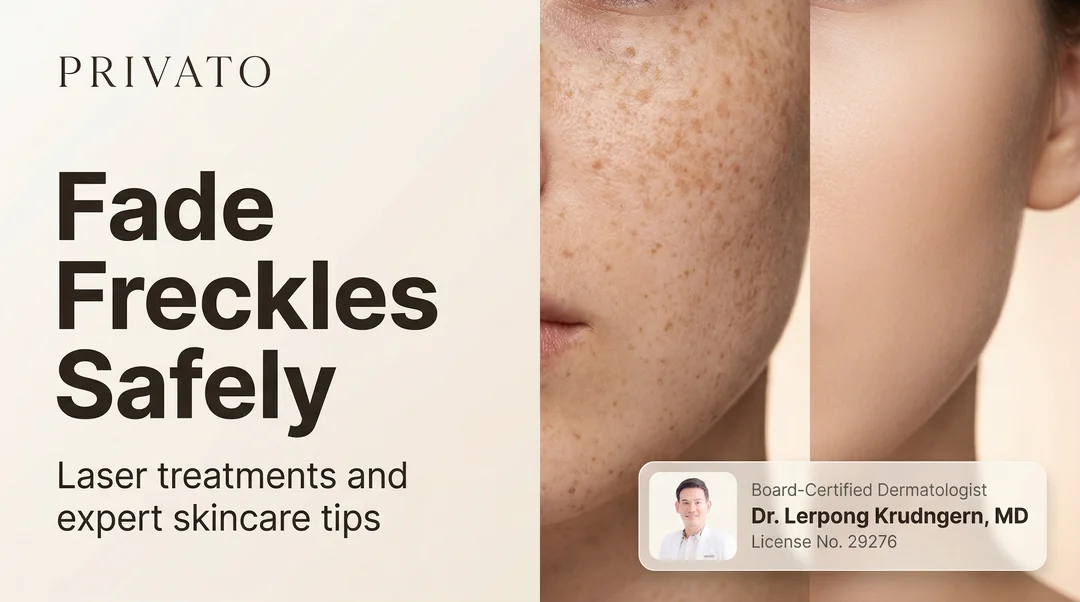
To achieve effective freckle removal, you can use professional laser treatments like picosecond lasers which offer a 74.46% clearance rate, or topical remedies that require strict lifelong photoprotection to prevent recurrence.
Is it possible to remove freckles permanently?
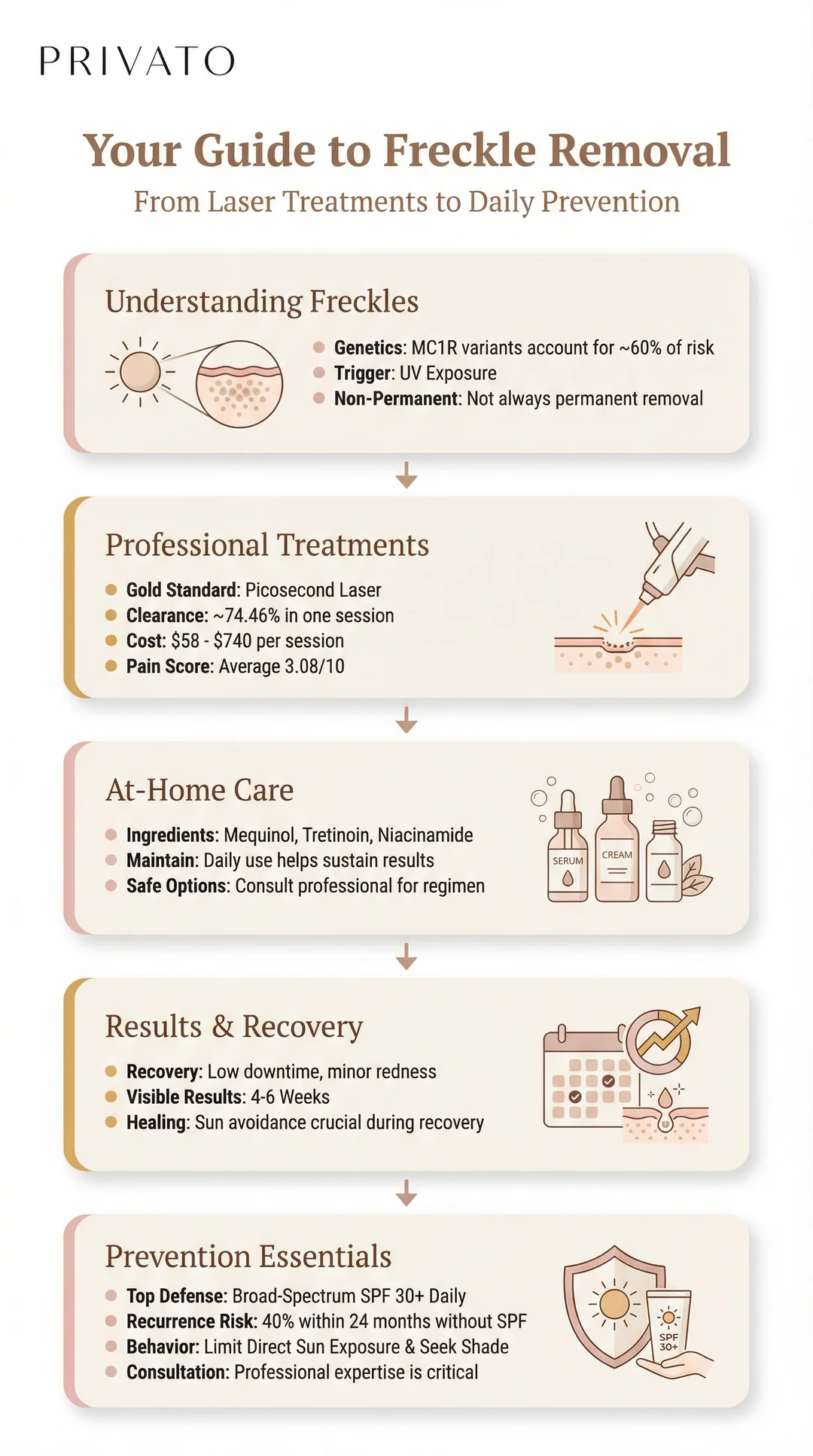
No, it is not possible to remove freckles permanently because new freckles or re-darkening can occur with UV re-exposure. While lasers can clear existing pigment, historical data on the 532-nm Nd:YAG laser indicates a partial recurrence rate of approximately 40% at a 24-month follow-up. Because freckles are strongly linked to genetics (specifically MC1R variants) and sun exposure, long-term maintenance requires strict, lifelong photoprotection to prevent the return of spots.
Understanding Freckles: Causes and Types of Pigmentation
What causes freckles to appear on the face and body?
Freckles are primarily caused by a combination of genetic predisposition and exposure to ultraviolet (UV) radiation. Variants in the MC1R gene are strongly associated with the development of these small brown macules, with one variant increasing risk by approximately three times and two variants by eleven times. Environmentally, UV exposure triggers an increase in melanin production and its transfer to skin cells, causing freckles to become more numerous and intense. While they often appear in childhood and darken during summer months, they typically fade in the winter when sun exposure decreases.
Freckles vs. Sunspots: How to identify your skin spots
To identify your skin spots, distinguish between freckles (ephelides) and sunspots (solar lentigines) by observing their seasonality, size, and onset.
Follow these steps to differentiate the two:
- Check for seasonality: Freckles typically darken in the summer and fade or disappear in the winter, whereas sunspots persist year-round regardless of UV exposure.
- Observe the size and borders: Freckles are generally small, brown macules; sunspots are often larger, more sharply defined, and linked to long-term photodamage.
- Note the timing of onset: Freckles usually appear during childhood and are strongly linked to genetics (specifically MC1R variants), while sunspots typically develop later in life due to cumulative sun exposure.
- Evaluate the mechanism: Freckles result from increased melanin production in normal skin cells, while sunspots may involve an actual increase in the number of pigment-producing cells (melanocytes).
- Identify “red flags”: Consult a clinician if any spot changes shape, becomes black, develops irregular borders, enlarges, or bleeds, as these can mimic malignancy
Professional Freckle Removal Treatments
Picosecond Laser: The gold standard for pigment removal
Picosecond lasers are highly effective for freckle removal, with the 730-nm wavelength specifically demonstrating a 74.46% mean clearance rate in clinical studies. These lasers use ultra-short pulses to target melanin with minimal thermal damage, often outperforming traditional Q-switched lasers in both improvement rates and safety profiles. While they are a leading professional choice, patients should be aware of potential side effects such as transient hyperpigmentation or hypopigmentation, and the fact that freckles may partially recur without strict long-term sun protection (Picosecond 730-nm freckles study, Academic/Methods, 2025)
CO2 Laser and Fraxel Repair for deep freckle targeting
Fractional CO2 lasers are primarily used for resurfacing and targeting pigmented lesions, though they require significant recovery time and strict adherence to sun protection. While these lasers can achieve clearance, they are often associated with a lower success rate for solar lentigines (8–23%) compared to picosecond or Q-switched lasers. Key considerations for CO2 laser treatment include:
- Contraindications: Active facial infections (95% consensus), pregnancy, breastfeeding, and recent sun exposure (67% consensus) are primary reasons to avoid or postpone the procedure.
- Recovery: Re-epithelialization typically takes between 8 and 42 days, during which active skincare is paused.
- Side Effects: Potential risks include post-inflammatory hyperpigmentation (PIH), erythema, and crusting; PIH prevention often requires starting sunscreen at least four weeks before the procedure.
- Cost: Historical data for CO2 resurfacing indicates an average cost of approximately $3,169, though pricing varies significantly by region and the extent of the treated area. (Fractional ablative CO2 expert consensus, 2025)
Chemical Peels and Professional Whitening Treatments
Chemical peels and professional whitening treatments can effectively lighten freckles and sunspots, though they often require multiple sessions and carry risks of side effects. A 35% TCA (trichloroacetic acid) peel can produce over 50% lightening in approximately 46% of cases, while topical combinations like 2% mequinol and 0.01% tretinoin show efficacy rates between 52.6% and over 80%. Common professional considerations include:
- Side Effects: Potential adverse reactions include pain, transient irritation, and post-inflammatory hyperpigmentation (PIH), which occurred in 13.3% of TCA peel patients in some trials.
- Safety Warnings: The FDA warns against unapproved over-the-counter skin-lightening products, such as those containing hydroquinone, which can cause permanent skin damage like ochronosis.
- Maintenance: Long-term results depend heavily on strict photoprotection, as UV exposure can trigger the recurrence of pigment.
- Comparison to Lasers: While topicals and peels are effective, procedural treatments like picosecond lasers generally achieve faster results with higher success ranges (up to 93%) for pigmented lesions.
Freckle Removal at Home and Natural Remedies
Topical Freckle Removal Creams: Ingredients to look for
Effective topical ingredients for fading freckles and sun-induced spots include mequinol, tretinoin, and various maintenance actives like kojic acid and retinoids. While true freckles (ephelides) have limited specific clinical trials for individual ingredients, the combination of 2% mequinol and 0.01% tretinoin is recognized as a highly effective topical treatment for sun-induced macules. Other ingredients commonly recommended by dermatological consensus for pigment maintenance and fading include:
- Thiamidol
- Azelaic acid
- Tranexamic acid
- Arbutin
- Niacinamide
- Antioxidants
It is essential to pair these ingredients with broad-spectrum photoprotection (SPF 15 or higher) to prevent re-darkening, as UV exposure is the primary trigger for freckle intensity. Consumers should avoid unregulated “whitening” products containing hydroquinone, which the FDA warns can cause permanent skin damage such as ochronosis
Natural fading methods and their limitations
Natural fading of freckles occurs primarily through seasonal changes and consistent photoprotection, though these methods are limited by genetic predisposition and the risk of recurrence. True freckles (ephelides) naturally darken during the summer due to UV exposure and fade during the winter when sun intensity decreases. While broad-spectrum sunscreen with an SPF of at least 15 to 30 can prevent seasonal darkening and the formation of new spots, it cannot eliminate the underlying genetic influence of MC1R variants, which account for approximately 60% of freckle risk. Furthermore, even after successful fading or professional removal, freckles frequently return; historical data indicates a partial recurrence rate of approximately 40% within 24 months if UV exposure continues.
The role of Sunscreen in preventing new freckle formation
Sunscreen is the essential foundation for preventing new freckle formation by blocking the UV radiation that triggers melanin production. Broad-spectrum SPF 15 or higher is recommended to protect against both UVA and UVB rays, which otherwise increase the number and intensity of freckles. For maximum effectiveness, it should be applied at a rate of approximately one ounce for the full body and reapplied every two hours, or more frequently after swimming or sweating. While photoprotection reduces seasonal darkening and prevents new spots, it does not eliminate the underlying genetic predisposition caused by MC1R variants. (Global hyperpigmentation consensus, 2024–2025)
Choosing the Right Method: When to See a Specialist
You should consult a specialist if a spot changes, becomes black, enlarges, develops irregular borders, or bleeds, as these features may mimic malignancy. Professional assessment is also necessary to differentiate between true freckles (ephelides) and solar lentigines, which require different treatment approaches. A specialist can help determine the most effective method based on your skin phototype and risk for post-inflammatory hyperpigmentation (PIH). (Clinical evaluation triggers, 2025)
What to Expect: Results, Cost, and Recovery
Professional freckle removal typically results in significant pigment clearance, though costs vary by region and recovery involves several days of skin healing.
Expected Results
- Clearance Rates: Picosecond lasers (730-nm) can achieve approximately 74.46% clearance in a single session, while other laser types like IPL and Q-switched lasers show success rates ranging from 36% to over 90% depending on the device.
- Recurrence: Results are often not permanent; historical data indicates a 40% partial recurrence rate within 24 months, making strict sun protection essential for maintenance.
- Topical Efficacy: Medical-grade creams (such as mequinol and tretinoin) can provide 52% to 80% efficacy but require weeks or months of consistent use.
Costs
- Switzerland: Prices for pigment removal start around CHF 150 per treatment, with full-face sessions reaching approximately CHF 740.
- Singapore: Per-session costs for pigmentation treatments generally range from $58 to $500.
- United States: While specific 2025 freckle pricing is limited, historical benchmarks for intensive resurfacing procedures like CO2 lasers average over $3,100.
Recovery and Safety
- Healing Time: Skin re-epithelialization (new skin growth) typically takes between 8 and 42 days following aggressive laser treatments.
- Side Effects: Common short-term reactions include redness, a burning sensation, and crusting. Clinical studies report mild irritation in 30% of patients and post-inflammatory hyperpigmentation (PIH) in approximately 8% to 15% of cases.
- Pain Management: Patients generally report moderate pain (averaging 3.08/10 on a pain scale), which is often managed with topical anesthetics or cooling during the procedure (Freckles and Freckle Removal: Multi‑Region Evidence Brief 2025–2026)
Freckle removal before and after: Realistic expectations
Professional treatments can significantly clear existing freckles, but results are often temporary without strict sun protection. While picosecond lasers can achieve mean clearance rates of approximately 74.46%, historical data indicates a partial recurrence rate of about 40% within 24 months.
Realistic expectations for freckle removal include:
- Treatment Efficacy: Picosecond lasers (730-nm) typically outperform Q-switched lasers, offering higher success rates and lower risks of collateral skin injury.
- Immediate Aftermath: Patients should expect short-term side effects such as redness, a burning or stinging sensation, and crusting.
- Recovery Timeline: For more aggressive treatments like fractional CO2 lasers, skin re-epithelialization can take between 8 and 42 days.
- Potential Risks: Even with advanced technology, there is a risk of post-inflammatory hyperpigmentation (PIH) or hypopigmentation, with studies showing these occurring in roughly 8% to 15% of cases.
- Maintenance: New freckles or the darkening of treated areas can occur with UV exposure; therefore, daily use of broad-spectrum SPF 30+ is essential to maintain results
Average cost of laser freckle removal sessions
Laser freckle removal costs vary significantly by region, with sessions typically ranging from approximately $58 to $740 depending on the treatment area and location. In Singapore, per-session prices for pigmentation removal are commonly cited between $58 and $500, while clinics in Switzerland report costs starting from CHF 150 for small areas to CHF 740 for full-face treatments. In the United States, while specific current benchmarks for freckles are limited, historical data for broader laser resurfacing procedures averages around $3,169. These figures often represent base marketing prices and may not include additional expenses such as consultations, anesthesia, or the multiple sessions frequently required for optimal results
Aftercare tips to prevent post-treatment hyperpigmentation
Preventing post-treatment hyperpigmentation (PIH) requires strict photoprotection and the use of specific medical interventions to stabilize the skin. Following a procedure, patients should adhere to the following aftercare strategies:
- Sun Protection: Apply broad-spectrum sunscreen (SPF 15–30 or higher) consistently for several months, as UV exposure is a primary trigger for PIH.
- Medical Interventions: Intradermal tranexamic acid has been identified as a highly effective treatment for reducing PIH risk compared to sunscreen alone.
- Topical Care: Use topical corticosteroids or cooling methods immediately following the procedure to manage inflammation.
- Skincare Timing: Resume active skincare routines only after full re-epithelialization, which typically takes between 8 and 42 days depending on the treatment intensity.
- Pre-treatment Preparation: Start a sunscreen regimen at least four weeks before the procedure to prime the skin. (Global hyperpigmentation consensus, 2024–2025)
Safety and Potential Side Effects
Common side effects of laser pigment treatment
Common side effects of laser pigment treatment include erythema, burning or stinging sensations, and the formation of crusts. Other frequently reported adverse events are post-inflammatory hyperpigmentation (PIH), which occurred in 15% of patients in some studies, and transient irritation that typically resolves within three days. While newer technologies like 730-nm picosecond lasers aim to minimize thermal damage, they can still result in both hyperpigmentation and hypopigmentation, with clinical trials reporting these effects in approximately 8.33% of cases.
Who should avoid professional freckle removal?
Professional freckle removal should be avoided or postponed by individuals with active facial infections, recent heavy sun exposure or sunburns, and those who are currently pregnant or breastfeeding. Other contraindications identified by clinical consensus include certain dermatoses and a high risk of post-inflammatory hyperpigmentation (PIH), particularly for aggressive resurfacing procedures like fractional CO2 lasers. Additionally, the FDA warns against using unregulated over-the-counter skin-lightening products due to the risk of permanent ochronosis and serious skin reactions
FAQs About Freckle Removal
Can freckles be safely removed at home?
No, freckles cannot be safely removed at home using potent acids or unregulated whitening products, as these significantly increase the risk of burns, permanent scarring, and ochronosis. While at-home care is effective for maintenance through photoprotection and gradual topical agents, the use of illegal or unapproved skin-lightening drugs has been linked to serious reactions like rashes and swelling. Regulatory bodies warn that many over-the-counter lightening products are misbranded and may cause permanent skin damage. (Freckles and Freckle Removal: Multi‑Region Evidence Brief 2025–2026)
What fades freckles the fastest?
Procedural treatments, such as lasers and Intense Pulsed Light (IPL), generally fade freckles faster than topical creams. While topical agents like mequinol and tretinoin can be effective, they typically require weeks or months to show results, whereas clinical procedures provide more rapid clearance but carry a higher risk of side effects. Among laser options, picosecond lasers (such as the 730-nm wavelength) have demonstrated high success rates, with one study showing a mean clearance of 74.46% after a single treatment.
Do freckles come back after laser treatment?
Yes, freckles can return after laser treatment, as new spots or re-darkening often occur with UV re-exposure. While lasers can successfully clear existing pigment, a historical 24-month follow-up of 532-nm Nd:YAG laser treatment showed a partial recurrence rate of approximately 40%. Because freckles are strongly linked to genetics and sun exposure, maintenance through strict photoprotection is essential to reduce the likelihood of relapse (Freckles and Freckle Removal: Multi‑Region Evidence Brief 2025–2026, 2026)
Is laser freckle removal painful?
Pain levels for laser freckle removal vary by the technology used and the application of anesthesia, but it is generally described as manageable. In a clinical trial using a 730-nm picosecond laser without anesthesia, participants reported an average pain score of 3.08 out of 10. Other common protocols, such as those using Q-switched lasers, frequently incorporate topical anesthetics and post-treatment cooling to minimize discomfort. While patients may experience short-term sensations of burning, stinging, or mild irritation, these effects typically resolve within a few days (Freckles and Freckle Removal: Multi‑Region Evidence Brief 2025–2026)