
Eye Bag Removal in Bangkok | Privato Clinic

Eye bag removal bangkok procedures include surgical lower blepharoplasty and non-surgical fillers, with average costs ranging from 38,352 to 54,400 THB at JCI-accredited facilities for long-lasting aesthetic results.
How can you effectively remove eye bags in Bangkok?
To effectively remove eye bags in Bangkok, you can choose between surgical lower blepharoplasty for permanent fat repositioning or non-surgical options like dermal fillers and laser resurfacing for temporary improvement.
The most effective methods available in Bangkok include:
- Lower Blepharoplasty: This is the primary surgical solution for “true” eye bags caused by fat protrusion. Surgeons use either a transconjunctival approach (incision inside the eyelid) for fat removal or a transcutaneous approach (external incision) if excess skin also needs tightening.
- Under-Eye Fillers: These are used to volumize the “tear trough” area. While they do not remove fat, they camouflage mild bags by smoothing the transition between the cheek and the lower eyelid.
- Laser Resurfacing: Procedures such as fractional CO2 lasers are used to improve skin texture and tighten minor laxity, though they are less effective for large fat pads.
- Energy-Based Tightening: Treatments like HIFU or Radiofrequency (RF) offer gradual skin lifting and are often marketed for patients with mild sagging.
When seeking treatment in Bangkok, it is recommended to prioritize board-certified specialists recognized by the Thai Society of Plastic and Reconstructive Surgeons and facilities with international accreditation (Thai Society of Plastic and Reconstructive Surgeons, 2026)
Understanding Eye Bag Removal: Blepharoplasty vs. Non-Surgical Options
What is lower blepharoplasty surgery?
Lower blepharoplasty is a surgical procedure designed to reduce under-eye bags by removing, sculpting, or repositioning bulging orbital fat. It may also involve tightening excess skin or muscle to address laxity in the lower eyelid area. Surgeons in Bangkok typically utilize two primary techniques: the transconjunctival approach, which involves an incision inside the eyelid for fat protrusion, and the transcutaneous approach, which uses an external incision to remove excess skin. While the procedure provides long-lasting structural changes, recovery usually involves a peak in swelling followed by suture removal around five to seven days post-operation (Lower blepharoplasty, Bangkok Hospital Headquarters, 2026)
Non-surgical alternatives: Under-eye fillers and laser treatments
Under-eye fillers and laser treatments serve as the primary non-surgical alternatives for addressing eye bags and the surrounding area in Bangkok.
- Under-eye Fillers: These are used for “tear trough” volumization to camouflage mild bags by filling in hollow shadows. The procedure typically takes 20–30 minutes, with results lasting between 6 to 18 months. While effective for hollowing, fillers do not remove prolapsed fat like surgery does.
- Laser Resurfacing: Treatments such as fractional CO2 lasers are used to improve skin quality, including fine lines and texture. A full eye area treatment in Bangkok may cost approximately 10,500 THB, with a downtime of 7–14 days characterized by peeling and redness.
- Skin Tightening: Other energy-based options like HIFU or Radiofrequency (RF) are marketed for gradual lifting and tightening of the skin, with effects generally lasting 6–12 months.
Causes of under-eye bags and sagging eyelids
Under-eye bags and sagging eyelids are primarily caused by age-related tissue weakening, orbital fat protrusion, and fluid retention.
The specific factors contributing to these conditions include:
- Anatomical Changes: “True” under-eye bags often result from orbital fat prolapse (steatoblepharon), where fat behind the eye pushes forward as the supporting tissues and muscles weaken over time.
- Fluid Retention: Temporary puffiness can be triggered by sleeping flat, high salt intake, alcohol consumption, or hormonal changes, all of which cause lymphatic fluid to pool in the delicate eye area.
- Inflammation and Allergies: Allergic reactions can lead to persistent swelling and inflammation of the eyelid tissues.
- Skin Laxity: As skin loses elasticity with age, it begins to sag, often creating deeper grooves or “tear troughs” that make fat deposits appear more prominent.
- Medical Conditions: In some cases, persistent swelling may be linked to underlying health issues such as thyroid eye disease, renal disease, or dermatitis.
Benefits of Choosing Bangkok for Eyelid Surgery
Expertise of Thai plastic surgeons in eye aesthetics
Thai plastic surgeons are recognized for their expertise in eye aesthetics through formal board certifications, international fellowships, and specialized training programs.
The following factors contribute to the high level of expertise in the region:
- Specialist Credentialing: The Thai Society of Plastic and Reconstructive Surgeons (ThPRS) ensures that members hold an official protected specialist title, distinguishing board-certified specialists from general providers.
- International Training: Many Bangkok-based surgeons enhance their skills through overseas fellowships at prestigious institutions in the United States (such as MD Anderson) and South Korea.
- Regulatory Standards: The Medical Council of Thailand oversees recognized residency and specialty training programs to maintain a structured pipeline of qualified experts.
- Accredited Facilities: Surgeons often operate in hospitals with international accreditation, such as JCI, which mandates adherence to globally recognized patient-safety protocols.
- Specialized Techniques: Providers are experienced in advanced procedures including transconjunctival and transcutaneous blepharoplasty, as well as fat repositioning and laser resurfacing.
Advanced medical technology and international hospital standards
Bangkok is a leading destination for eye bag removal due to its concentration of JCI-accredited hospitals and surgeons with extensive international training.
The city’s medical infrastructure is characterized by several key factors:
- International Accreditation: Many major facilities, such as Bumrungrad International and Bangkok Hospital, hold Joint Commission International (JCI) accreditation, which signals adherence to globally recognized patient safety and clinical protocols.
- Specialized Expertise: Surgeons often hold memberships in the Thai Society of Plastic and Reconstructive Surgeons (ThPRS), a protected specialist title, and many have completed fellowships at prestigious institutions in the U.S., South Korea, or Europe.
- Advanced Technology: Clinics utilize a range of modern surgical and non-surgical technologies, including transconjunctival blepharoplasty, fractional CO2 lasers for skin resurfacing, and high-intensity focused ultrasound (HIFU) for tissue tightening.
- Medical Tourism Infrastructure: Hospitals provide dedicated support for international patients, including multilingual translation services (covering English, Chinese, German, and French) and integrated travel packages that bundle procedures with recovery accommodations. (Bumrungrad International Hospital, 2025)
Eye Bag Removal Cost in Bangkok and Thailand
Average price range for surgical blepharoplasty
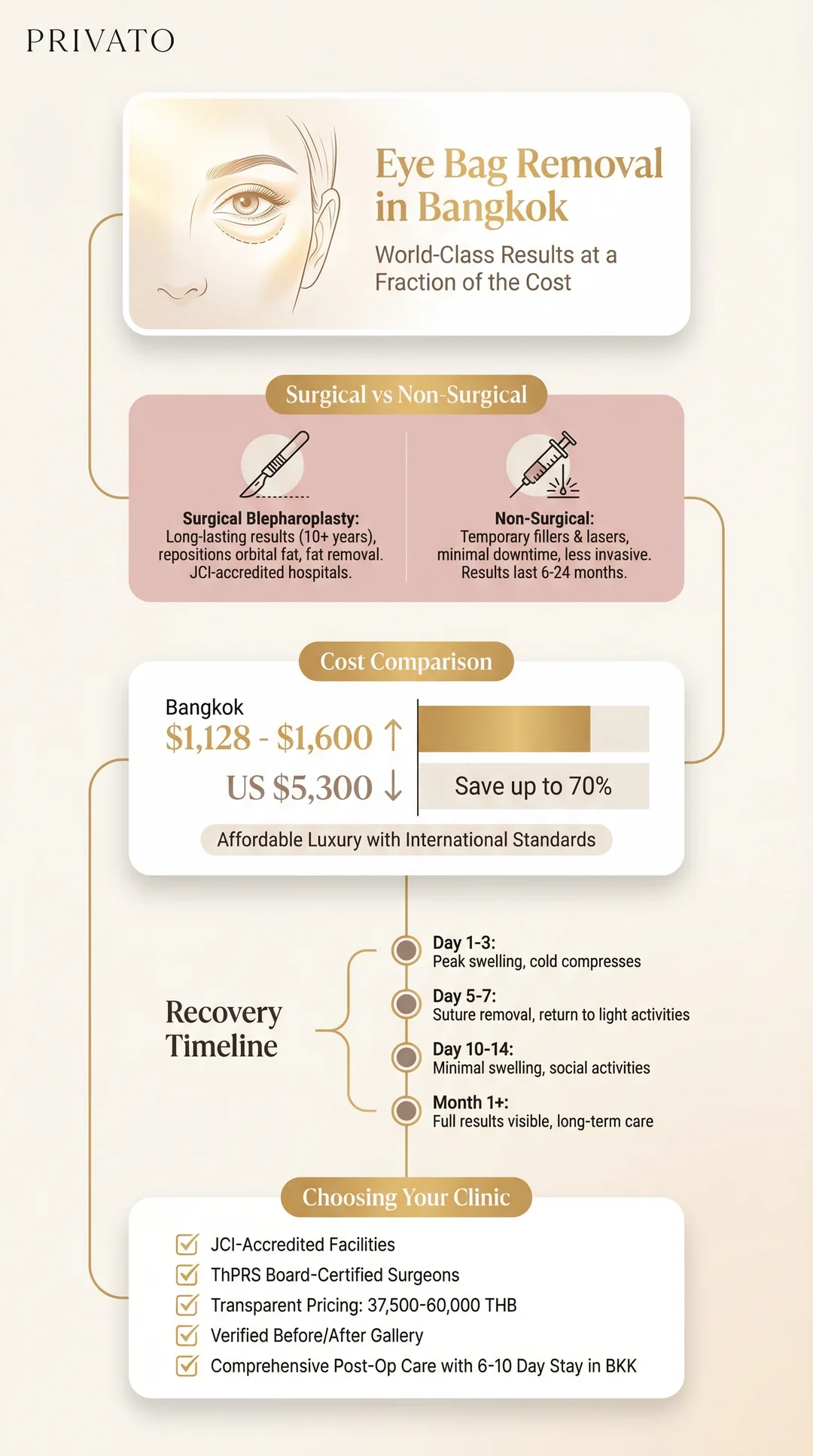
The average price for lower blepharoplasty in Bangkok ranges from approximately $1,128 to $1,600 (38,352–54,400 THB). While specific hospital packages for upper or lower procedures can be found for around 60,000 THB, the broader market average for the surgery is approximately $1,364. These costs are significantly lower than benchmarks in the United States, where the average cost is reported at $5,300, or Switzerland, where prices typically start around 4,500 CHF. (Bookimed, 2026)
Cost comparison: Surgery vs. under-eye fillers
Under-eye surgery in Bangkok typically costs between 37,500 THB and 60,000 THB, whereas under-eye fillers generally start at approximately 15,000 THB per syringe.
While fillers offer a lower initial price point, they are temporary solutions for hollowing or mild bags and usually require repeat treatments every 6 to 18 months to maintain results. In contrast, surgical blepharoplasty is a more expensive one-time investment that provides long-lasting structural changes to the fat pads and skin, with effects often lasting 10 years or more. (Yanhee International Hospital, 2025)
Factors that influence the total treatment price
The total treatment price for eye-bag removal is primarily influenced by the surgical technique used, the type of anesthesia, and the facility’s accreditation level.
Key factors that determine the final cost include:
- Incision Technique: Prices vary between transconjunctival (internal) and transcutaneous (external) approaches, with the latter often addressing skin laxity.
- Procedure Complexity: Costs increase if the surgeon must perform fat repositioning rather than simple excision, or if the procedure is a revision of a previous surgery.
- Anesthesia and Facility Fees: Whether the procedure is performed under local or general anesthesia, and whether it takes place in a specialized clinic or a JCI-accredited hospital, impacts the quote.
- Inclusions and Logistics: Total expenses often depend on included medications, pre-operative tests, follow-up schedules, and bundled medical tourism packages that may include hotel stays and transfers.
Preparing for Your Procedure: Candidacy and Consultation
Who is the ideal candidate for eye bag surgery?
The ideal candidate for eye bag surgery is a generally healthy adult with realistic expectations and specific anatomical concerns.
According to medical standards, a thorough evaluation for this procedure should identify the following physical characteristics:
- Fat herniation: The presence of “true” under-eye bags caused by bulging orbital fat.
- Eyelid laxity: Loose skin or weakened muscle support around the lower eyelid.
- Tear-trough hollowing: Deep grooves or shadowing that may require fat repositioning.
- Eye-surface status: A healthy ocular surface, as conditions like severe dry eye or a compromised blink reflex can be contraindications
What to expect during your initial clinic consultation
During your initial consultation, you should expect a comprehensive evaluation of your eye anatomy and medical history to determine the most effective treatment for your specific concerns.
The consultation typically involves several key components:
- Anatomical Assessment: The specialist will evaluate eyelid laxity, the presence of herniated fat (true eye bags), and any tear-trough hollowing or skin texture issues.
- Medical Screening: You will be asked about your general health, eye-surface status (such as dry eye), and any history of ocular diseases or surgeries like LASIK.
- Treatment Selection: The provider will distinguish between “true bags” and temporary fluid retention to recommend either surgical blepharoplasty (internal or external) or non-surgical options like fillers or lasers.
- Risk and Safety Discussion: A qualified specialist will discuss potential complications, such as bleeding risks or dry eye, and provide guidance on stopping blood-thinning medications or supplements before the procedure. (American Academy of Ophthalmology, 2026)
The Recovery Process and Aftercare Results
Typical recovery timeline and healing stages
The typical recovery timeline for eye bag removal involves a peak in swelling during the first few days, with most patients appearing natural after one month.
The healing process generally follows these stages:
- Days 1–3: Swelling and bruising typically peak; patients are advised to use cold compresses and keep their head elevated.
- Days 5–7: A follow-up appointment is usually scheduled for the removal of stitches if an external incision was used.
- Weeks 1–2: Visible bruising and significant swelling commonly improve, allowing many patients to return to daily activities.
- Weeks 2–4: Residual swelling continues to subside; however, some minor puffiness may persist.
- 1 Month+: The final results begin to settle, though the healing of internal tissues can continue for several months (Lower blepharoplasty, Bangkok Hospital, 2025)
Post-operative care tips for optimal results
To achieve optimal results after eye bag removal, patients should prioritize head elevation and the consistent application of cold compresses during the initial healing phase. Following these steps helps minimize swelling and protects the delicate surgical area:
- Manage Swelling: Keep the head elevated while sleeping and apply cold gel packs or compresses frequently during the first few days.
- Activity Restrictions: Avoid heavy eye strain (such as prolonged reading or television), intense exercise, and the consumption of alcohol or tobacco, as these can interfere with circulation and healing.
- Hygiene and Cleaning: Keep the eye area clean using saline solution as directed by the surgeon.
- Follow-up Care: Attend the scheduled suture removal, which typically occurs between day 5 and day 7 for external incisions.
- Travel Planning: International patients should plan to remain in Bangkok for at least 6 to 10 days to ensure proper monitoring before flying home.
Managing swelling and potential side effects
Effective management of swelling and side effects after eye bag removal involves a combination of immediate post-operative care and monitoring for rare but serious complications.
To manage recovery and mitigate risks, patients should follow these guidelines:
- Immediate Aftercare: Keep the head elevated and apply continuous cold compresses or gel packs during the early stages of healing.
- Activity Restrictions: Avoid heavy eye strain (such as reading or watching TV), alcohol, smoking, and intense exercise during the initial recovery period.
- Hygiene: Keep the surgical area clean using saline as directed by the clinician.
- Recovery Timeline: Expect swelling and bruising to peak early and improve significantly within 1 to 2 weeks, though residual swelling may persist for up to 4 weeks.
- Warning Signs: Seek urgent medical assessment for “red-flag” symptoms, including severe pain, decreased vision, or progressive swelling, which could indicate a serious complication like retrobulbar hemorrhage (American Academy of Ophthalmology, 2025)
How to Choose the Best Eye Bag Removal Clinic in Bangkok
To choose the best eye bag removal clinic in Bangkok, prioritize facilities with international accreditation and surgeons who hold board-certified specialist credentials.
Follow these steps to select a high-quality provider:
- Verify Accreditation: Confirm the facility is accredited by the Joint Commission International (JCI) by using their official “Find accredited organizations” lookup tool to ensure global patient-safety standards.
- Check Surgeon Credentials: Ensure the doctor is a member of the Thai Society of Plastic and Reconstructive Surgeons (ThPRS), which indicates they hold an official protected specialist title and have completed recognized residency training.
- Evaluate International Infrastructure: Look for hospitals like Bumrungrad or Bangkok Hospital that offer dedicated international patient centers, multilingual interpreters, and assistance with visas or transport.
- Review Treatment Approaches: Choose a clinic that offers both surgical (blepharoplasty) and non-surgical (fillers, lasers) options, as “true” eye bags caused by fat prolapse typically require surgery rather than topical or energy-based treatments.
- Assess Recovery Support: Select a provider that provides a clear 5–7 day follow-up schedule for suture removal and has explicit emergency protocols for international patients.
- Compare Transparent Pricing: Request itemized quotes that include anesthesia, facility fees, and revision policies, noting that hospital packages for lower blepharoplasty often range from 37,500 to 60,000 THB
Evaluating clinic certifications and surgeon credentials
To evaluate clinic certifications and surgeon credentials in Bangkok, prioritize facilities with Joint Commission International (JCI) accreditation and surgeons who are members of the Thai Society of Plastic and Reconstructive Surgeons (ThPRS).
When researching providers, follow these verification steps:
- Check Facility Accreditation: Use the JCI “Find accredited organizations” lookup tool to verify a hospital’s status directly rather than relying on marketing materials.
- Verify Surgeon Credentials: Ensure the surgeon holds the official protected specialist title from the Medical Council of Thailand and is a member of ThPRS, which indicates formal residency and specialty training.
- Review International Training: Many Bangkok surgeons highlight overseas fellowships (such as in the U.S. or South Korea) as a signal of quality and alignment with global medical protocols.
- Assess Patient Infrastructure: Look for clinics that provide dedicated international services, such as multilingual interpreters and structured emergency protocols for patients traveling from abroad.
Importance of before and after galleries and patient reviews
Before and after galleries and patient reviews serve as essential tools for verifying a surgeon’s aesthetic style and the clinic’s operational reliability. While galleries allow prospective patients to evaluate whether a surgeon’s previous results align with their personal goals, reviews from platforms like RealSelf or WhatClinic provide insight into communication quality, pain management, and the effectiveness of follow-up care. It is recommended to triangulate these anecdotal sources with formal credentials, such as board certification from the Thai Society of Plastic and Reconstructive Surgeons or JCI hospital accreditation, to ensure a comprehensive assessment of safety and quality
Safety and Risks: What You Need to Know
Eye bag removal procedures are generally safe when performed by board-certified specialists in accredited facilities, though they carry specific surgical and non-surgical risks.
While major complications are rare, potential risks and safety considerations include:
- Surgical Risks: Lower blepharoplasty can result in persistent swelling (2–4 weeks), bruising, and infection. Rare but severe complications include retrobulbar hemorrhage, which can lead to vision loss, and issues like dry eye or compromised blink function.
- Non-Surgical Risks: Under-eye fillers may cause redness, swelling, or bruising for 1–2 weeks. In rare cases, vascular occlusion can occur, potentially leading to skin necrosis or blindness if not treated immediately by an expert.
- Safety Protocols: To minimize risk, patients should choose hospitals with international accreditation, such as Joint Commission International (JCI), and surgeons recognized by the Thai Society of Plastic and Reconstructive Surgeons (ThPRS).
- Emergency Preparedness: International patients should ensure their provider has explicit emergency protocols and a clear follow-up schedule, typically requiring a stay of 7–10 days for initial monitoring and suture removal. (American Academy of Ophthalmology, 2024)
Common side effects vs. rare surgical complications
Common side effects of eye bag treatments include temporary swelling, bruising, and redness, while rare surgical complications can include retrobulbar hemorrhage, vision loss, or skin necrosis.
Common Side Effects
Most patients experience minor, temporary reactions that typically resolve within one to two weeks:
- Swelling and Bruising: These usually peak shortly after surgery or filler injections and improve significantly within 7–14 days.
- Redness and Peeling: Common after laser resurfacing treatments, often lasting up to two weeks.
- Tenderness: Mild discomfort or a “tight” sensation around the eyes during the initial healing phase.
- Injection Reactions: For non-surgical fillers, localized redness or swelling at the injection site is common.
Rare Surgical and Procedural Complications
While infrequent, serious complications require immediate medical intervention:
- Retrobulbar Hemorrhage: A rare but severe surgical complication characterized by intense pain and progressive swelling that can threaten vision.
- Vision Changes: Any decrease in vision following surgery is considered a medical emergency.
- Vascular Occlusion: A rare risk associated with under-eye fillers that can lead to skin necrosis or blindness if the filler enters a blood vessel.
- Infection or Eyelid Issues: Potential risks include compromised blink function, persistent dry eye, or asymmetric healing.
Contraindications: Who should avoid eye bag surgery?
Individuals with certain medical conditions, such as severe dry eye, compromised blink reflex, or those taking anticoagulants that increase bleeding risk, should avoid or exercise extreme caution with eye bag surgery. While many contraindications are considered relative rather than absolute, a thorough evaluation is required for patients with a history of LASIK/PRK, ocular disease, or systemic issues like renal and thyroid eye disease. It is also recommended that patients stop smoking and discontinue specific blood-thinning medications or supplements several weeks before the procedure to reduce healing risks (American Academy of Ophthalmology, 2026)
FAQs About Eye Bag Removal in Bangkok
Can eye bags be permanently removed with one surgery?
Lower blepharoplasty can provide long-lasting structural changes by removing or repositioning fat, but it is generally described as long-lasting rather than strictly permanent because the natural aging process continues. While the surgical removal of herniated fat pads typically offers results that can last 10 years or more, factors such as skin laxity and tissue support may change over time. Most patients see a “more natural” appearance after one month, though final settling can take longer depending on the technique used.
How long does the swelling last after lower blepharoplasty?
Visible swelling and bruising after a lower blepharoplasty typically improve within one to two weeks, though residual swelling can persist for two to four weeks. While many patients begin to look more natural around the one-month mark, the final results and complete settling of the tissue may take longer depending on the specific surgical technique and the patient’s skin type.
Is eye bag removal in Thailand safe for international patients?
Yes, eye bag removal in Thailand is considered safe for international patients when performed by board-certified specialists in accredited facilities. To ensure safety, patients should prioritize hospitals with international accreditation, such as those recognized by the Joint Commission International (JCI), which signifies adherence to global patient-safety protocols. Additionally, the Thai Society of Plastic and Reconstructive Surgeons (ThPRS) recommends choosing surgeons who hold official protected specialist titles to ensure they have undergone structured residency training. While major complications are rare, international patients are advised to stay in Bangkok for at least 7 to 10 days to allow for initial healing and a follow-up appointment, typically around day 5 to 7 for suture removal. (Joint Commission International, 2026)
How many days should I stay in Bangkok for recovery?
You should plan to stay in Bangkok for at least 6 to 10 days to ensure proper initial recovery and follow-up care.
While specific timelines depend on the procedure and the surgeon’s requirements, the following milestones typically dictate the length of stay:
- Suture Removal: If external incisions are used, stitches are typically removed between day 5 and day 7.
- Initial Monitoring: Providers often advise staying at least 6 days to monitor for early complications like swelling or bruising, which usually peak shortly after surgery.
- Travel Safety: A conservative window of 7 to 10 days is recommended for international patients to ensure they are stable before flying back to their home country